
ScienceMiddle school
Phases of the Moon
Move the Moon around the Earth and see how much of its sunlit half we can see from here.
Lab
Each simulation brings a real object or a historic experiment to life. Predict the result first, then play: the numbers are worked out again with your own values. The simulations need no account; building your own projects in the Workshop takes a free account.
29 simulations
ScienceMiddle school
Move the Moon around the Earth and see how much of its sunlit half we can see from here.

ScienceMiddle school
Change the date and the latitude: how does the axial tilt change the angle of sunlight and the length of the day?
ScienceMiddle school
Lower the lamp: air scatters blue light far more than red, giving a blue sky at noon and a red Sun at dusk.
ScienceMiddle school
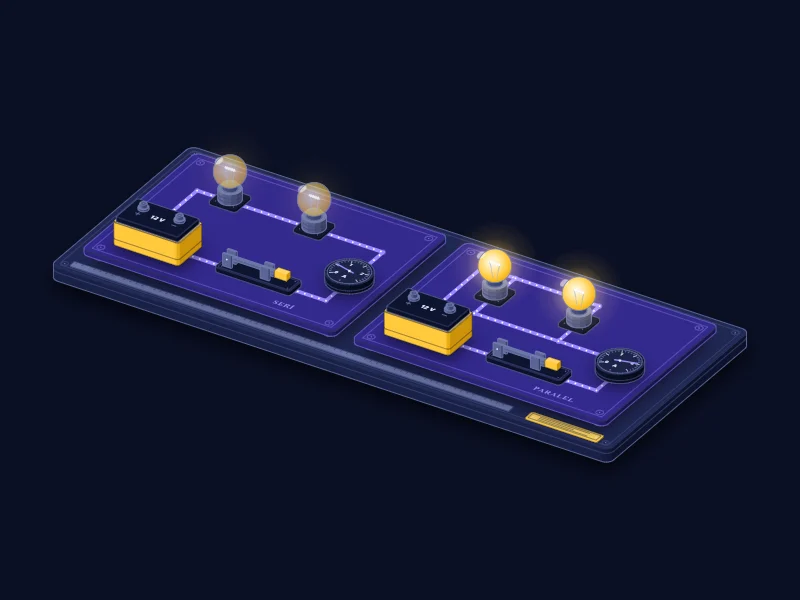
The same bulbs on two boards: close a switch, remove a bulb and measure how the current changes in series and parallel.
ScienceMiddle school
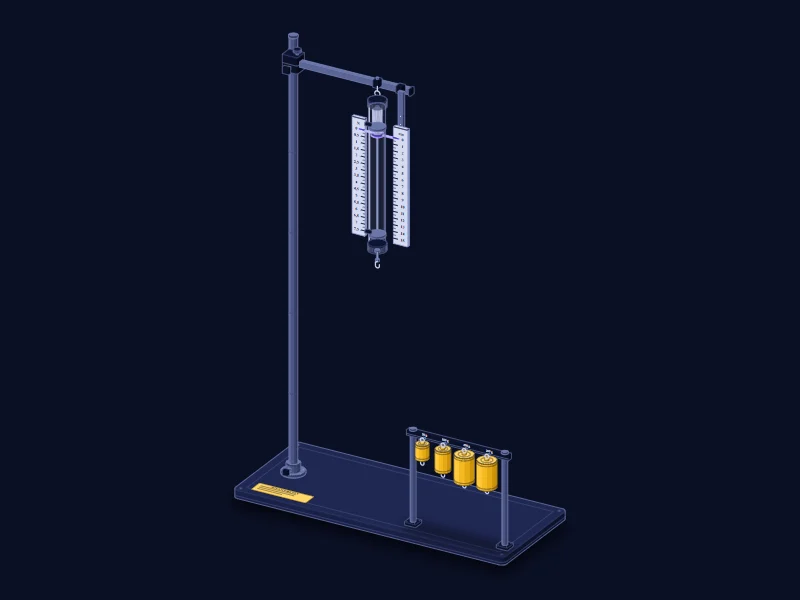
Hang masses on the hook, read how far the spring stretches and how many newtons it shows; compare three springs.
ScienceMiddle school
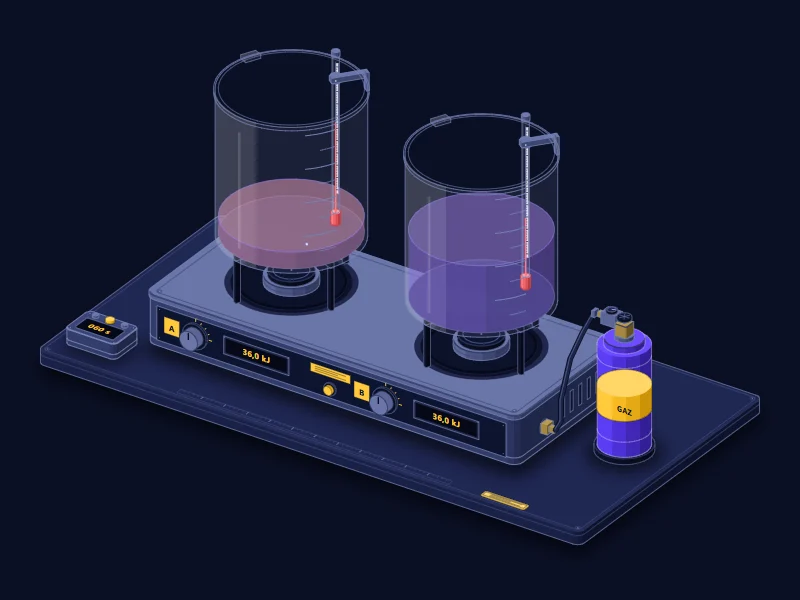
Heat different masses with the same amount of heat: the joules are equal, the thermometer readings are not.
ScienceMiddle school
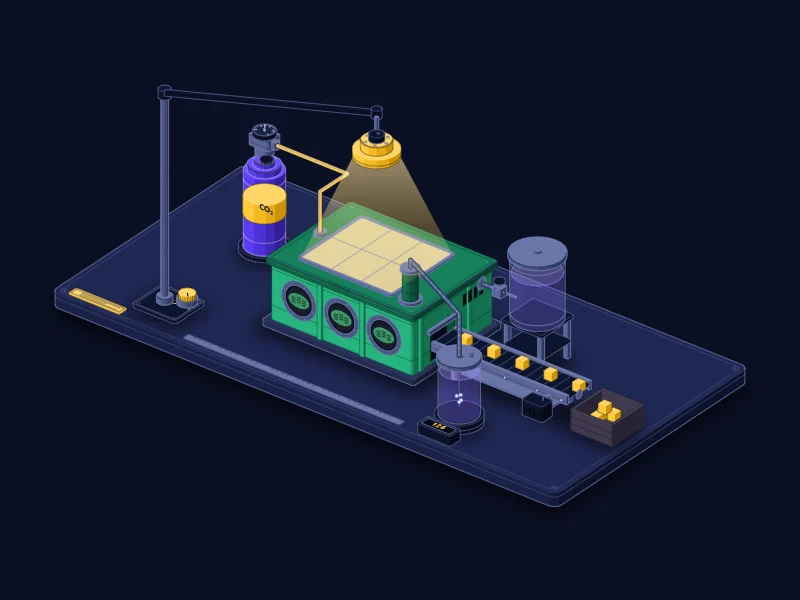
Set the light and the carbon dioxide, and see that whichever is scarcest sets the pace of photosynthesis.
ScienceMiddle school
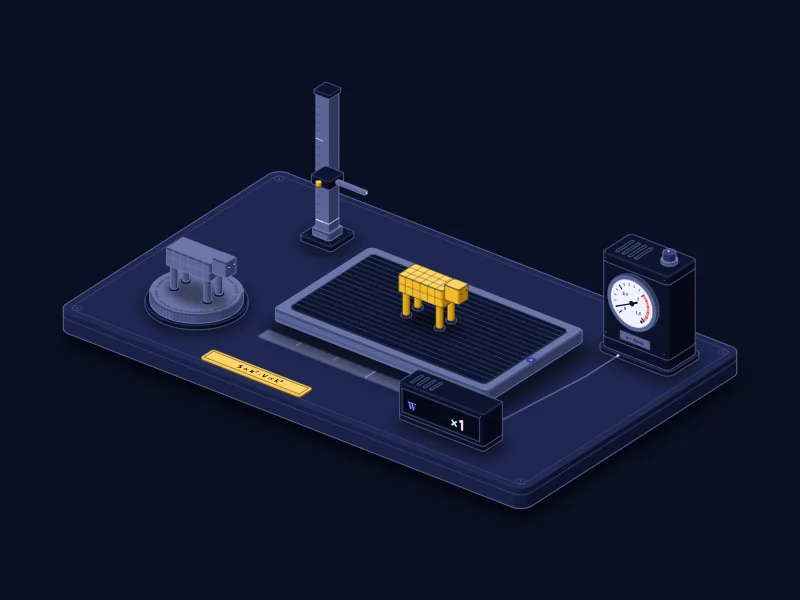
Scale a model up k times: its surface grows k², its weight k³. At what size do the legs break, and why are elephant legs so thick?
MathematicsMiddle school
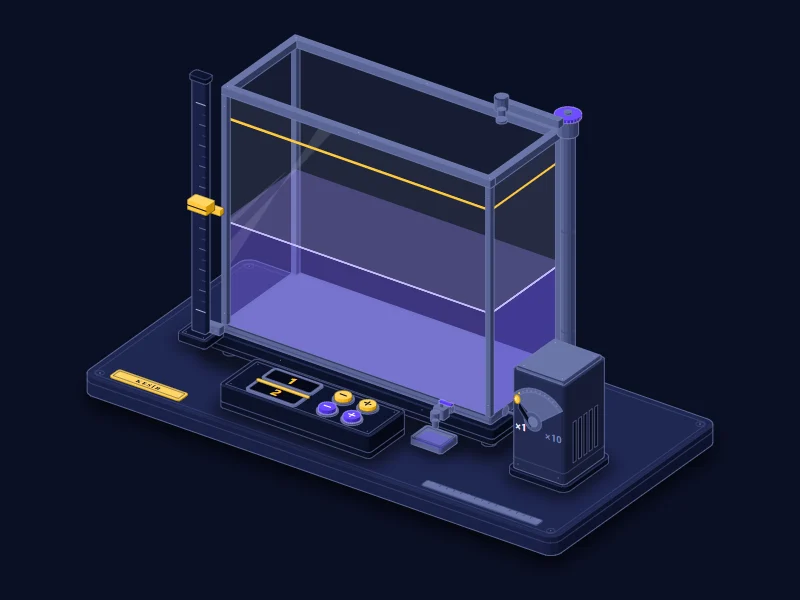
Make the tank’s parts finer: the water stays put while the fraction’s name changes. See equivalent fractions.
MathematicsMiddle school
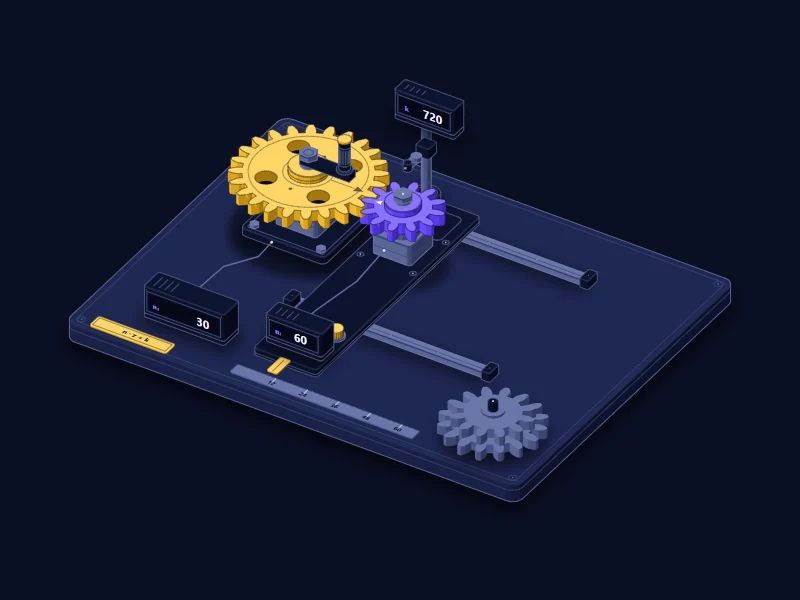
Change the number of teeth: teeth and turns are inversely proportional, and their product stays the same.

MathematicsMiddle school
If the leaves double every day, on which day is the pond half full? Compare linear, exponential and logistic growth side by side.
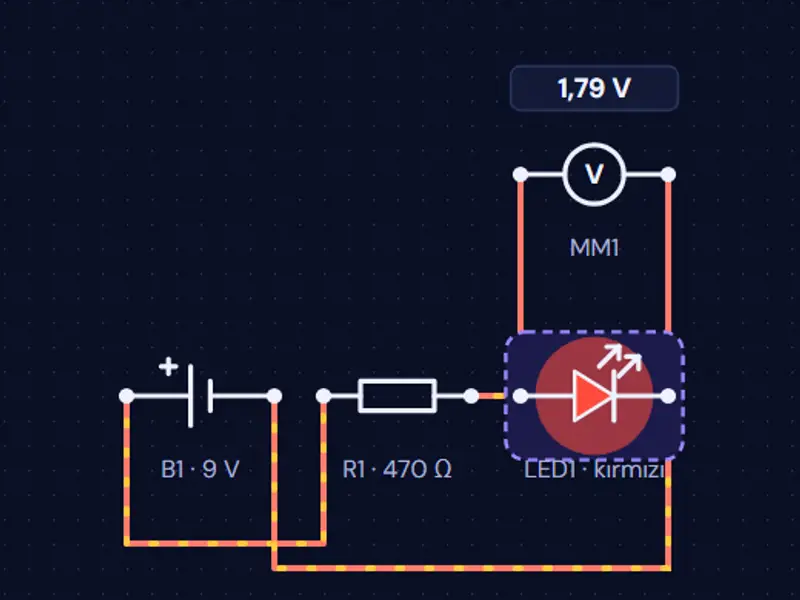 Free account needed
Technology and EngineeringMiddle school
Build and measure your own circuit on an empty bench, run experiments and plot them, program an Arduino with blocks. Your projects are saved to your account.
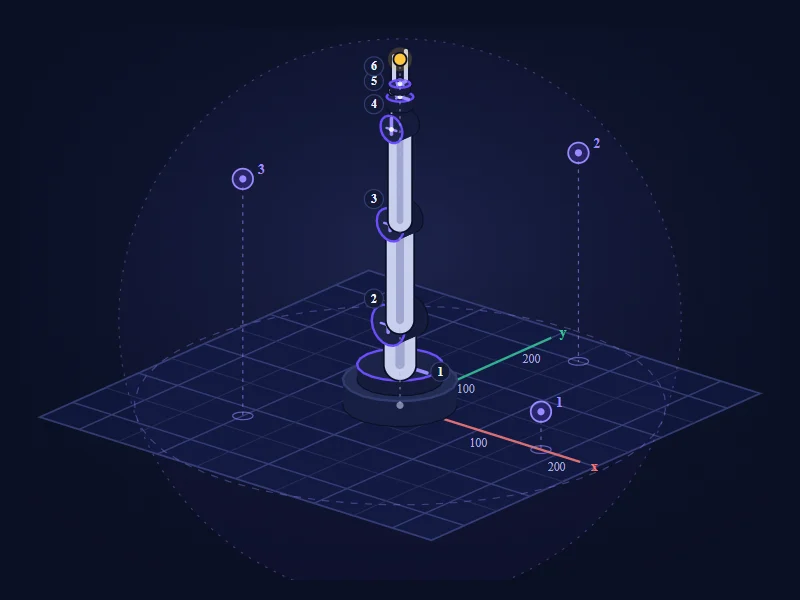 3D lab
Technology and EngineeringHigh school
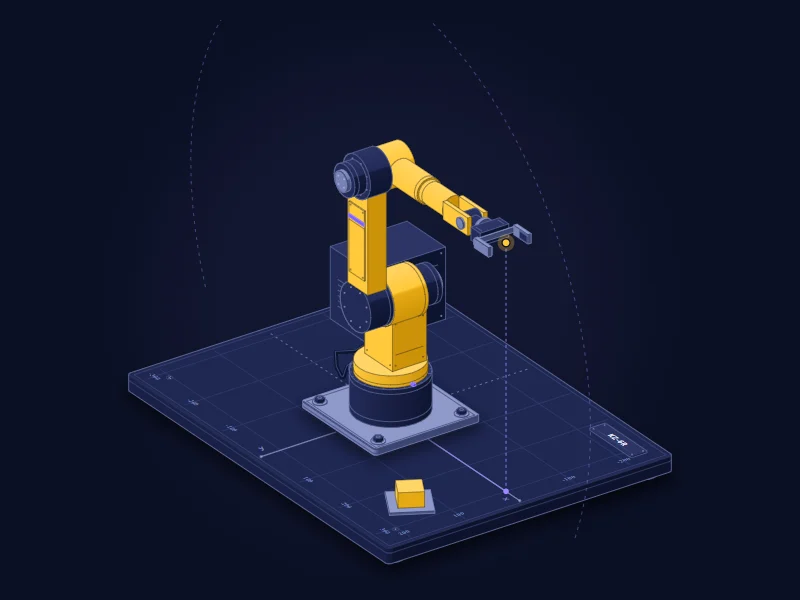
Turn a 6-axis robot arm in 3D, reach for targets and test inverse kinematics in two short tries.
Technology and EngineeringMiddle school
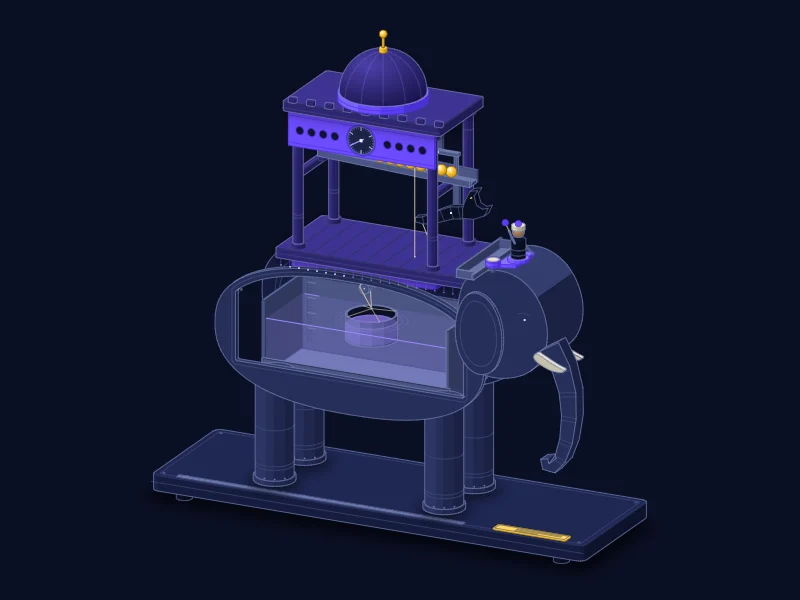
How does the sinking bowl in al-Jazari’s Elephant Clock measure half an hour? Scrub through time and follow it.
Technology and EngineeringMiddle school
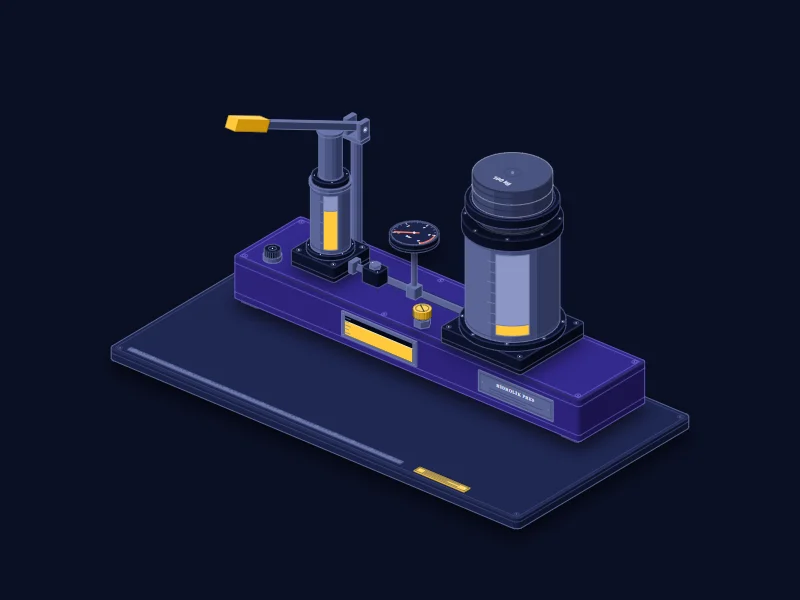
Pump the lever: the pressure on the small piston passes unchanged to the big one, and the force grows.
Technology and EngineeringHigh school
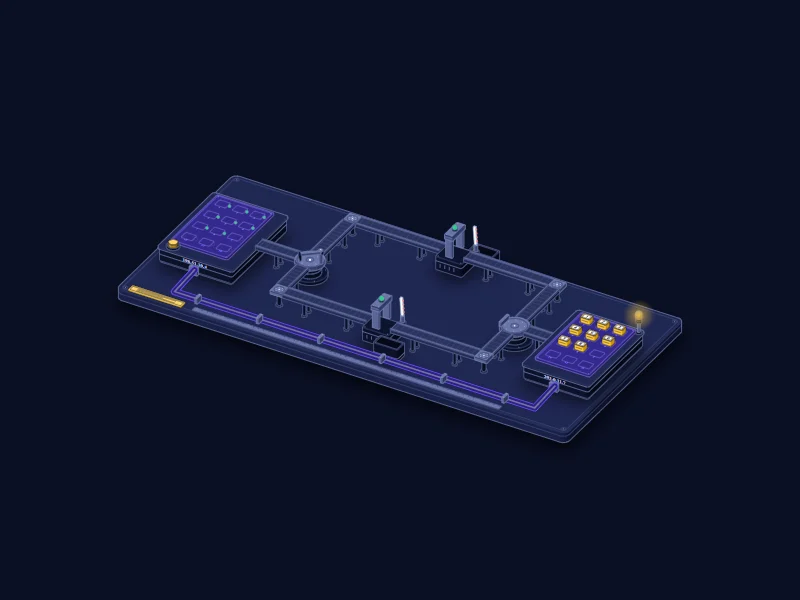
Split a message into packets and send it; cut a line and watch the routers deliver them another way.
Technology and EngineeringHigh school
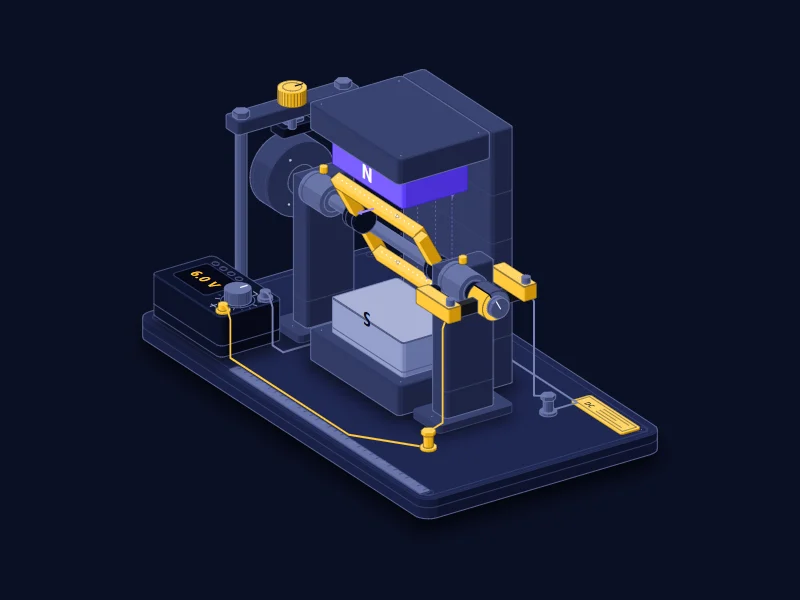
Set the voltage and the brake; in slow motion, watch the commutator reverse the current every half turn.

Technology and EngineeringHigh school
The refrigerant boils at low pressure in the freezer and takes in heat, then condenses at the back and gives it off.
Technology and EngineeringHigh school
Turn the joints one by one and follow forward kinematics: where the gripper tip ends up, worked out from the angles.
Technology and EngineeringHigh school
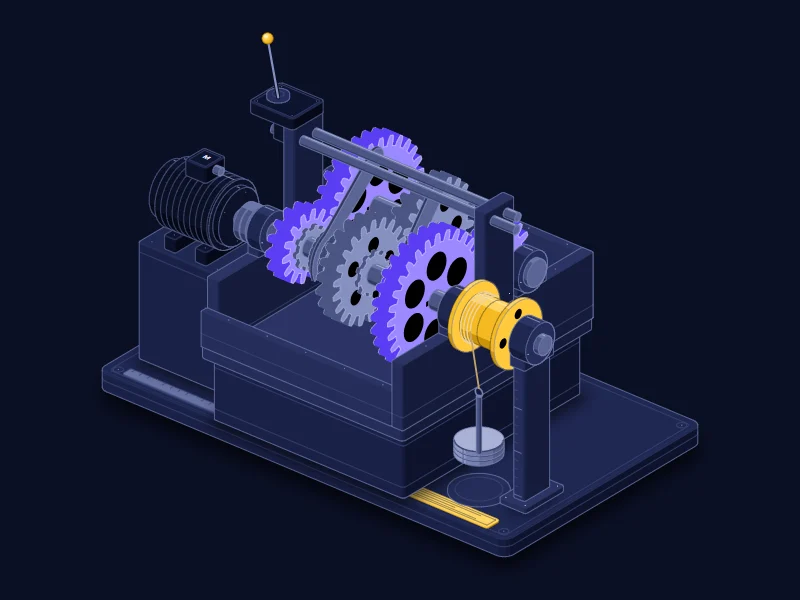
Change gear: as the gear ratio grows, the output slows down but the torque rises; the power stays the same.
Technology and EngineeringHigh school
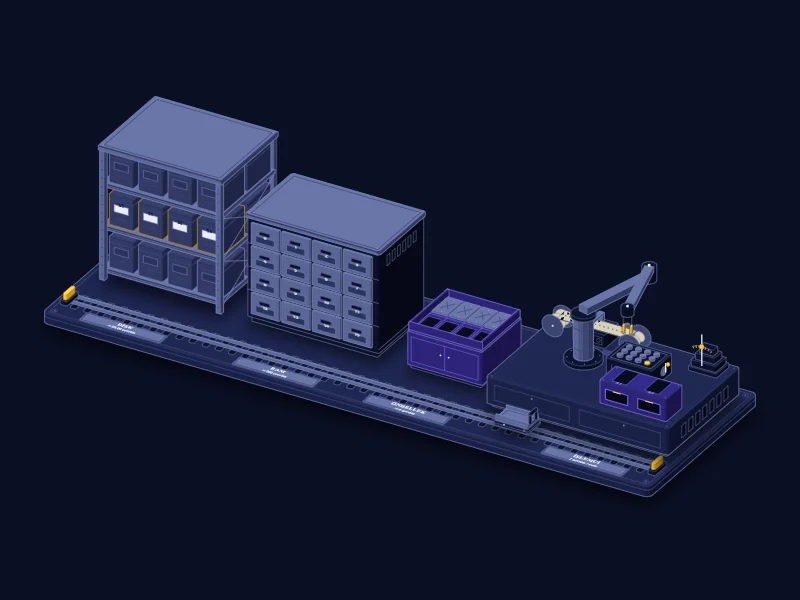
Run a small program step by step and see how long the processor waits for data from the cache and from memory.
Technology and EngineeringHigh school
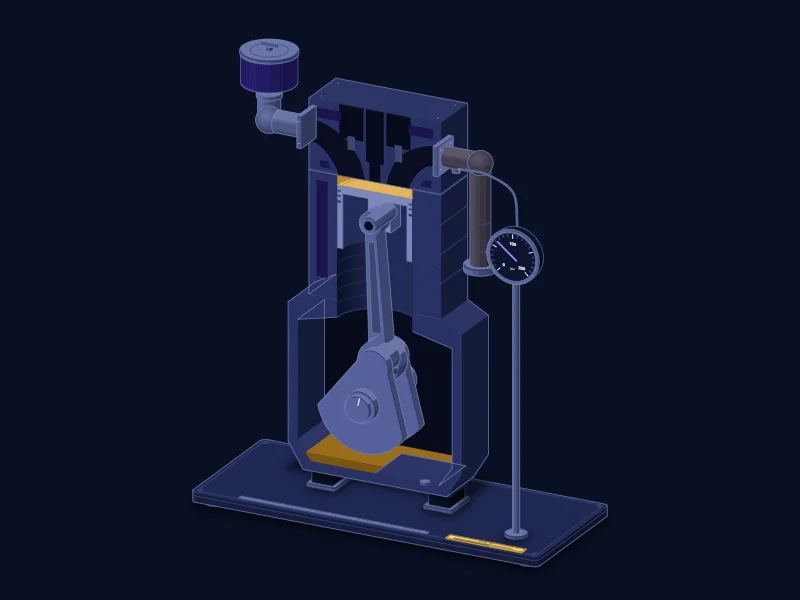
Turn the crankshaft and follow the piston and valves through intake, compression, power and exhaust.
Technology and EngineeringHigh school
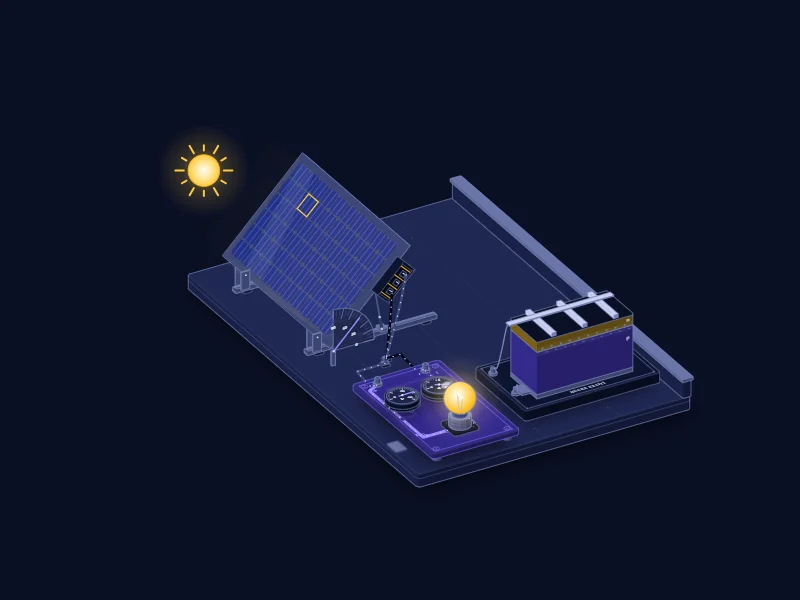
Move the sun and the panel: how do the angle of the light and a single shaded cell change the panel’s power?
ExperimentsHigh school and university
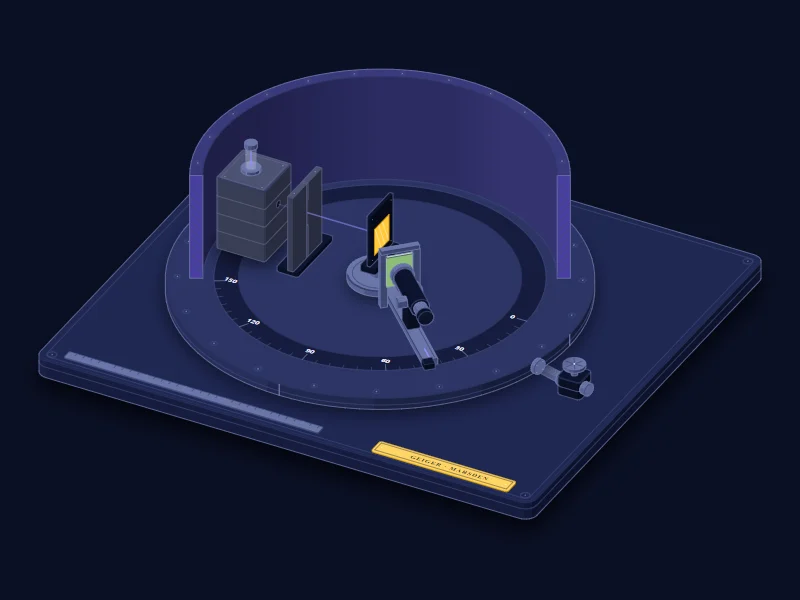
Fire alpha particles at gold foil; swing the detector, count the ones that bounce back and trace the nucleus.
ExperimentsHigh school and university
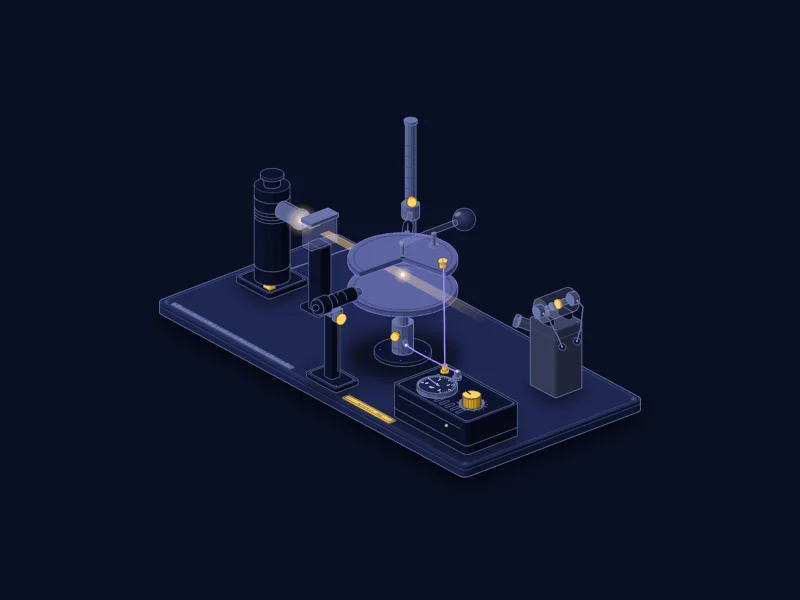
Adjust the voltage, hold the drop still in the microscope and work out the charge of the electron yourself.
ExperimentsHigh school and university
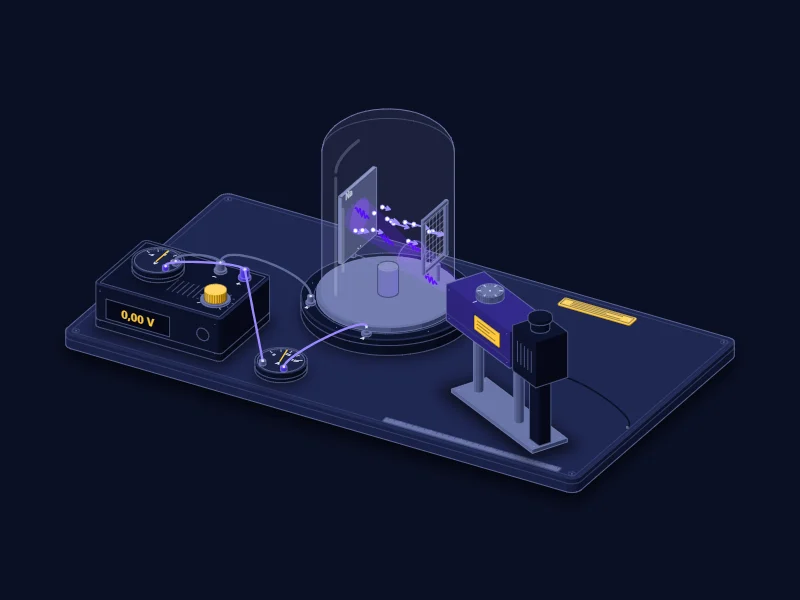
Change the wavelength, the intensity and the metal: it is the photon’s energy, not the intensity, that frees electrons.
ExperimentsHigh school
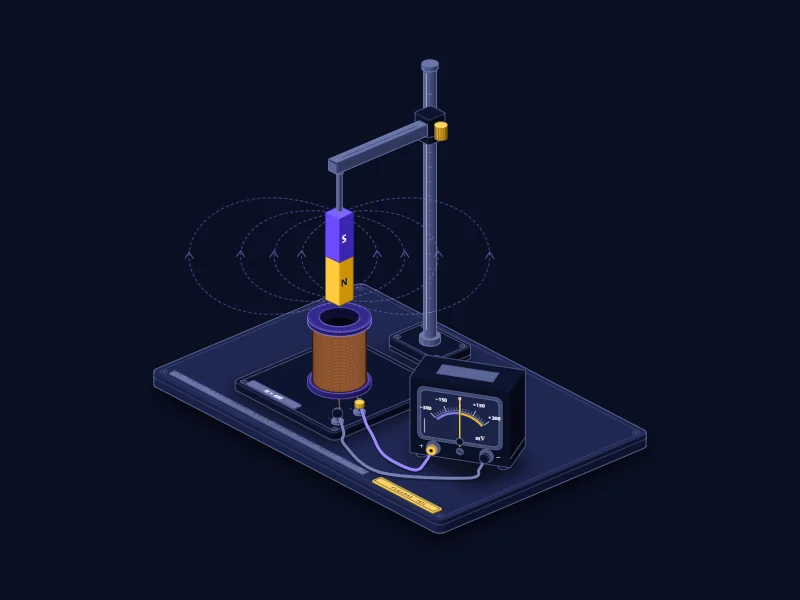
Move the magnet in the coil: the galvanometer swings while the flux changes, and the current stops when the magnet stops.
ExperimentsHigh school
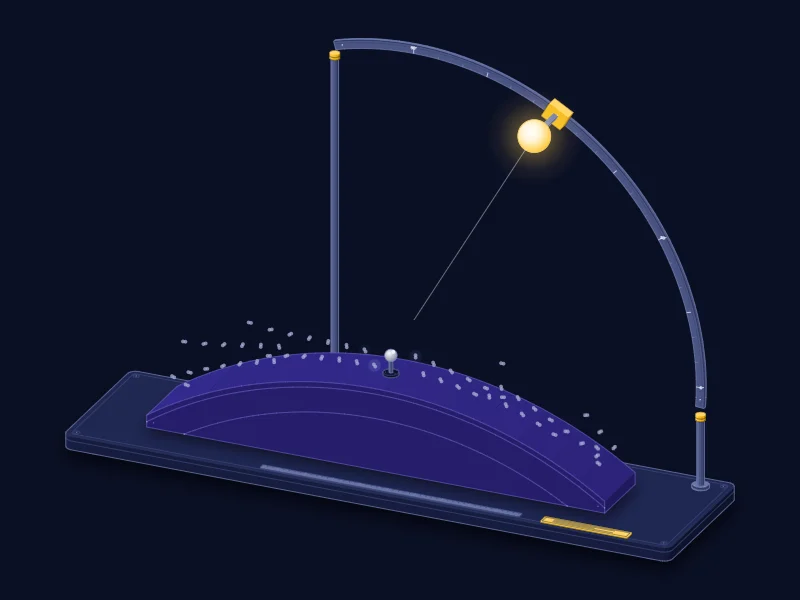
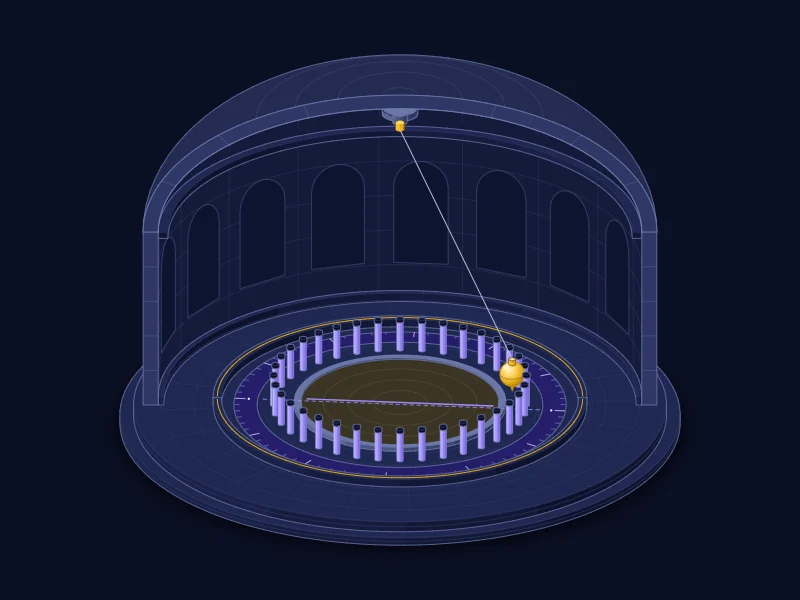
Pick a latitude and swing the pendulum: its plane slowly turns, the pins fall and the Earth’s rotation shows itself.
ExperimentsHigh school and university
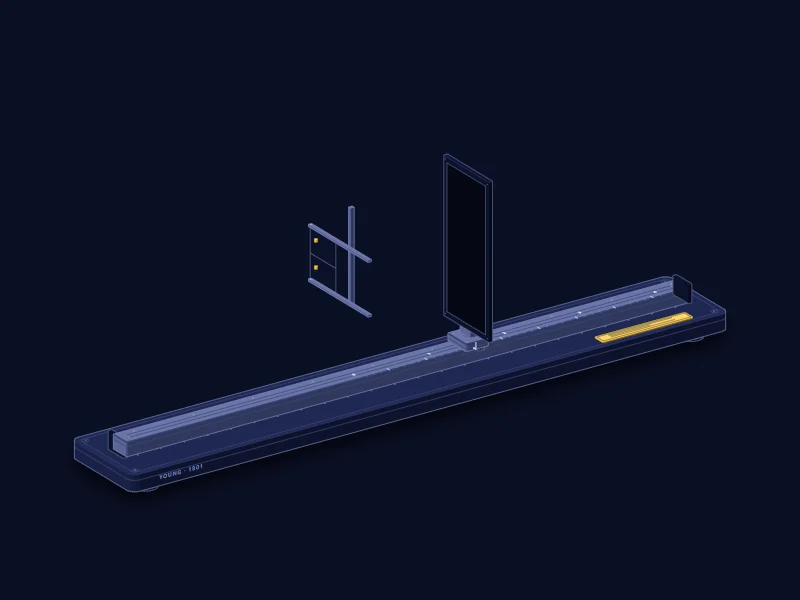
Change the wavelength, the slit spacing and the screen distance, and measure how the interference fringes spread.