Field · no grade
Curiosity
Why is the sky blue, why does luck fool us, how big is the universe? Not for exams but for curiosity: short discovery lessons that start from everyday questions and are learnt by experimenting with simulations. No age limit.
Follow these lessons around a question: journeys- 3 units
- 7 lessons
- about 108 min
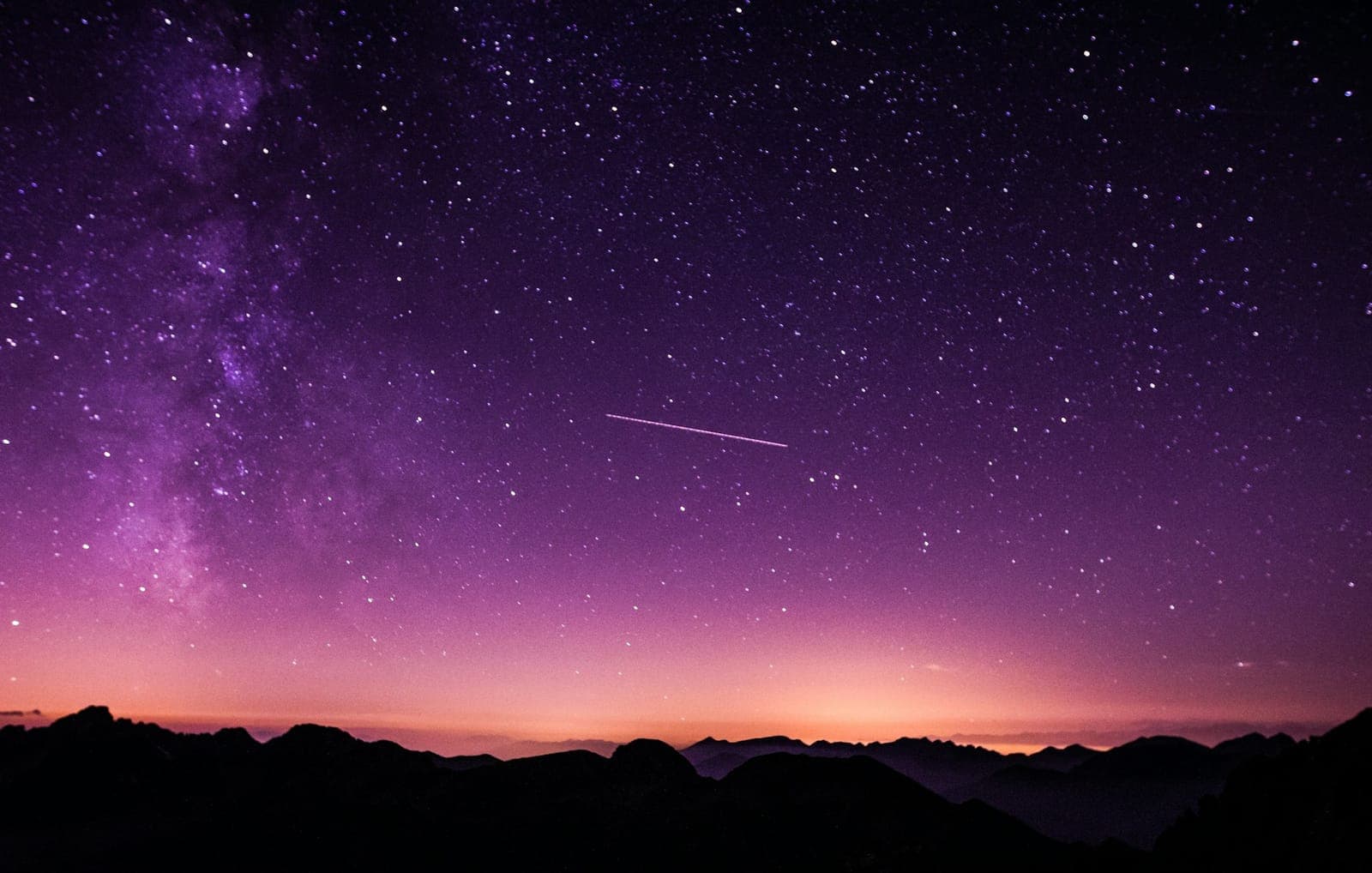
Photo: Vincentiu Solomon / Unsplash
Light and colour
Why is the yellow on your screen not really yellow? Why is the sky blue and the sunset red? Try mixing light and scattering it in the air with your own hands.
- Mixing light and colour
When red and green light overlap, why do you get yellow and not brown? Find out how screens make millions of colours from just three, and how your eye "calculates" colour.
- 15 min
- 2 simulations
- Mini quiz
- Why is the sky blue?
If sunlight is white, why is the sky blue? Find out how air molecules scatter short-wavelength light more, why blue is scattered about six times more than red, and why the sky is not violet.
- 16 min
- 2 simulations
- Mini quiz
- Why is the sunset red?
Why does the Sun, shining white at midday, look like an orange ball in the evening? Find out how blue gets left behind as light's path through the air grows longer, and why dust and volcanic ash colour the sunset.
- 15 min
- 2 simulations
- Mini quiz
Chance and probability
A die surprises you every time, so why does a steady pattern appear over a thousand rolls? See the rules of randomness through experiments and learn to spot the most common mistake about luck.
- The law of large numbers
Nobody can predict a single roll of a die, so why do a thousand rolls settle into a surprisingly steady pattern? Find out how relative frequency approaches probability as the number of trials grows, and why insurers and casinos rely on this law.
- 16 min
- 1 simulation
- Mini quiz
- The gambler's fallacy
If a coin has landed heads five times in a row, is tails now more likely? Find out why a coin has no memory, how gamblers in Monte Carlo lost fortunes to this fallacy in 1913, and what independent events really mean.
- 14 min
- 2 simulations
- Mini quiz
The scale of the universe
How far away is the Moon, and the nearest star? Get a feel for distances too big for kilometres using scale models and the speed of light, and find out why looking at the sky means looking into the past.
- The scale of space
If the Earth were a chickpea, how far away would the Moon be? The nearest star? Our galaxy? Use scale models to turn the mind-boggling distances of the universe into everyday objects, and find out why space is mostly empty.
- 17 min
- 2 simulations
- Mini quiz
- The light year: measuring distance with time
A light year is not a time but a distance: the roughly 9.46 trillion km that light travels in a year. Find out why looking at the sky means looking into the past, and why we see the Sun as it was 8 minutes ago.
- 15 min
- 2 simulations
- Mini quiz