Skip to content

Science · art · culture/free

Don't memorise.
See it, then understand.

Why is the sky blue? Will a die roll a 6 because "it's due"? Why does ice float on water? Here every idea starts with your prediction, then a simulation, and only then a short explanation.

Your age, your grade or your exam timetable don't matter. Curiosity is enough.
  • No ads
  • Try it without signing up
  • Useful at school too

Photo: Jaro Bielik / Unsplash

A quick question

Physics

Which of these is a renewable energy source?

Which of these is a renewable energy source?

Source: U.S. Energy Information Administration: Renewable energy

Journeys · 12 questions

Today's question

Each journey grows out of a single question and leads through a few short lessons. By the end you can answer that question in your own words. The featured question changes every day.

See them all
  1. Why do we slip on ice?

    Physics · 4 steps · 1 h 6 min

  2. Does luck really exist?

    Probability · 5 steps · 1 h 25 min

  3. How small are we in the universe?

    Space · 5 steps · 1 h 23 min

  4. How does electricity flow?

    Electricity · 4 steps · 1 h 6 min

  5. How do you divide a pizza fairly?

    Maths · 4 steps · 1 h 10 min

  6. Why does ice float on water?

    Matter · 4 steps · 1 h 14 min

  7. Why does music sound pleasant?

    Music · 4 steps · 1 h 8 min

  8. How does a picture gain depth?

    Art · 4 steps · 1 h 9 min

  9. How does a seed become a plant?

    Nature · 5 steps · 1 h 21 min

  10. Why is the kitchen a laboratory?

    Kitchen · 5 steps · 1 h 26 min

  11. How did we measure the Earth?

    History · 5 steps · 1 h 27 min

How a lesson works

Predict first, then experiment, then explain

  1. Predict

    Before the simulation opens, we ask a question. Your intuition may be wrong, and that's exactly when we learn most. Predictions aren't scored.

  2. Test

    Change the values, switch the light on and off, roll the die. When you submit your answer, the server checks whether it is right.

  3. Explain

    A short explanation follows the correct answer. Put it next to your prediction: where did they part ways, and why?

A lesson takes 10–20 minutes. Some lessons have two simulations, and every lesson ends with a short quiz. Outside the lessons there are new short facts and mini questions every day, prepared with the help of AI and checked before they go live.

A moment from a lesson
The simulation from the lesson “Why is the sky blue?”. Same as the real lesson screen, and it works without an account.
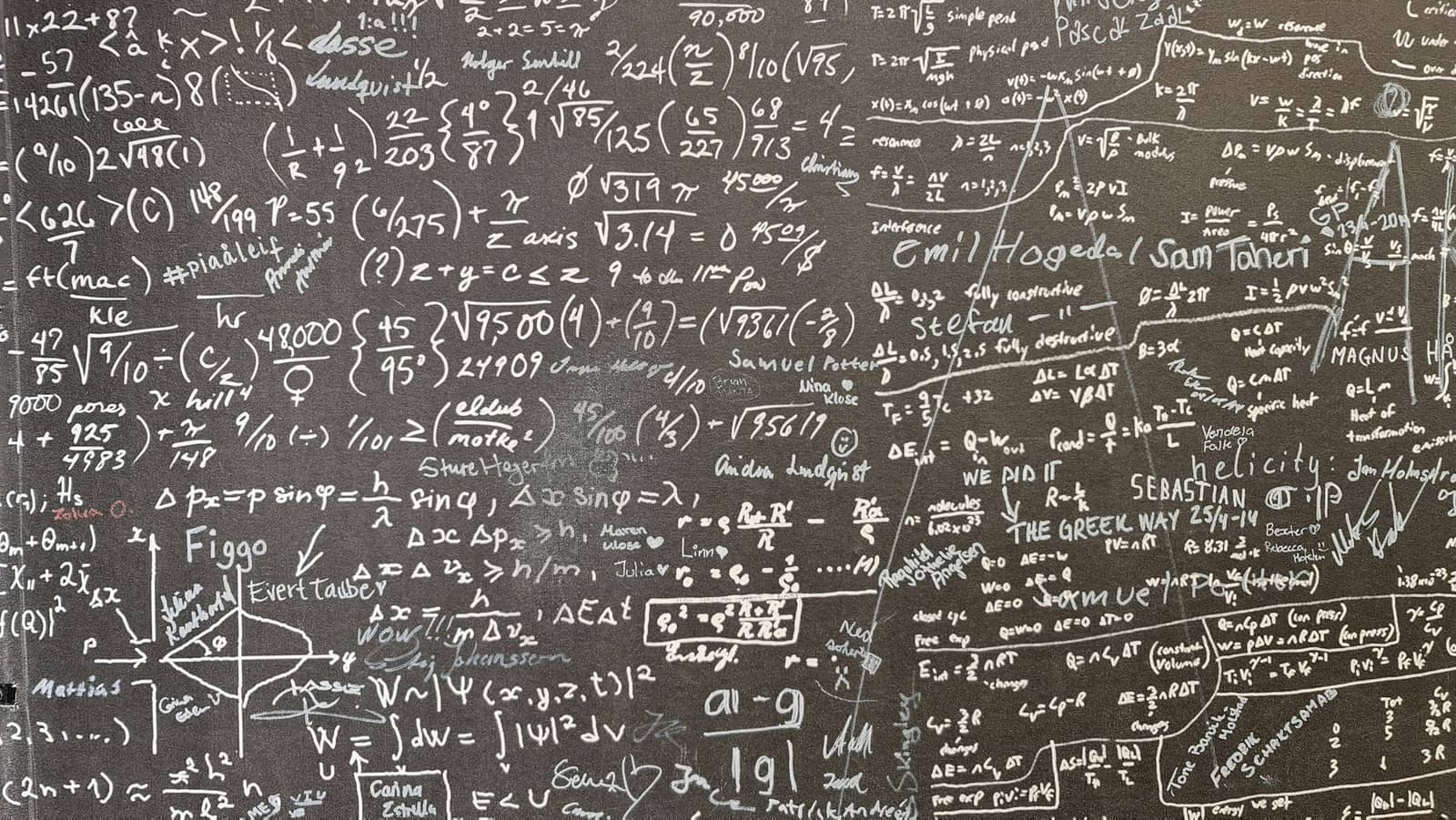
The full lesson

(700/450)⁴ ≈ 6. Blue light scatters about six times more than red. The colour of the sky comes from that ratio.

From a lesson: the number-line question in “Why is the sky blue?”

Instead of making you memorise the formula, we show how you get there. If you find the number yourself, it's hard to forget.

Photo: Thomas T / Unsplash

What's inside

What's here right now

These numbers aren't typed by hand; they're counted straight from the content every few minutes. When a new lesson is added, they change too.

What's new?
64
lessons
97
simulations and activities
12
journeys
60
blog posts

Simulation toolbox · 20 kinds

Fraction model / Number line / Protractor / Electric circuit / Sorting / Planet observatory / Pendulum / Projectile motion / Friction and force / Colour mixer / Probability lab / Robot arm / Sound lab / Perspective and symmetry / Plant growth / Soil layers / Boiling point / Recipe scaler / Eratosthenes / Matching
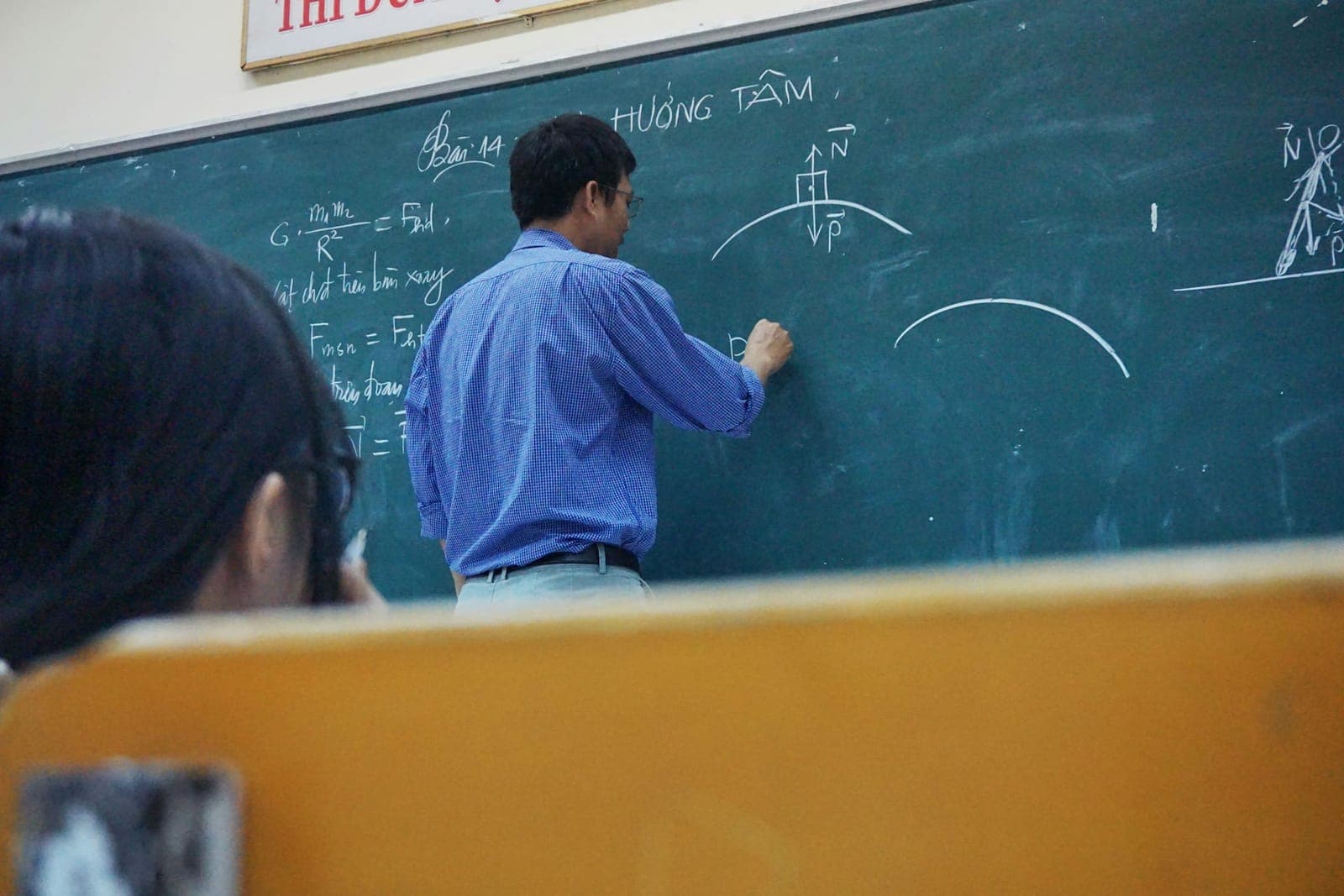
Yeşil tahtaya fizik denklemleri yazan öğretmen, arkadan

Photo: Tra Nguyen / Unsplash

For educators

Bring curiosity into the classroom

Project a simulation on the board, have the class predict, then test it together. It works without an account, so you're not waiting for anyone to log in. If you like, set up a class, give assignments and see in a table where everyone is.

Tools for educators

Frequently asked

Straight answers

Have a question that isn't here? Write to us; we read every message.

Is Kuazara free?

Yes. All lessons, simulations and journeys are currently free. If a paid feature is added in the future, its price and terms will be announced clearly in advance.

Do I have to create an account?

No. You can read lesson previews and try the simulations without an account. An account is only needed to save where you left off, the steps you have completed and your streak.

Are there ads? What do you do with my data?

There are no ads and we don't sell your personal data to anyone. We keep only what your account needs; the details are on the Privacy page. Under-18s sign up together with a parent or guardian.

Who is it for? Is there an age or grade limit?

No limit. Lessons start at middle-school level, but journeys are not tied to a grade; an adult asking "why is it like that?" can start from the same place. Maths and Science fields have grade labels; Curiosity, Art and culture, Nature and farming, Kitchen science, and Culture and history do not.

Does it help with schoolwork or exams?

It helps at school too: the Maths and Science topics follow the Turkish middle-school curriculum and every lesson ends with a short quiz. But we design it to help you really see an idea, not as exam prep.

Are you affiliated with any official institution?

No. Kuazara is an independent learning platform; it is not affiliated with any government body and does not issue official certificates.

Are the lessons available in English?

Yes. Lessons, quizzes, journeys and the blog are available in English as well as Turkish. You can switch language from the menu at any time.

Do you use AI?

Yes, in four places, all with checks. The short facts and mini questions on the site come from a pool: some are written by our team and some are generated with Claude; every generated item passes a second, independent automatic check before it goes live, and content that readers report as wrong goes to an admin for review. Approved educators can generate quiz drafts; every question is solved again independently, and educators read and edit the draft before giving it to a class. Students can ask the “I’m stuck” helper on a lesson page for a hint: it never gives the answer, only talks about that lesson, is limited per day, and teachers can turn it off for their class. In the mistakes notebook students can also ask for a short “Why is it wrong?” explanation once a question’s answer key is open. Account details (name, email, school) are not sent to the AI; emails and phone numbers in what students write are hidden, and messages aren’t stored. Students are asked not to write personal details about themselves.

Pick a question. Give it ten minutes.

Today's question is “Why is the sky blue?”: 4 steps, 1 h 6 min in total. You can start without an account.