Why do we slip on ice?
- 4 steps
- 1 h 6 min
- 7 simulations
Journey · Light
The colours of light, the particles in the air and red evening skies
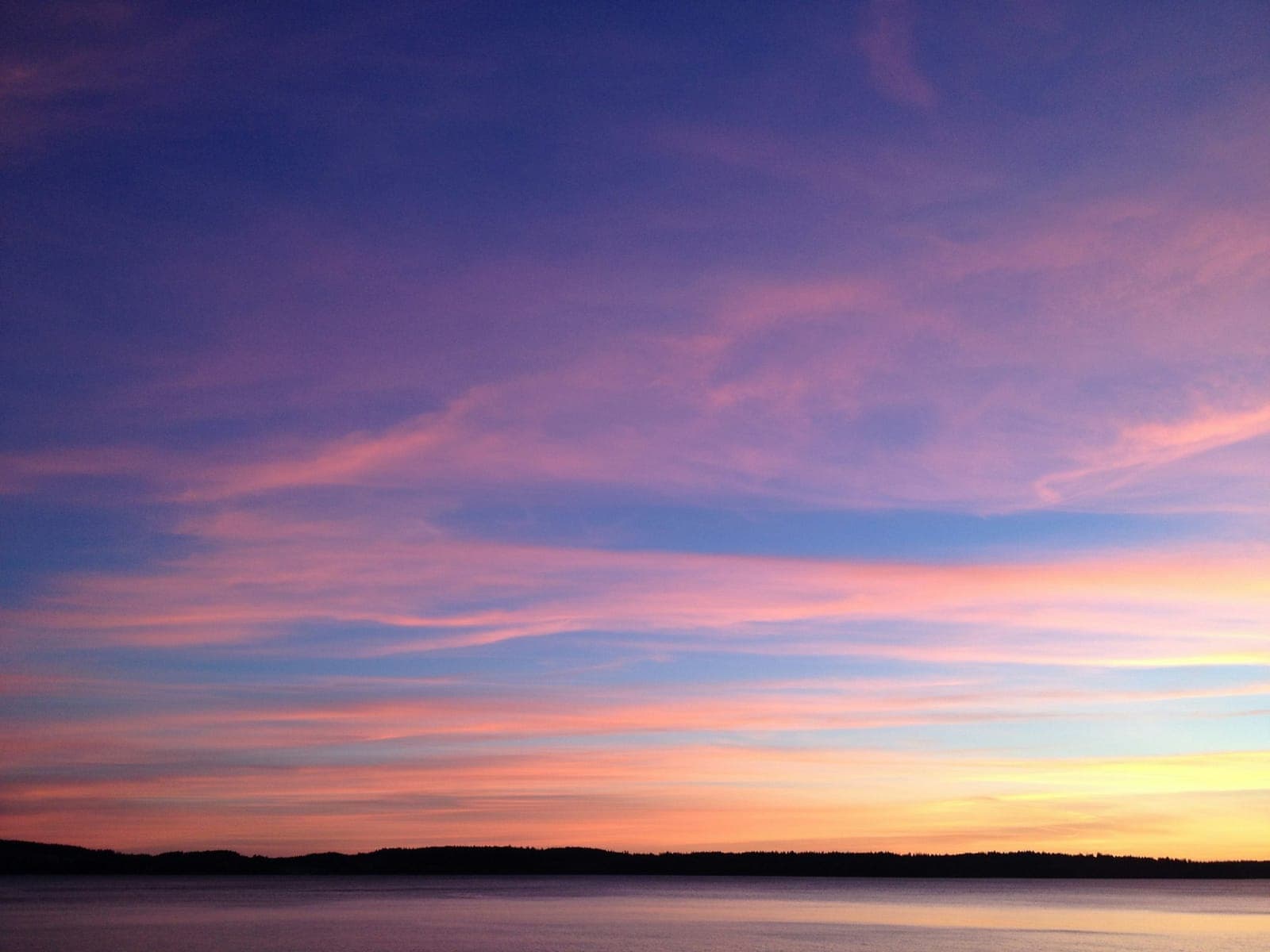
Photo: Alan Jones / Unsplash
The light that comes from the Sun is white, and space is pitch black. So how does the thin layer of air in between manage to paint the whole sky blue? And why does the same sky turn orange and red towards evening? Children ask this question, but the answer kept scientists busy for centuries.
The journey begins with how light relates to colour: you'll experiment to see that white light is really a mixture of many colours, and how colours combine. Then you'll see why the tiny particles in the air scatter blue light more than the other colours, and why sunlight turns red at sunset, when it has a longer path to travel.
In the last step we turn your gaze from the sky to the Earth itself: how does the angle at which sunlight arrives decide the seasons? By following the path of light, one idea explains both the colour of the sky and the heat of summer.
We suggest going in order; each step builds on the one before. You can try every lesson’s simulation without an account.
Step 115 min
White light isn't a single colour. See this for yourself by mixing colours and splitting them apart.
Step 216 min
Particles in the air scatter blue light in every direction; that's where the colour of the sky comes from.
Step 315 min
In the evening, light travels further through the air and the blues are lost on the way. Red is what remains.
Step 420 min
When the angle at which the same light arrives changes, we get summer and winter. Here too, the path of light is what decides.