Why do we slip on ice?
- 4 steps
- 1 h 6 min
- 7 simulations
Journey · Space
From the planets to the light year: getting a feel for scale
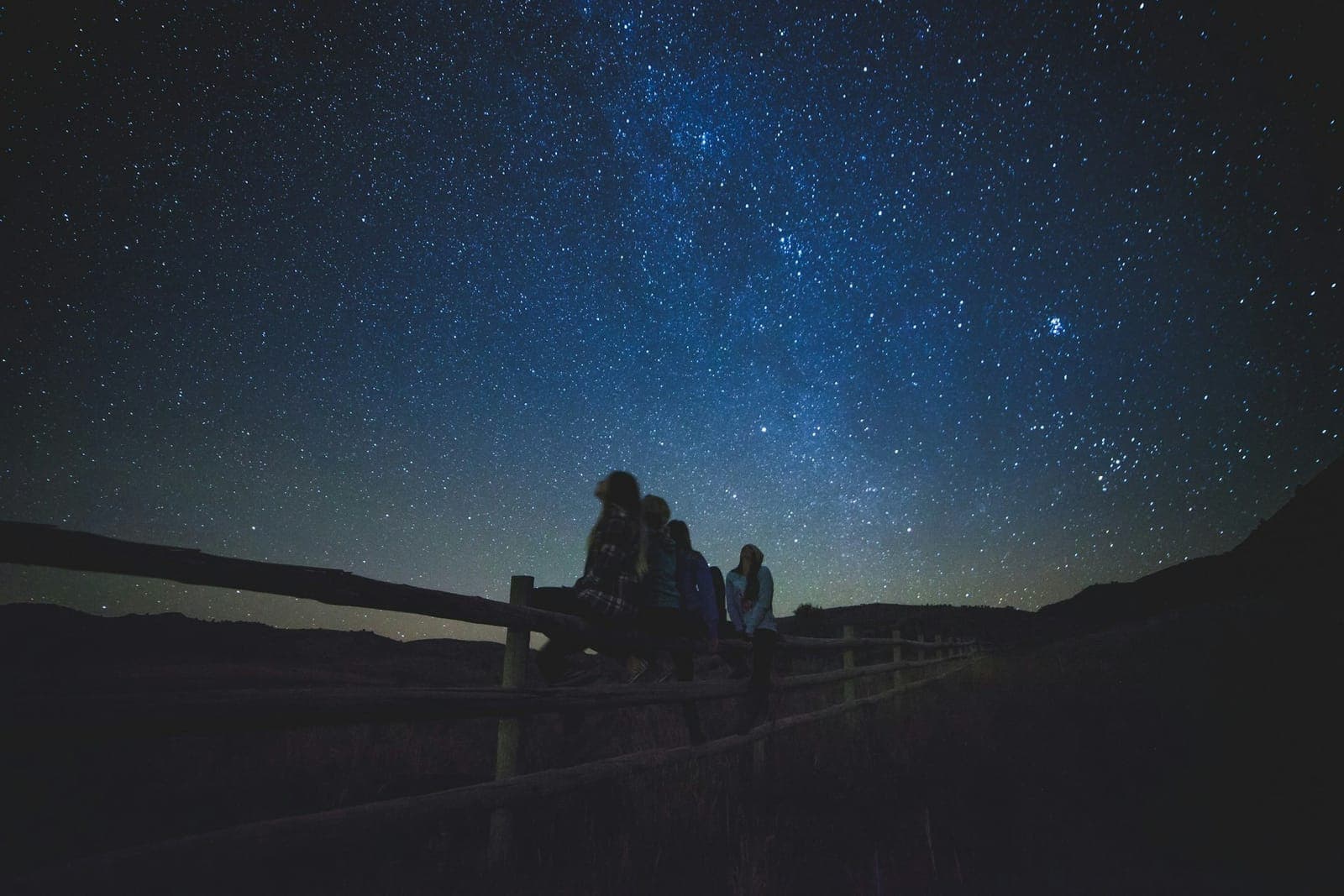
Photo: Greg Rakozy / Unsplash
In textbook pictures of the Solar System, the planets are lined up side by side. If they were drawn to true scale, they wouldn't fit on the page: the Solar System is mostly empty space. Sizes in space are hard to grasp, because none of the measures we use in everyday life ever gets that big.
On this journey you'll first put the planets in order and compare their sizes. Then you'll widen the scale and map the distances onto your own neighbourhood and city, and you'll see why the distance light travels in a year is used as a unit of length. Realising that when you look at a star you are really looking into the past is one of the best ways to get a feel for scale.
Then you come back home: how does the Earth spinning on its axis create night and day, and how does the Moon's orbit create its phases? The journey ends with understanding the daily rhythm of a small planet in a huge universe.
We suggest going in order; each step builds on the one before. You can try every lesson’s simulation without an account.
Step 118 min
First, get to know our neighbours: the order of the eight planets and their real sizes.
Step 217 min
Scale the distances down until they fit; that's when you see how big the empty space really is.
Step 315 min
When kilometres aren't enough, we use the distance light travels as our measure. Looking at a star is looking into the past.
Step 415 min
Come back home from the big scale: the Sun isn't rising and setting; we're the ones turning.
Step 518 min
The Moon's shape doesn't change; the lit part we can see does. Put the phases in order and see why.