About
Remember the why, not just the formula
Most of us memorised maths and science without ever seeing the ideas behind them. The memorising faded after the exam, and what stuck was the belief that we're "not a numbers person". That is why we're building Kuazara.
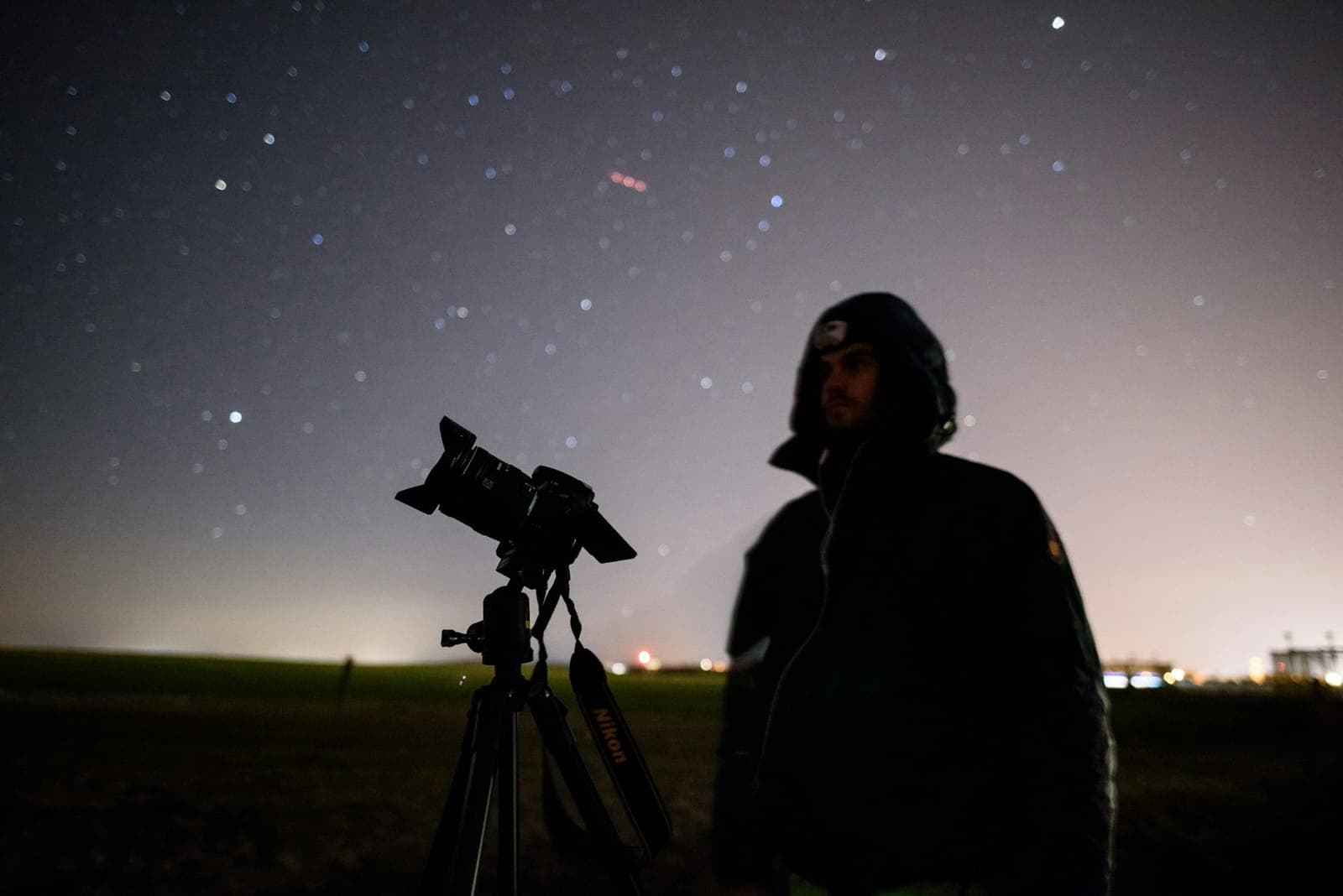
Photo: Jaro Bielik / Unsplash
What we noticed
Most learning products in Turkish follow the same pattern: videos, question banks, practice exams. They are tied to an exam calendar and stop at the end of high school. They have little to offer a middle-schooler who wants to actually see an idea, or an adult who wants to finally understand what they missed at school.
There are good simulation tools out there, but many leave you alone with a blank screen, and the ones that guide you aren't in Turkish. We're trying to fill that gap: short, guided simulations, written in Turkish first.
Every idea is a short experience: you predict first, test it in a simulation, and only then learn why.
Principles
What we hold ourselves to
These aren't slogans. They're the rules we check when we add a feature, or decide not to.
No ads
We don't show ads on any page and we don't sell your personal data. Nothing should be competing for your attention while you learn.
No made-up numbers
The lesson and simulation counts you see on the site are counted straight from the content. We don't invent user numbers, reviews, awards or "thousands of students". If a screen is an example, it says so.
Experiment first, explanation second
Before we explain an idea, we let you play with it. The formula comes last, as a summary of what you observed.
Written in Turkish from the start
Our lessons are written in Turkish, not translated, with everyday examples from Turkey: the crust of a simit, a discount in a shop, sharing a pizza fairly.
A calm space
No public leaderboards, no chat, no messaging with strangers. Under-18s sign up with a parent or guardian. There are streaks and badges, but they only compare you with yesterday’s you.
AI, with checks
Some of the short facts and mini questions that refresh every day are generated by Claude; every item passes a second, independent automatic check before it goes live, and content reported as wrong goes to an admin for review. When students get stuck they can ask a hint helper that never gives the answer away; it only talks about the lesson, messages aren’t stored and teachers can turn it off. Account details (name, email, school) are not sent to the AI; emails and phone numbers in what students write are hidden.
Behind the scenes
How a lesson gets made
Four steps. The order is the same for every lesson; how long each takes depends on the topic.

Photo: Thought Catalog / Unsplash
Find where the idea trips people up
A lesson starts from a question, not a chapter heading: "Why does ice float?", "How does electricity flow?". First we write down the common wrong answers to that question and the point where the idea most often gets muddled. The lesson is built around that point.
A lesson answers one question; everything else is left for another lesson.
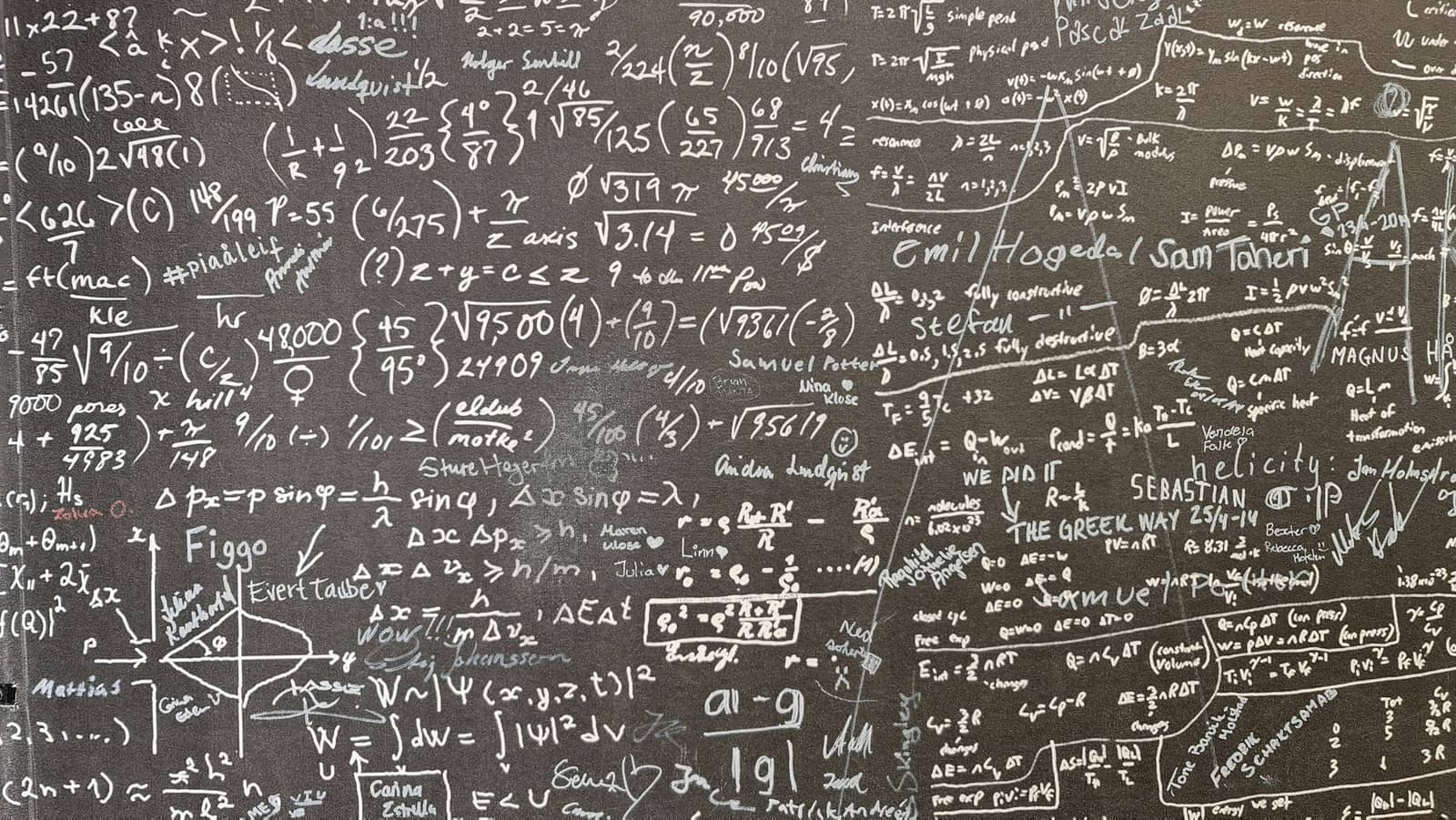
Design the prediction question
The options in the prediction question before each simulation come from real misconceptions. In the gambler’s fallacy lesson we ask after a coin has landed heads five times in a row; the option "more than 50%, because tails is due" is there on purpose. A wrong prediction is the most productive moment of the lesson.
Predictions aren't scored or stored anywhere.
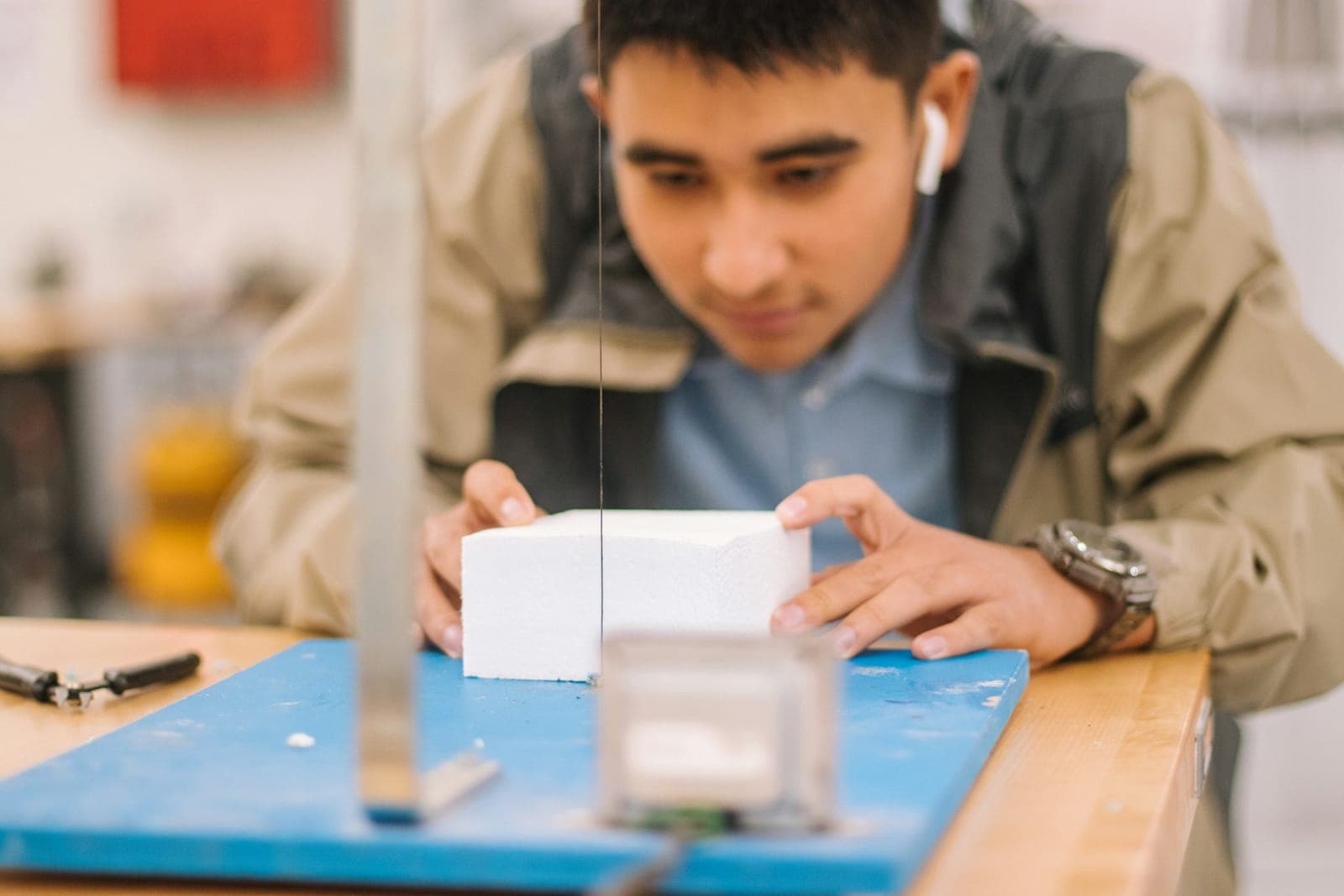
Photo: Jeswin Thomas / Unsplash
Build the simulation
Each simulation puts one thing under your control: the length of a pendulum's string, the brightness of stage lights, the number of dice rolls. When you submit an answer it is checked on the server; the correct answer is never sent to your browser, so you can't find it in the page source.
Simulation types range from light and sound to forces and probability; new ones arrive with each new topic.

Photo: National Cancer Institute / Unsplash
Review, then publish
Before content goes live, every activity and quiz question passes an automated check: if a single activity is incomplete or inconsistent, the whole upload is rejected. If you report a mistake that slipped through, we fix it and note it on the what's new page.
Every lesson ends with a short quiz that explains the reasoning behind each answer.
Where does the name come from?
Quasars are among the brightest objects in the universe: the disc around a giant black hole glows, and jets of light shoot out from either side. That is our logo: a tilted disc, a vertical jet and a golden core.
We're independent
We have no ties to any government body and we don't issue official certificates. The Maths and Science topics follow the Turkish middle-school curriculum; Curiosity, Art and culture, Nature and farming, Kitchen science, and Culture and history aren't tied to any grade.