
Does luck really exist?
- 5 steps
- 1 h 25 min
- 6 simulations
Journey · Physics
From force to friction: the physics inside a single step
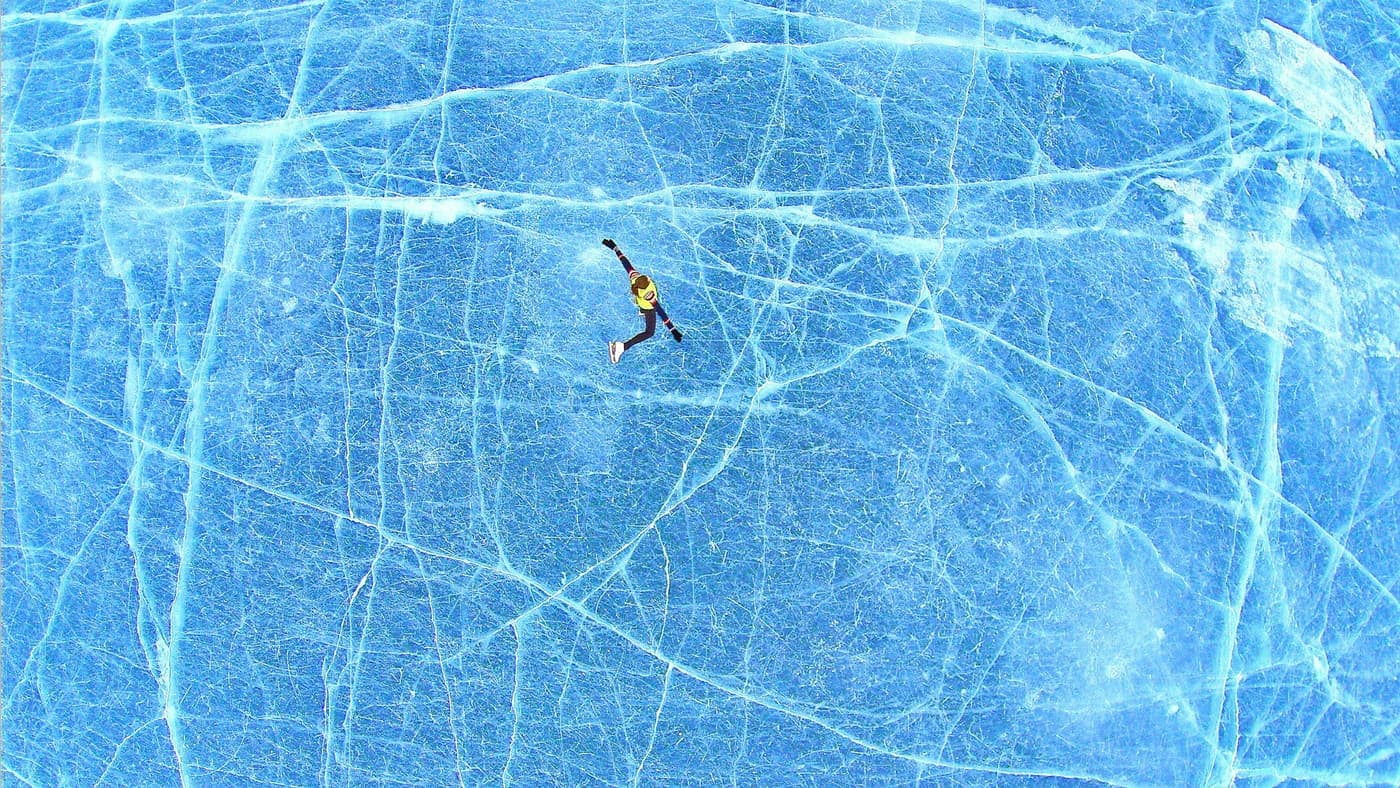
Photo: Bruce Christianson / Unsplash
You're walking along the pavement with ease, and the moment you step onto an icy patch your legs go out of control. Same shoes, same step, same weight. The only thing that changes is the invisible grip between your foot and the ground. The reason we can walk and the reason we fall are one and the same force: friction.
On this journey you'll first see what a force is and how it is measured. Then you'll test why nothing moves when two forces balance each other, and what changes when the balance is broken. In the friction simulation you'll push the same box across different surfaces and measure for yourself why ice is so slippery.
In the last step, speed comes into play: how far does a sliding object travel, and how long does it take to stop? By the end, you'll know enough physics to explain why you take smaller steps on an icy slope next winter.
We suggest going in order; each step builds on the one before. You can try every lesson’s simulation without an account.
Step 115 min
Before talking about slipping, learn how to measure what it means to push or pull something.
Step 218 min
When you stand still, there are forces acting on you, but you don't move. This is where the secret of balance lies.
Step 315 min
The real question: the same box stays put on a carpet but slides on ice. Test for yourself the friction that makes the difference.
Step 418 min
Learn to calculate how fast a sliding object is going and how far it travels.