Field · no grade
Culture and history
The history of science: the people who measured the sky, and ideas that travelled from culture to culture. Discover how knowledge was passed on from Alexandria to Samarkand and from Baghdad to Istanbul, and sort out what is documented, what is an estimate and what is legend by calculating and testing for yourself. For all ages.
Follow these lessons around a question: journeysThe sky-measurers
From a stick's shadow to the circumference of the Earth, from a stone arc with a 40-metre radius to a star catalogue, from the mechanical clock to decimal tables. Discover how people measured the sky in Alexandria, Samarkand and Istanbul by working through their methods yourself.
- Eratosthenes: measuring the Earth with a shadow
In the 3rd century BC, a scholar in Alexandria worked out the Earth's circumference from the difference between the shadows in two cities. Calculate for yourself how parallel rays and alternate interior angles made this possible, and which numbers are documented and which are debated.
- 18 min
- 2 simulations
- Mini quiz
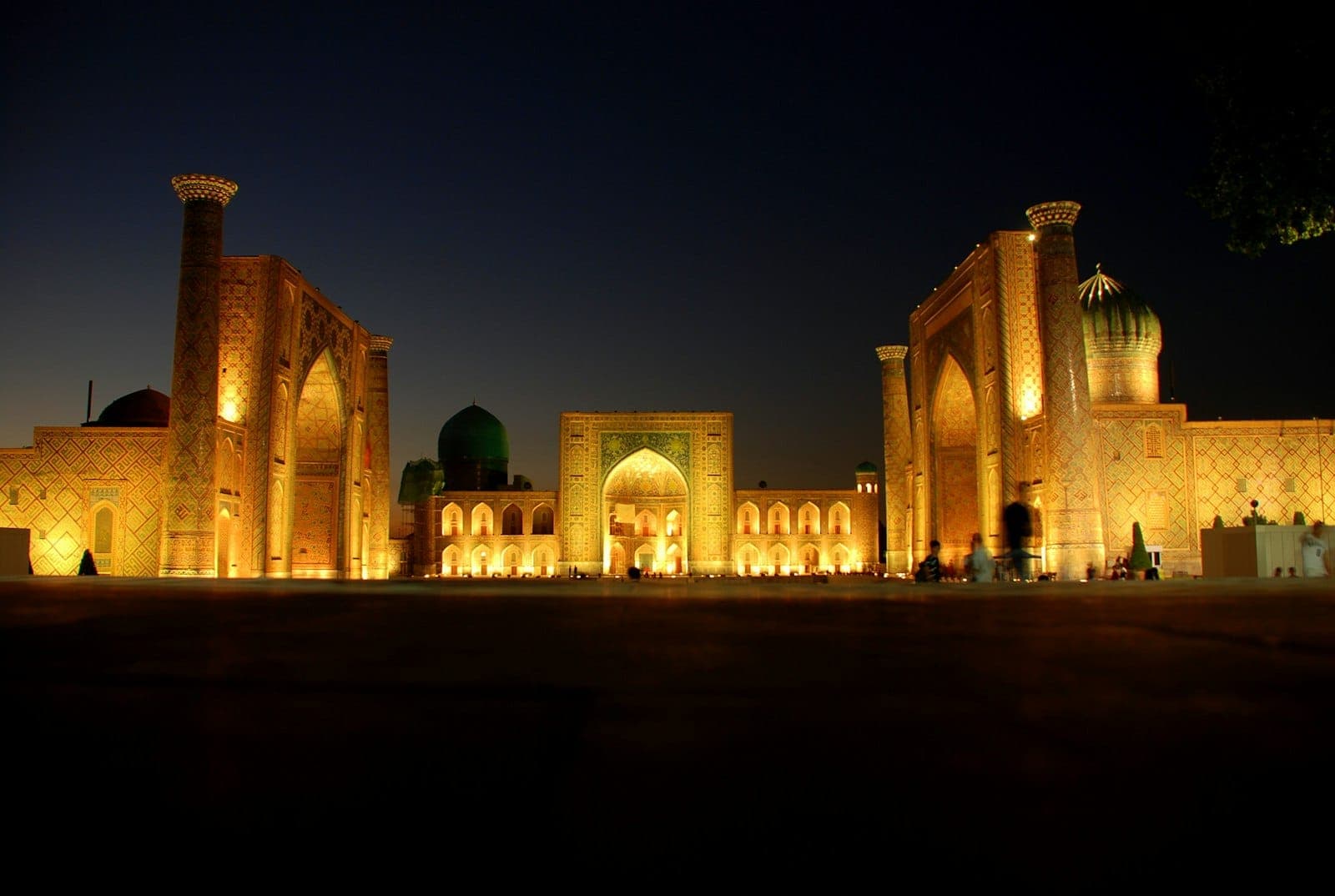
- Ulugh Beg and the Samarkand Observatory: observing with a giant arc
In 15th-century Samarkand, an arc about 40 metres in radius, cut into the ground, was used to measure how high the Sun and other celestial bodies stood. Try out the logic of meridian observation and finding latitude from the Pole Star, and see why a bigger instrument is more precise.
- 18 min
- 2 simulations
- Mini quiz
- Taqi al-Din and the Istanbul Observatory: observing with a clock
The observatory that began observing at Tophane in 1577 was demolished three years later. Explore Taqi al-Din's instruments, the role of the mechanical clock in observation, decimal trigonometric tables and the debated reasons for the demolition, and put the sky-measurers' relay in order.
- 18 min
- 2 simulations
- Mini quiz
How ideas travel
A numeral travels from India to Baghdad and on to Europe; a water clock brings Indian and Greek traditions together in Diyarbakir; a map is pieced together from some twenty sources. Discover how ideas passed from culture to culture, who added what, and which claims are legends.
- The journey of zero and decimals
Writing 0.125 feels completely natural, yet it is the product of a long journey: ideas that grew up separately in Babylon and India (any transfer between them is undocumented and disputed) travelled from Baghdad to Damascus and Samarkand to Europe. Put in order who added what.
- 17 min
- 2 simulations
- Mini quiz
- Al-Jazari: automata and medieval engineering
A book completed in Diyarbakir (Amid) in 1206 describes fifty devices with their measurements and drawings: the Elephant Clock, water-raising machines, musician automata. From the sinking bowl to the camshaft, explore al-Jazari's mechanisms and how much of the "first robot" claim is true.
- 18 min
- 2 simulations
- Mini quiz
- The Piri Reis map and map projections
Drawn on gazelle skin at Gallipoli in 1513, the Piri Reis map was compiled from about twenty sources, including a lost map by Columbus. Explore the compass lines of portolan charts, why flattening a globe always distorts something, and why the "ice-free Antarctica" legend falls apart.
- 18 min
- 2 simulations
- Mini quiz