Why do we slip on ice?
- 4 steps
- 1 h 6 min
- 7 simulations
Journey · Matter
The dance of particles, heat and the states of matter
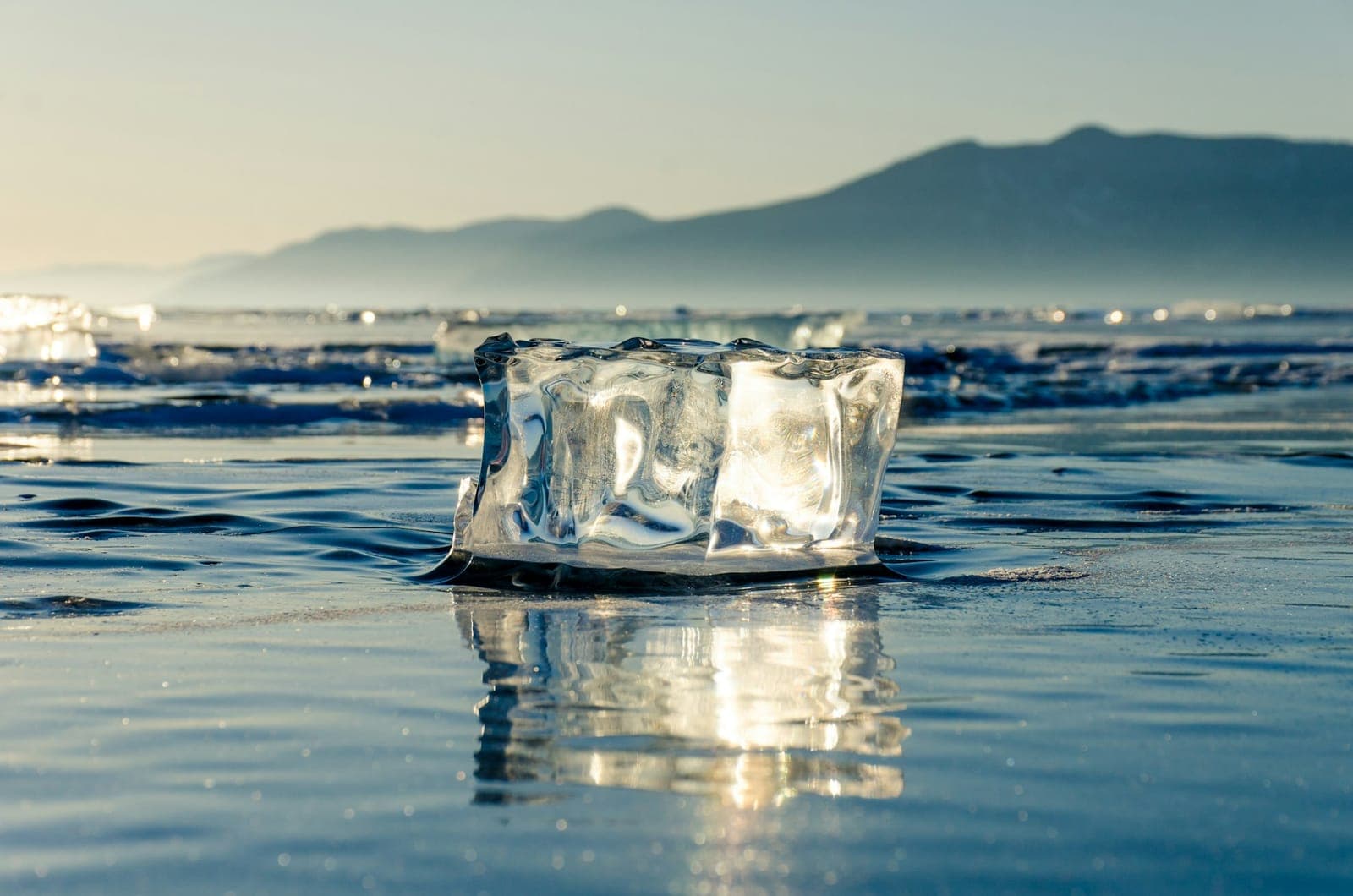
Photo: Daniel Born / Unsplash
When you drop ice into a glass of water, it doesn't sink to the bottom; it stays at the surface. That may seem ordinary to you, but it's actually surprising: most substances are denser when solid than when liquid, so the solid sinks. Water is one of the most important exceptions to this rule, and it's thanks to this exception that lakes don't freeze all the way to the bottom in winter.
The journey starts with the particles that make up matter: in a solid, a liquid and a gas, how close together are the particles, and how much do they move? Then you'll see why heat and temperature aren't the same thing, and how particles behave when heat is transferred.
In the last two steps you'll look at melting, freezing and evaporation, and then at how substances expand when they're heated and contract when they're cooled. Once you've learnt why water expands as it freezes, you'll also be able to explain why water pipes burst in the winter months.
We suggest going in order; each step builds on the one before. You can try every lesson’s simulation without an account.
Step 118 min
Ice, water and steam are the same substance. What makes the difference is the way the particles are arranged.
Step 218 min
Heat and temperature are often mixed up. To understand how ice melts, you need to tell them apart.
Step 320 min
Melting, freezing, evaporation: see why the temperature stays constant for a while during a change of state.
Step 418 min
Substances expand when they warm up. Water, however, expands as it freezes: that's the secret of why ice floats.