Field · no grade
Art and culture
Why does music sound pleasant, how does a painting gain depth, why are Seljuk stars so regular? Explore the science behind art and culture by tuning frequencies, extending lines and rotating patterns. No age limit.
Follow these lessons around a question: journeys- 2 units
- 6 lessons
- about 102 min
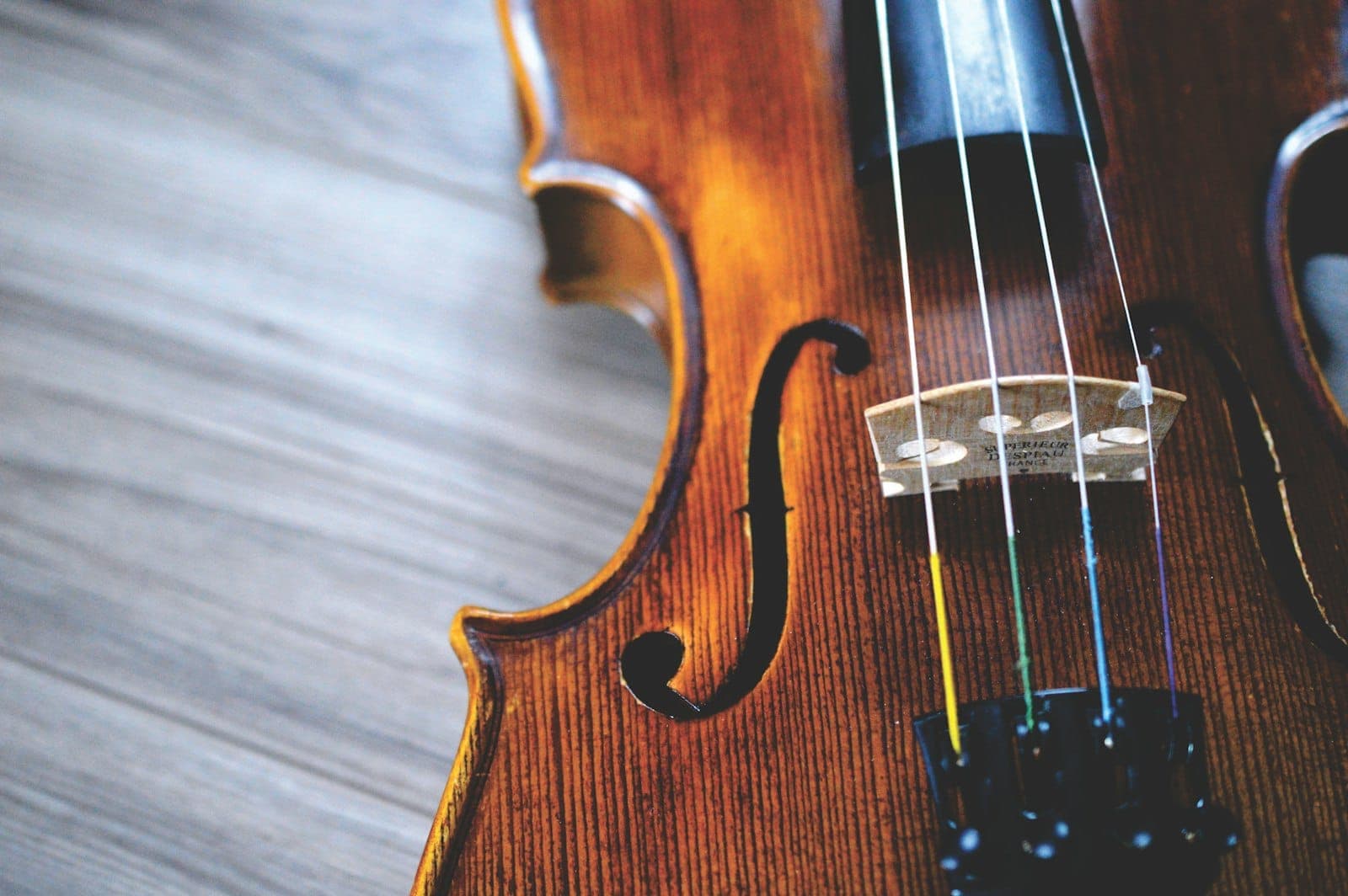
Photo: Providence Doucet / Unsplash
Music and sound
A string vibrates, the air ripples, and your ear hears a note. Find out what sound is, why an octave sounds like "the same note" and why some notes sound good together, by tuning the frequencies with your own hands.
- What is sound? Vibration, frequency and amplitude
When a guitar string vibrates, what actually reaches your ear? See and hear that sound is a vibration wave, that frequency makes a sound higher and that amplitude makes it louder.
- 15 min
- 2 simulations
- Mini quiz
- The octave: why does it sound like "the same note"?
When a man and a child sing the same song, their frequencies differ but the melody sounds the same. Discover the secret of doubling the frequency, the octave, and find the A's on a piano yourself.
- 15 min
- 2 simulations
- Mini quiz
- Why does harmony sound pleasant? Simple ratios and the monochord
Some notes sound sweet together, others tense. From the Pythagoreans' string measurements to today's piano, discover the secret of simple ratios such as the perfect fifth (3:2) and perfect fourth (4:3) in strings and waves.
- 18 min
- 2 simulations
- Mini quiz
Visual arts and geometry
How do you draw depth on a flat surface? Why are the stars in Seljuk tiles so orderly? Is the golden ratio really everywhere? Explore the geometry behind pictures and patterns by drawing, rotating and measuring.
- Perspective and the vanishing point
Why do railway tracks seem to meet in the distance? Find the vanishing point and the horizon line that Renaissance painters used to draw depth on a flat surface, working on a drawing of a road and a building.
- 18 min
- 2 simulations
- Mini quiz
- Symmetry and pattern: the geometry of Seljuk stars
From the dome of the Karatay Madrasa in Konya to the Kubadabad tiles, Anatolia's geometric patterns are built with compass and straightedge. Learn reflection, rotational and translational symmetry, and find out how many turns bring a star pattern back to itself.
- 18 min
- 2 simulations
- Mini quiz
- The golden ratio: myth and fact
The golden ratio is said to be in sunflowers, the Parthenon, the Mona Lisa and credit cards. Which is true and which is exaggeration? Learn the maths of φ ≈ 1.618, its link with the Fibonacci numbers and how to test the claims.
- 18 min
- 2 simulations
- Mini quiz