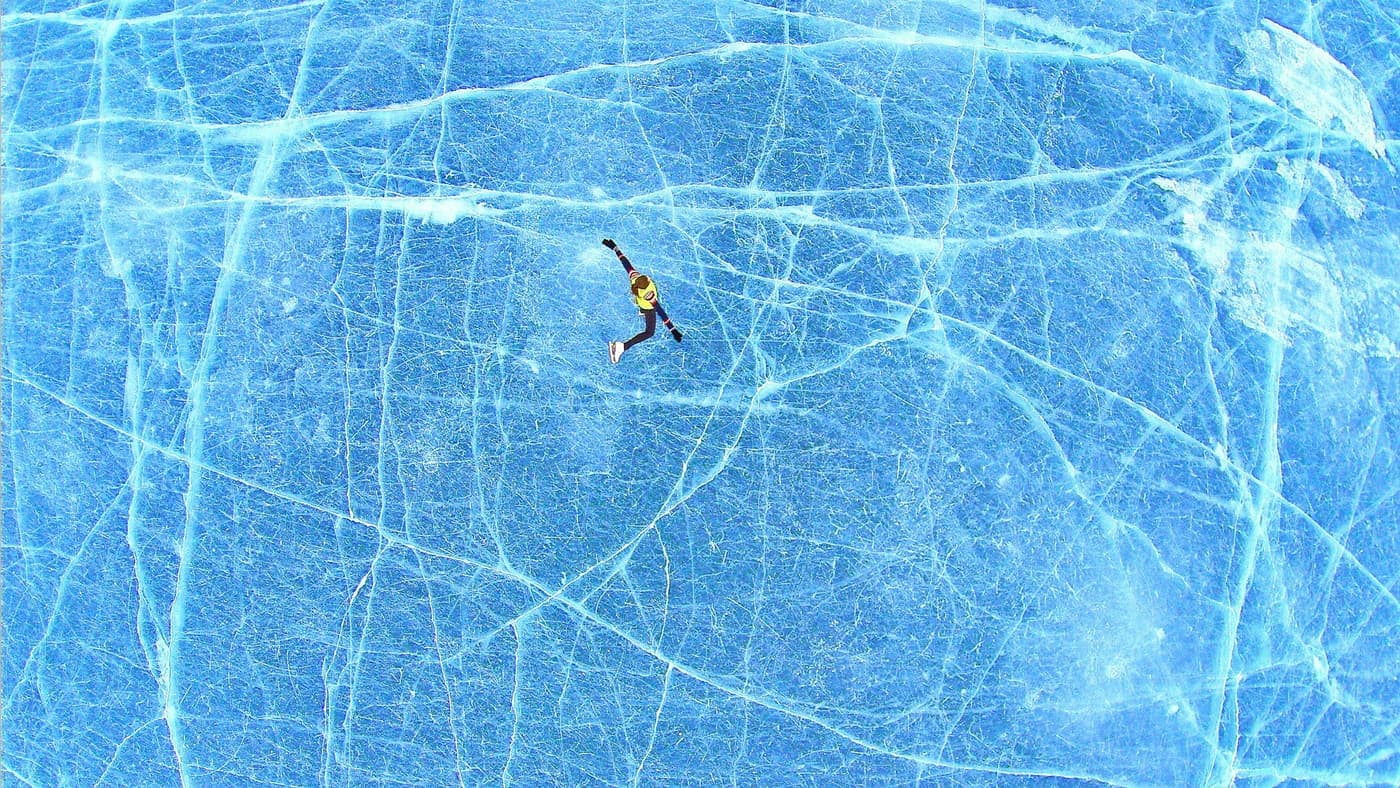
Why do we slip on ice?
- 4 steps
- 1 h 6 min
- 7 simulations
Journey · Art
From vanishing points to Seljuk stars: the geometry of art
A canvas or a wall is completely flat. Yet when we look at a Renaissance painting we see a road stretching away for kilometres, and when we look at a medieval Seljuk dome we see stars turning endlessly. Painters and master craftsmen didn't create this effect at random; they used the rules of geometry.
On this journey you'll first learn linear perspective: why do parallel lines seem to meet in the distance, and what are the vanishing point and the horizon line? Then you'll move on to the geometric patterns of Anatolia and discover how many turns it takes for a star to look the same again, and how colours change symmetry.
The last two steps are about ratios: first you'll firm up what a ratio is, then you'll examine the most famous and most exaggerated ratio of all, the golden ratio. The final stop on this journey is telling, by measuring, which claims are true and which are myths.
We suggest going in order; each step builds on the one before. You can try every lesson’s simulation without an account.
Step 118 min
Understand why railway tracks seem to meet in the distance, and find the vanishing point of a drawing yourself.
Step 218 min
Seljuk stars are built with a compass and straightedge. Rotate a pattern and count its symmetries.
Step 315 min
Before moving on to the golden ratio, firm up how a ratio compares two quantities.
Step 418 min
Is 1.618 everywhere? Measure to separate the real connections from the myths.