
ScienceMiddle school
Phases of the Moon
Move the Moon around the Earth and see how much of its sunlit half we can see from here.
Science · Middle school
Set the light and the carbon dioxide, and see that whichever is scarcest sets the pace of photosynthesis.
In the learning section below the figure, predict, try, complete the tasks and check yourself with short questions.
ScienceMiddle school
Move the Moon around the Earth and see how much of its sunlit half we can see from here.

ScienceMiddle school
Change the date and the latitude: how does the axial tilt change the angle of sunlight and the length of the day?
ScienceMiddle school
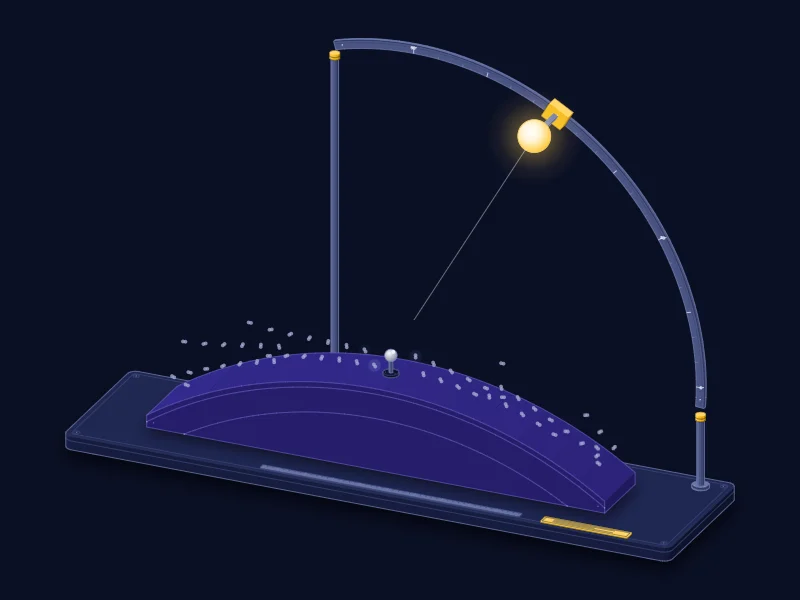
Lower the lamp: air scatters blue light far more than red, giving a blue sky at noon and a red Sun at dusk.
Turn the lamp’s knob or use the sliders; watch the shortest stave
21.0 µmol CO₂ / m²·s
21.0 µmol CO₂ / m²·s
The barrel’s staves: The rate stops level with the shortest stave.
Plenty of light but little CO₂: more light does nothing, more CO₂ helps.
In forest shade (10% sun), what happens to the rate of photosynthesis if you give the leaf more CO₂?
Photosynthesis rate 21.0 µmol CO₂ / m²·s. Limiting factor: CO₂.