What is photosynthesis? How plants make food out of thin air
Does the mass of a huge tree come from the soil or from the air? We explain what photosynthesis is, its equation, why leaves are green and the most common misconceptions, with a floating leaf-disc experiment you can try at home.
By Kuazara Bilim EkibiPublished: Updated: 8 min read
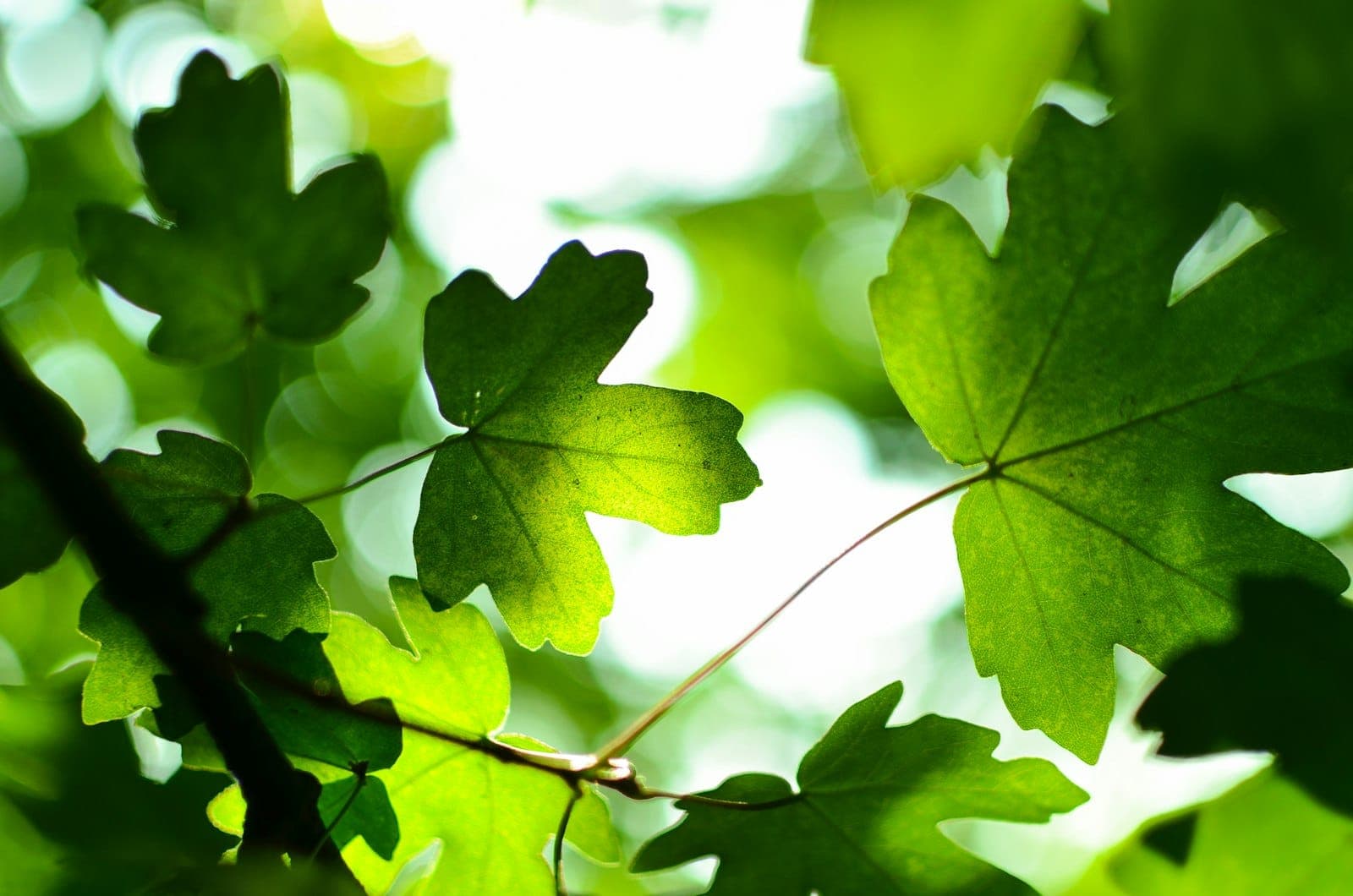
Photo: Rémi Walle / Unsplash
In this article · 8 sections
Think of a walnut tree. It starts as a tiny seed and over the years grows to weigh several tonnes. So where does all that mass come from? Most people’s first answer is “the soil”. The surprising but correct answer is this: most of a tree’s dry mass comes from the air, or more precisely from the carbon dioxide in the air. The process that makes this possible is called photosynthesis. In this article we explain what photosynthesis is, how it happens, and why almost all life on Earth depends on it.
What is photosynthesis? A short definition
Photosynthesis is the process in which plants, algae and some bacteria use light energy to make sugar (glucose) from carbon dioxide and water, releasing oxygen as they do so. The word itself says as much: “photo” means light, and “synthesis” means putting together to make something.
The overall equation for photosynthesis is written like this:
In other words, six molecules of carbon dioxide and six molecules of water, with the help of light energy and chlorophyll, become one molecule of glucose and six molecules of oxygen. If you count the atoms on both sides of the equation (6 carbon, 18 oxygen, 12 hydrogen), you will see they are equal. Atoms are not destroyed, only rearranged.
This equation is really a summary of many small steps. But the main idea is simple: light energy is converted into energy stored in chemical bonds. The glucose the plant makes is used as a source of energy, and it is also turned into larger molecules such as starch and cellulose, which build the plant’s stem, leaves and roots.
Where does photosynthesis happen? Chloroplasts and chlorophyll
Photosynthesis takes place in organelles called chloroplasts inside plant cells. A single leaf cell can contain dozens of chloroplasts. Inside the chloroplasts is a green pigment that captures light: chlorophyll.
Carbon dioxide enters through tiny openings, usually on the underside of the leaf, called pores (stomata). Water is taken up from the soil by the roots and carried to the leaves through the transport vessels in the stem. Some of the oxygen produced leaves again through the stomata.
Why are leaves green?
Chlorophyll does not use all the colours in sunlight equally. It absorbs mostly blue-violet and red light, and largely reflects and transmits green light. Because this green light is what reaches our eyes, leaves look green. So, interestingly, a leaf being green tells you that green is the colour the plant uses least.
The same thing explains why leaves turn yellow in autumn: the plant breaks down its chlorophyll and recovers it. Yellow and orange pigments (carotenoids), which were in the leaf all along but hidden by chlorophyll’s dominant green, come into view.
A factory in two stages
Scientists study photosynthesis in two main stages:
- Light-dependent reactions: Chlorophyll captures light. With this energy, water molecules are split, oxygen is released, and energy-carrier molecules the cell can use (ATP and NADPH) are produced.
- Light-independent reactions (the Calvin cycle): Using the energy carriers made in the first stage, carbon dioxide taken from the air is turned step by step into sugar molecules.
There is a very important detail here: the oxygen released in photosynthesis comes from water, not from carbon dioxide. In the 1940s scientists showed this with experiments using water containing a heavy isotope of oxygen. When the heavy isotope was in the water, it also turned up in the oxygen that was released.
Where does a tree get its mass?
Let’s go back to the question at the start. In the 17th century the Flemish scientist Jan Baptist van Helmont carried out a famous experiment. He planted a small willow sapling in a weighed amount of soil and gave it nothing but water for five years. At the end, the willow’s mass had increased by about 74 kilograms, but the soil had lost only about 57 grams (roughly two ounces, in the units of his day). Van Helmont concluded that the mass came from the water. He was partly right, but very little was known about gases at the time.
Today we know that most of a tree’s dry mass is made of carbon atoms from the carbon dioxide taken from the air during photosynthesis. Water also makes an important contribution by supplying hydrogen and oxygen. Minerals taken from the soil, such as nitrogen, phosphorus and potassium, are vital, but they make up only a small part of the total mass.
Examples from everyday life
- Pot plants and windowsills: It is no coincidence that a pot plant leans towards the light. Light is the fuel for photosynthesis.
- Greenhouses: In the greenhouses of Antalya and Mersin, growers carefully control light, temperature and watering. In some modern greenhouses, controlled amounts of carbon dioxide are added to the air to speed up photosynthesis.
- Hazelnut orchards and tea plantations: The lush green of Turkey’s Black Sea coast is the visible face of a giant photosynthesis system running on plenty of rain and light.
- The oceans: A large share of the Earth’s oxygen comes not from forests on land but from microscopic algae in the seas (phytoplankton).
Common misconceptions
“Plants only photosynthesise; they don’t respire.” Wrong. Like us, plants carry out cellular respiration: they break down glucose with oxygen to release energy. This respiration goes on day and night. During the day photosynthesis runs faster than respiration, so the plant gives out oxygen overall.
“Plants get their food from the soil.” They take minerals and water from the soil, but they make their food, sugar, themselves. Fertiliser is not the plant’s “meal”; it is more like a vitamin and mineral supplement.
“Photosynthesis only happens in leaves.” Photosynthesis can happen in any green tissue that contains chlorophyll. Young green stems and unripe fruit also photosynthesise a little.
“Plants are dangerous in the bedroom because they give off carbon dioxide at night.” The carbon dioxide a pot plant releases through respiration at night is tiny compared with what a person sleeping in the room breathes out. This common belief does not pose a realistic danger.
Try it at home: Floating leaf discs
With this experiment you can see with your own eyes that photosynthesis produces oxygen. All you need is help from an adult.
You will need: Spinach leaves, a needle-free syringe (the plastic kind sold in pharmacies), a glass of water, a pinch of bicarbonate of soda (about the tip of a teaspoon), a few drops of washing-up liquid, a drinking straw or the cap of a thick pen, a desk lamp.
- Stir a pinch of bicarbonate of soda and a drop of washing-up liquid into the water. The bicarbonate gives the water a source of carbon dioxide.
- Use the pen cap to cut about 10 small discs out of the spinach.
- Put the discs in the syringe and draw up some of the bicarbonate water. Cover the tip of the syringe with your finger and pull the plunger back. This draws the air out of the leaf. Repeat a few times and the discs will sink.
- Empty the discs into the glass of bicarbonate water and put the glass under the lamp.
- Within a few minutes you will see the discs rise to the surface one by one.
Why? The oxygen produced by photosynthesis collects in the air spaces inside the leaf and makes the disc lighter. If you leave a glass in the dark, you will see the discs rise much more slowly or not at all. You can also explore the effect of light intensity by moving the lamp closer and further away.
Summary
- Photosynthesis is the production of glucose and oxygen from carbon dioxide and water using light energy.
- It takes place in chloroplasts; chlorophyll captures the light.
- Chlorophyll absorbs red and blue light and reflects green, which is why leaves are green.
- The oxygen released comes from water.
- Most of a tree’s dry mass comes from carbon dioxide in the air.
- Plants both photosynthesise and respire.
For more on living things and energy transformations, take a look at our Science topics and our biology articles.
Frequently asked
4 questionsWhat is photosynthesis?
What is the equation for photosynthesis?
Where does the oxygen released in photosynthesis come from?
Do plants respire at night as well?
Sources
3 sources- #photosynthesis
- #plants
- #chlorophyll
- #carbon dioxide
- #oxygen
- #cell