What is osmosis? Cell membranes, salt water and the secret of pickled cucumbers
Why does a cucumber shrivel in salt water, and why does a raisin swell in water? Using Turkish pickles as our example, we explain what osmosis is, how the cell membrane lets some things through, and why drinking seawater makes you thirstier.
By Kuazara Bilim EkibiPublished: Updated: 7 min read
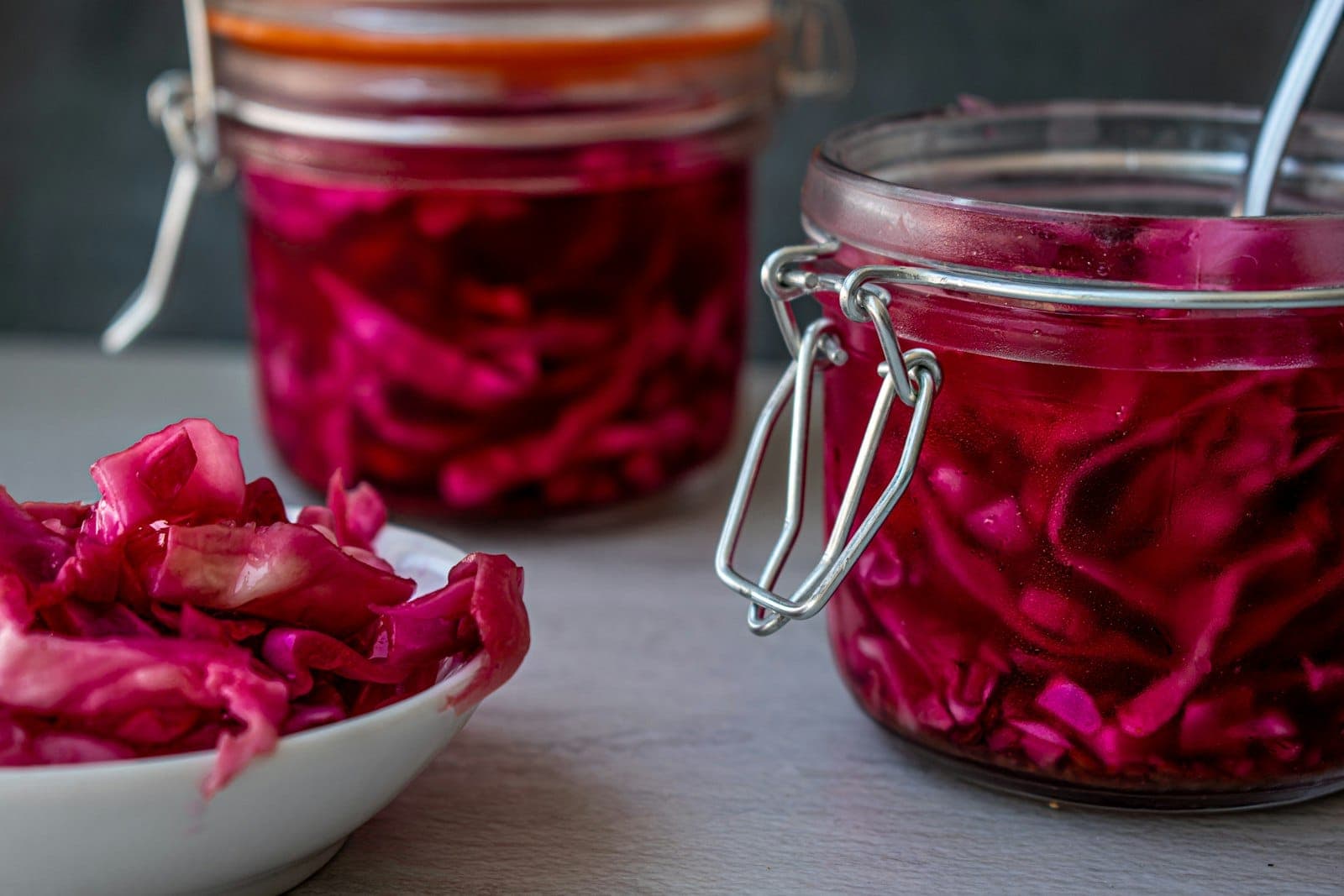
Photo: The Matter of Food / Unsplash
In this article · 8 sections
If you have ever watched your mother or grandmother make turşu (Turkish pickles: vegetables preserved in salty brine), you will have noticed something. A few days after fresh, plump cucumbers go into the salt water, they shrivel a little, change colour and turn softer. When aubergine is salted and left to stand before frying, drops of water appear on its surface. On the other hand, if you leave a handful of raisins in water, they swell up and become plump. Behind all of these lies a single idea: osmosis. In this article we explain what osmosis is, what role the cell membrane plays in it, and where we meet it in everyday life.
First, diffusion: why do substances spread out?
When you spray perfume in one corner of a room, after a while the smell spreads through the whole room. When you drop a single drop of ink into a glass of water, the ink slowly spreads throughout the water. This is called diffusion.
Diffusion happens because molecules are constantly moving at random. There is a net spread from where there are many molecules to where there are few, because more molecules leave the crowded region than enter it. In the end the substance is evenly spread everywhere. Nobody “pushes” the molecules here; random motion leads to balance by itself.
What is osmosis?
Osmosis is the movement of water through a selectively permeable membrane from the side with a lower concentration of dissolved substances to the side with a higher concentration. You can also put it like this: water moves from where “there is a lot of water” to where “there is little water”.
The key phrase here is selectively permeable membrane. A membrane like this lets water molecules through but blocks, or greatly slows, dissolved substances such as salt or sugar. Because the dissolved substance cannot cross the membrane, the way to reach balance is for the water to move.
The cell membrane is exactly this kind of membrane. Water molecules can pass through it; in fact, the membranes of many cells contain special channel proteins (aquaporins) that let water through quickly. Salt ions and sugar molecules, by contrast, cannot pass through the membrane freely.
A cell in three different surroundings
Imagine placing a cell in different liquids. Compared with the fluid inside the cell, the concentration of the surrounding liquid can fall into three cases:
- Hypertonic solution: The solution outside is more concentrated (for example, salt water). Water leaves the cell and the cell shrinks.
- Hypotonic solution: The solution outside is more dilute (for example, pure water). Water enters the cell and the cell swells.
- Isotonic solution: Inside and outside have the same concentration. Water moves equally in both directions; the cell’s volume does not change.
Plant and animal cells respond to these situations differently. Plant cells have a strong cell wall outside the membrane. A plant cell that takes in water in a hypotonic solution swells, but the wall stops it from bursting. The pressure the cell contents exert on the wall (turgor pressure) keeps the plant upright. When a pot plant that hasn’t been watered droops, it is because its cells have lost water and with it this pressure.
Animal cells have no cell wall. So if red blood cells are put in pure water, they take in water, swell and can eventually burst. In a very salty liquid, they lose water and shrivel.
Pickles, aubergines and raisins
Now let’s look at the examples from the start through the lens of osmosis.
Pickled cucumbers: The pickling brine is much saltier than the fluid inside the cucumber’s cells. In other words, the cucumber is in a hypertonic solution. Water moves out of the cells into the salt water, which is why the cucumber shrivels. Salt has another job in pickling too: most microbes also lose water, so they struggle to multiply in a very salty environment. This helps pickles keep for a long time without spoiling. The sourness of pickles, on the other hand, comes separately from acid made by certain helpful bacteria, or from added vinegar.
Salting aubergine: When you sprinkle salt on sliced aubergine, water comes out of the cells at the surface. That is why droplets form on the aubergine’s surface.
Raisins and dried apricots: The cells of dried fruit contain very little water and a lot of sugar. When the fruit is put in water, its surroundings become hypotonic; water enters the cells and the fruit swells. Making hoşaf (a traditional dessert drink of dried fruit soaked or stewed in water) is really an osmosis experiment.
Jam: The high sugar content of jam works in the same way as salt. Because microbes lose water, jam keeps for a long time.
Why does drinking seawater make you thirsty?
This is a vital consequence of osmosis. Seawater is much saltier than our body fluids. When you drink seawater, the extra salt that enters your body has to be removed by the kidneys. But our kidneys cannot produce urine as salty as seawater. So to get rid of the salt in the seawater you drank, you have to use more water than you drank. The result: the body loses water and thirst gets worse.
This is also why the saline drip (physiological saline) given through a vein in hospitals contains about 0.9 per cent salt. This concentration is roughly isotonic with the inside of blood cells, so the cells neither swell nor shrivel.
Common misconceptions
“In osmosis, salt moves.” No. In osmosis it is the water that moves. Because salt cannot cross the selectively permeable membrane, the water moves instead.
“Water moves from the concentrated solution to the dilute one.” It’s the other way round. Water moves from the side with a lower concentration of dissolved substances to the side with a higher concentration.
“Osmosis and diffusion are completely different things.” Osmosis can be thought of as the diffusion of water through a selectively permeable membrane. In other words, osmosis is a special case of diffusion.
“The cell uses energy to draw in water.” Osmosis is a passive process; the cell does not spend energy directly on it. However, cells can create concentration differences by pumping ions across the membrane (this does need energy), and so indirectly influence which way the water moves.
Try it at home: Potato slices
You will need: A raw potato, two glasses, water, two tablespoons of salt, a knife (let an adult do the cutting).
- Cut two thin sticks or slices of the same size from the potato.
- Put plain water in one glass, and water with plenty of salt in the other, and stir.
- Put the slices in the glasses and wait 30-40 minutes.
- Take the slices out and try bending them.
The slice from the salt water goes soft and bends easily, because it has lost water. The slice from the plain water stays firm and stiff, and may even get a little longer. If you have kitchen scales, you can also weigh the slices before and after the experiment to measure the change in mass.
Summary
- Diffusion is the spontaneous spreading of substances from where there is more of them to where there is less.
- Osmosis is the movement of water through a selectively permeable membrane from the side with less dissolved substance to the side with more.
- The cell membrane is selectively permeable: it lets water through but largely holds back salt and sugar.
- In salt water a cell loses water (pickles); in pure water it gains water (raisins).
- Drinking seawater makes thirst worse because it causes the body to lose water.
For more on cell structure and how substances cross membranes, take a look at our Science topics and our biology articles.
Frequently asked
4 questionsWhat is osmosis?
What is the difference between osmosis and diffusion?
Why does a cucumber shrivel in salt water?
Why is drinking seawater dangerous?
Sources
3 sources- 1.OpenStax, Biology 2e — Bölüm 5: Structure and Function of Plasma Membranes (opens in a new tab)openstax.org
- 2.Khan Academy — Membranes and transport
- 3.Encyclopaedia Britannica — Osmosis (opens in a new tab)britannica.com
- #osmosis
- #cell membrane
- #diffusion
- #pickles
- #cell