ScienceMiddle school
Phases of the Moon
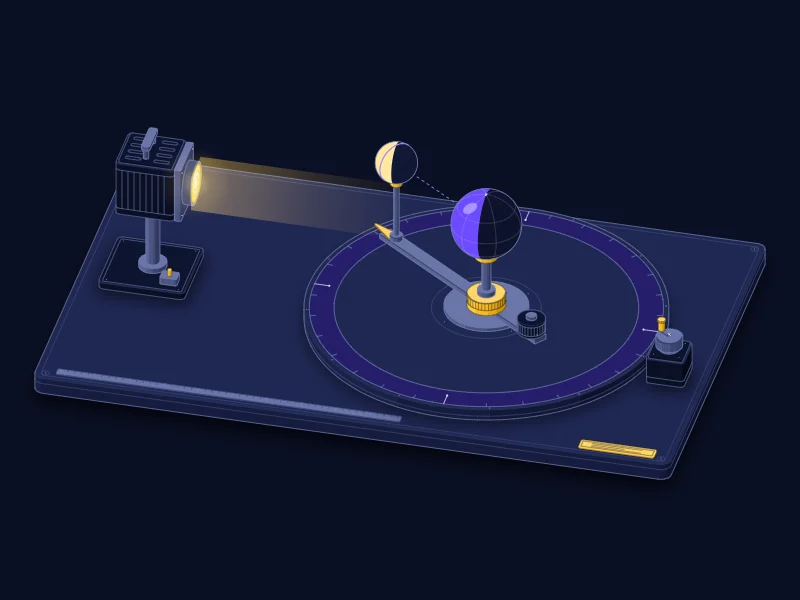
Move the Moon around the Earth and see how much of its sunlit half we can see from here.
Science · Middle school
Heat different masses with the same amount of heat: the joules are equal, the thermometer readings are not.
In the learning section below the figure, predict, try, complete the tasks and check yourself with short questions.
ScienceMiddle school
Move the Moon around the Earth and see how much of its sunlit half we can see from here.
ScienceMiddle school
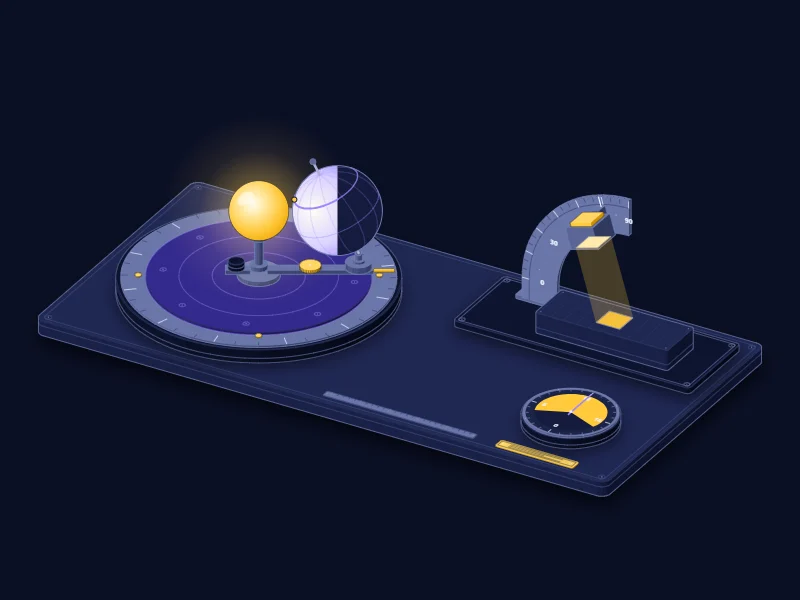
Change the date and the latitude: how does the axial tilt change the angle of sunlight and the length of the day?
ScienceMiddle school
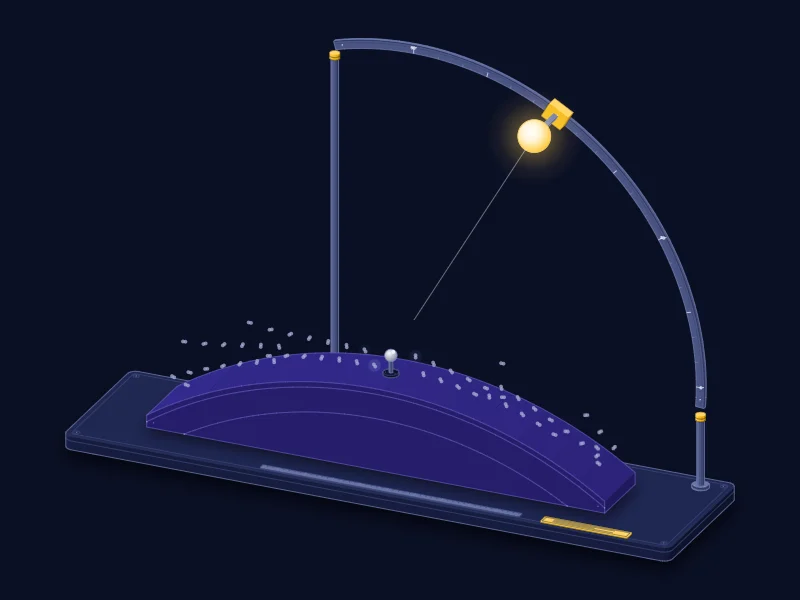
Lower the lamp: air scatters blue light far more than red, giving a blue sky at noon and a red Sun at dusk.
Change the masses, heat: the joules match, the degrees don’t
36.0 kJ → A 54.4 °C · B 28.6 °C
Given the same heat, Beaker A warmed 4 times as much.
Heat is energy transferred (J); temperature measures the average motion of the particles (°C). The same heat is shared among few particles in a little liquid and among many in a lot; a liquid with a smaller specific heat warms more for the same heat.
Type a number; a decimal comma works too. Mass and liquid are set per beaker; power, starting temperature and time are shared.
Both burners run at the same power for the same time. Beaker A holds 0.25 kg of water, beaker B 1 kg. When the time is up, which has warmed more?
Both beakers were given 36.0 kJ of heat. Beaker A is at 54.4 °C, beaker B at 28.6 °C.