Skip to content

Blog

Science you're curious about

Why is a rainbow curved? Why does a magnet stick to the fridge but not to wood? Short, sourced, clear articles.

  • Technology and Engineering

    How does a four-stroke engine work? Intake, compression, power and exhaust

    In a petrol engine the piston goes down and up while the crankshaft turns twice, completing the intake, compression, power and exhaust strokes. On an engine cut in half, we explain the crank and rod, the camshaft that runs the valves, the compression ratio and how a diesel differs.

    10 min read

  • Technology and Engineering

    How does a fridge keep things cold? The vapour-compression refrigeration cycle

    A fridge does not make cold; it takes heat from inside and carries it out of its back into the room. We meet the compressor, the condenser, the capillary tube and the evaporator one by one and follow the cycle in which the refrigerant takes in heat as it boils and gives it out as it condenses.

    13 min read

  • Technology and Engineering

    How does a web page reach you? The journey of packets on the internet

    The moment you tap a link, the page is split into hundreds of small packets; they travel by different paths, sometimes arrive out of order, and lost ones are sent again. We explain DNS, IP addresses, routers, TCP and delay with a sorting plant you can play with.

    11 min read

  • A large iceberg resting on frozen sea ice under a starry purple night sky
    Physics

    What is density? Why a huge ship floats while a small stone sinks

    A steel ship weighing thousands of tonnes floats, while a stone that fits in your palm sinks. The answer is not weight but density. We explain what density is, Archimedes' principle, why ships do not sink, and a safe egg experiment you can try at home.

    7 min read

  • Close-up of a hand writing with a ballpoint pen in a spiral squared-paper notebook
    Learning Science

    How do you keep a mistakes notebook? The science of learning from errors

    Solving a wrong question and moving on carries the mistake into the next exam. What goes in a mistakes notebook, how do you separate kinds of errors, and when do you return to them? A research-based method for paper and for Kuazara's mistakes notebook.

    6 min read

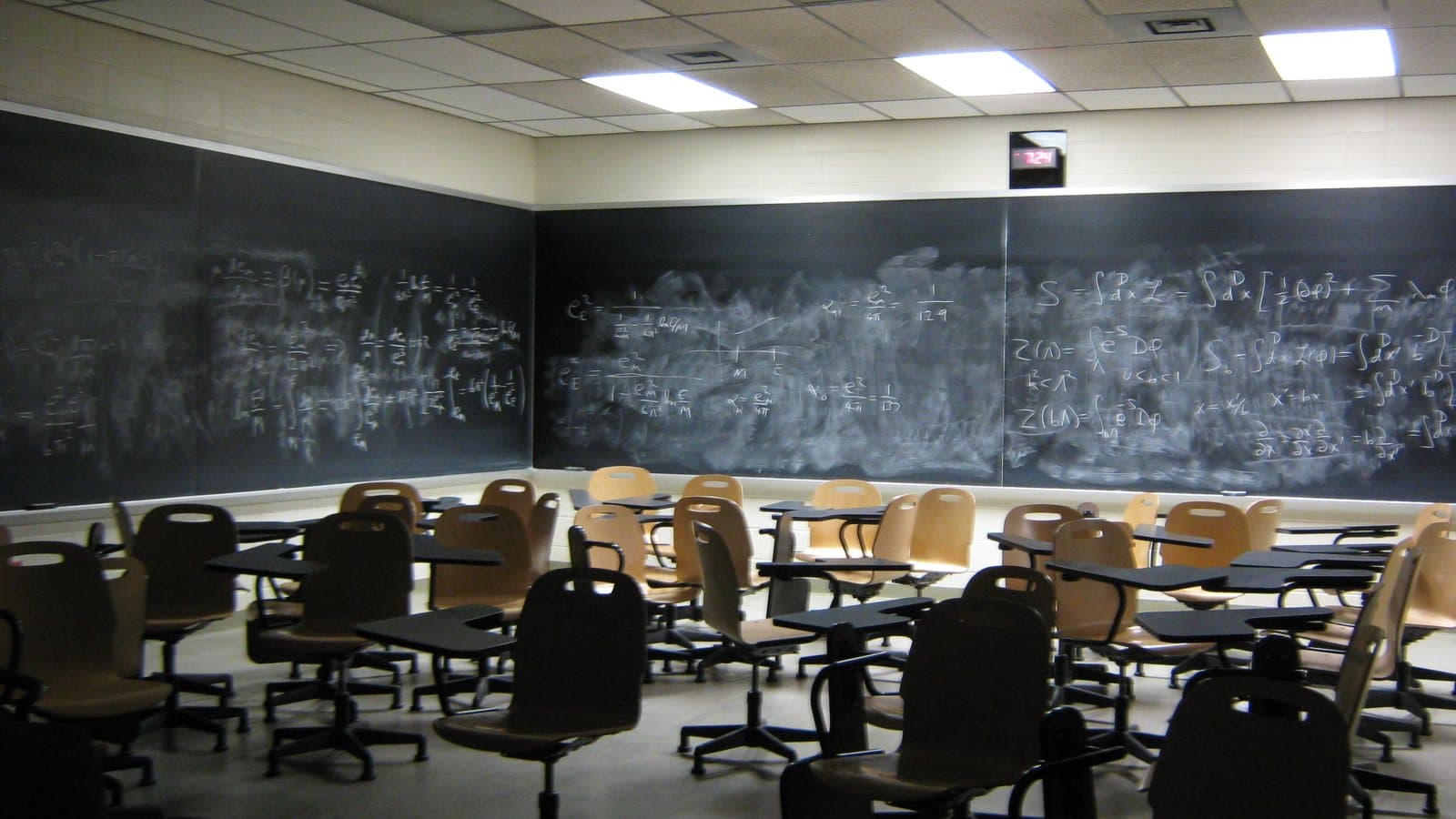
  • An empty classroom with chairs and blackboards covered in mathematical formulas
    Learning Science

    Projecting a simulation: a 40-minute class activity plan

    A simulation on the board stays a show if students only watch. A 40-minute lesson flow with prediction, pair talk, a turn at the board, explanation and a short close, illustrated with Kuazara's friction lesson.

    6 min read

  • An Apollo 15 astronaut standing next to the lunar rover beside Hadley Rille on the Moon, in a black-and-white photograph
    Physics

    Do heavier objects fall faster? Free fall and air resistance

    Aristotle said heavier objects fall faster; Galileo disagreed; in 1971 an astronaut dropped a hammer and a feather together on the Moon. The story of free fall, air resistance and a safe paper-and-book experiment you can do at home.

    6 min read

  • A bright Moon in a blue sky seen through bare tree branches
    Learning Science

    The most common misconceptions in science and how to change them

    Is it hot in summer because we are closer to the Sun? Do plants take their food from the soil? Misconceptions are not random mistakes but regular ideas born of everyday experience. We explain six common examples and the methods that support a move to the scientific idea.

    7 min read

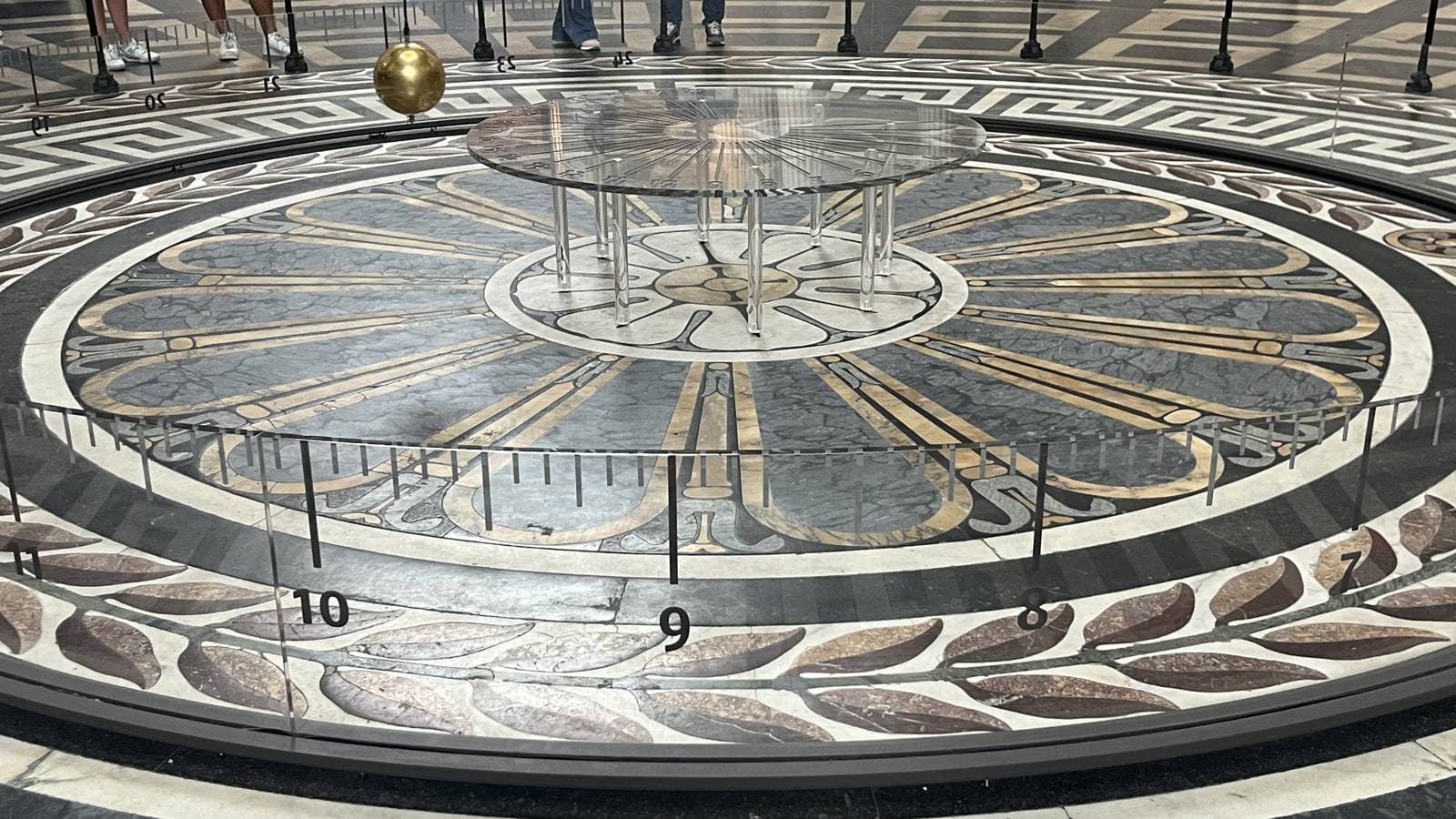
  • A Foucault pendulum swinging over a patterned floor of concentric circles at the Panthéon in Paris
    Learning Science

    Predict, observe, explain: three steps that make students think in science class

    First a prediction, then an observation, finally an explanation. The Predict-Observe-Explain (POE) method makes students' intuitions visible and turns a wrong prediction into part of the learning. We explain why it works and how to use it in class, with a pendulum and an ice example.

    7 min read

  • Nature and Farming

    Do legumes fix nitrogen from the air? Root nodules and crop rotation

    About 78% of the air is nitrogen, yet plants cannot use it directly. Legumes such as chickpeas and lentils get around this with bacteria in their root nodules. We explain how the partnership works, what crop rotation is and how it differs from fertiliser, limits included.

    6 min read