Predict, observe, explain: three steps that make students think in science class
First a prediction, then an observation, finally an explanation. The Predict-Observe-Explain (POE) method makes students' intuitions visible and turns a wrong prediction into part of the learning. We explain why it works and how to use it in class, with a pendulum and an ice example.
By Kuazara Bilim EkibiPublished: Updated: 7 min read
In this article · 7 sections
A science teacher writes a question on the board: “Two pendulums have strings of the same length. The weight on one is twice as heavy as the other. If we release both from the same height, which one completes a swing there and back sooner?” The class is quiet for a moment, then hands go up. Most students say “the heavy one”, a few say “the light one”, and a small group says “the same”. The teacher does not correct anything yet. They only ask: “Why did you think that?”
This little scene is the start of a method that has long been used in science teaching: Predict, Observe, Explain, or POE for short. In this post we explain what the method is, why a prediction is asked for first, how it works in class through two examples, and how it relates to the prediction step in Kuazara.
What is POE?
POE was described for teachers in a systematic way by Richard White and Richard Gunstone in their 1992 book Probing Understanding. It has three steps:
- Predict. Before an experiment is carried out, the student predicts what will happen and gives their reasoning, in writing or aloud.
- Observe. The experiment is carried out or a simulation is run. The student records what happens, answering “what did we see?” without adding interpretation.
- Explain. The student tries to explain the difference between the observation and the prediction (if there is one). If the two do not match, the student reconsiders the thinking behind the prediction.
The order matters: the explanation comes after the prediction and the observation. Only a student who expected something can notice the gap between what they expected and what they saw.
Why ask for a prediction first?
Three reasons stand out.
Intuition becomes visible. Students do not arrive in class with an empty head; they arrive with ideas built from everyday experience. Sometimes these ideas match the scientific explanation and sometimes they do not. Asking for a prediction shows these ideas to the teacher and to the student. When a student can say “this is what I thought”, it also becomes possible to change it. (We cover this in more detail in our post on misconceptions in science.)
Curiosity and engagement rise. A student who has made a prediction has a small stake in the result. They want to know the outcome, because they will turn out to be right or wrong.
A wrong prediction does not damage learning; it often supports it. Cognitive psychology research reports that trying to guess an answer before it is given can lead to better learning once the correct information arrives. For example, Kornell, Hays and Bjork (2009) asked participants to make guesses that were often wrong, and when the answers were shown afterwards these participants remembered the information better than people who simply read the answers. Richland, Kornell and Kao (2009) reported a similar “pretesting effect”. An important caution: most of these studies used words and short texts. Rather than expecting the same size of effect for science concepts in class, it is more accurate to read them as supporting evidence that a prediction does no harm and often helps. You can find a related idea in this post on retrieval and spaced repetition.
Example 1: The pendulum
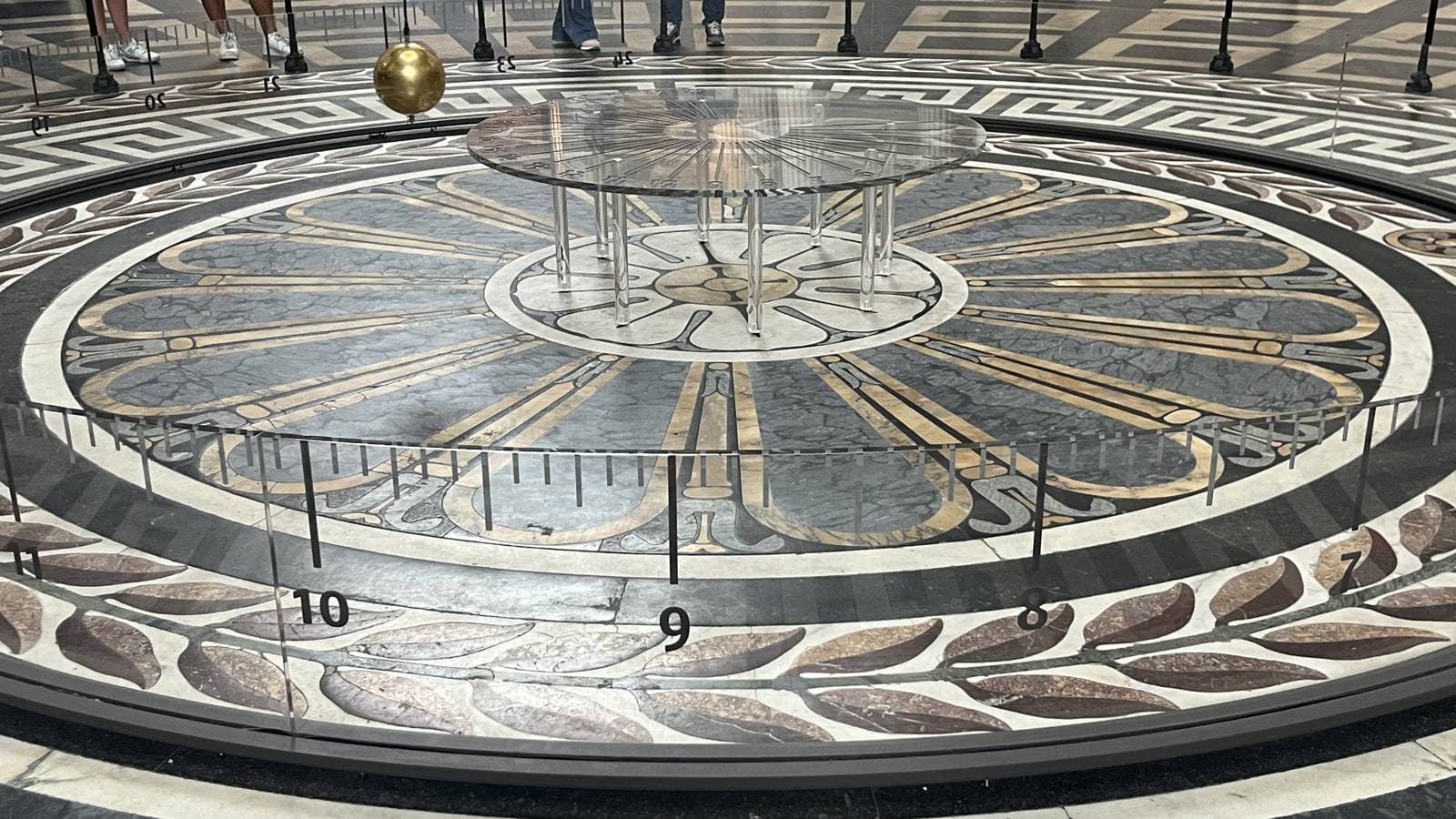
Predict. Two cords of the same length hold a 50 g and a 100 g weight. Which swing takes less time? Students tick one option and write a one-sentence reason: “The heavier one is pulled harder towards the ground, so it swings faster.”
Observe. Both pendulums are released at the same moment from the same small angle. Students time ten full swings and divide by ten. A stopwatch, a phone timer or counting aloud is enough. For small angles the two periods come out practically the same.
Explain. For a simple pendulum with a small angle, the period is approximately , where is the length of the string and is the acceleration due to gravity. Mass does not appear in the formula. A larger force acts on the heavier weight, but because the same force has to accelerate a larger mass, the acceleration does not change. The student’s reason “the heavy one is pulled harder” is half right; what is missing is that the force acts on a larger mass. After the observation, a good follow-up question is: “So what change would actually alter the period?” Changing the string length and trying again answers it.
The same idea connects to our post on whether heavier objects fall faster.
Example 2: Ice on two plates
Predict. An ice cube is placed on a metal plate and another on a plastic plate, both at room temperature. Which melts first, or do they melt at the same time? Many students think “the plastic one, because metal is cold” or “the same, because both are at room temperature”.
Observe. The ice cubes are placed at the same moment and photographed or sketched at regular intervals (for example every two minutes). The ice on the metal plate usually melts noticeably faster. To keep the test fair, the plates’ thickness, the ice cubes’ size and the surroundings should be similar.
Explain. Both are at the same room temperature; the difference lies in how quickly they conduct heat. Metals conduct heat much better than plastic, which is also why a hand touching metal loses heat quickly and feels “cold”. The metal plate carries the room’s heat to the ice faster. This experiment leads to the idea that heat and temperature are not the same thing. In our heat and temperature lesson you can study this difference with a simulation.
How do you use it in class?
- Have the prediction written down. Put the options on the board. Students first write their choice and a one-sentence reason on their own paper. Writing first reduces going along with a neighbour’s idea.
- Show the spread. By a show of hands or by collecting the papers, show how often each option was chosen. Do not reveal the right answer.
- Collect the observations together. At first accept only descriptions in answer to “what did we see?”. “The pendulums swung in step” is an observation; “mass does not matter” is an interpretation and belongs to the next step.
- Leave the explanation to the students. Have pairs discuss “why did my prediction not hold?”. An explanation a student builds in their own words lasts longer than one the teacher gives.
- Finish with an application question. Test the idea in a new situation: “What if we double the string?”
A small warning: not embarrassing a student who made a wrong prediction is a precondition of the method. Saying at the start “making a wrong prediction is fine here, because we learn from it” may be enough.
The prediction step in Kuazara
In activities with a prediction step in Kuazara, the simulation opens once a prediction question has been answered. The options are written from ideas students commonly hold, and the prediction is not graded. When you open a class with a teacher account, you can see the spread of your students’ chosen predictions anonymously (once at least three predictions have accumulated). Projecting a simulation to the class and voting first makes the first two steps of POE easier. You can find the teacher features on the Teachers page, and the topics you can study with simulations on the Science page.
Summary
- POE has three steps: predict (with reasoning), observe (without interpretation), explain (the gap with the prediction).
- A prediction makes the student’s intuition visible; a wrong prediction often supports learning.
- The explanation comes after the observation and is built in the student’s own words.
- Make sure the experiment is safe, fair (one variable) and repeatable.
Frequently asked
4 questionsWhat is the Predict-Observe-Explain (POE) method?
Does a wrong prediction harm learning?
Which grade levels can use POE?
Can POE be used without a lab?
Sources
5 sources- 1.White, R., Gunstone, R. (1992) — Probing Understanding, Falmer Press (London)
- 2.Kornell, N., Hays, M. J., Bjork, R. A. (2009) — Unsuccessful retrieval attempts enhance subsequent learning, Journal of Experimental Psychology: Learning, Memory, and Cognition, 35(4)
- 3.Richland, L. E., Kornell, N., Kao, L. S. (2009) — The pretesting effect: Do unsuccessful retrieval attempts enhance learning?, Journal of Experimental Psychology: Applied, 15(3)
- 4.Halliday, D., Resnick, R., Walker, J. — Fundamentals of Physics, Wiley (simple pendulum and period chapter)
- 5.OpenStax (2016) — University Physics, Volume 1, "Pendulums" section (period independent of mass) (opens in a new tab)openstax.org
- #predict observe explain
- #POE
- #science teaching
- #for teachers
- #pendulum
- #learning science