What causes the seasons? Axial tilt and the most common misconception
Is summer hot because we are closer to the Sun? No. The real cause of the seasons is Earth's axial tilt. We explain the angle of sunlight, day length and the common misconception with examples.
By Kuazara Bilim EkibiPublished: Updated: 10 min read

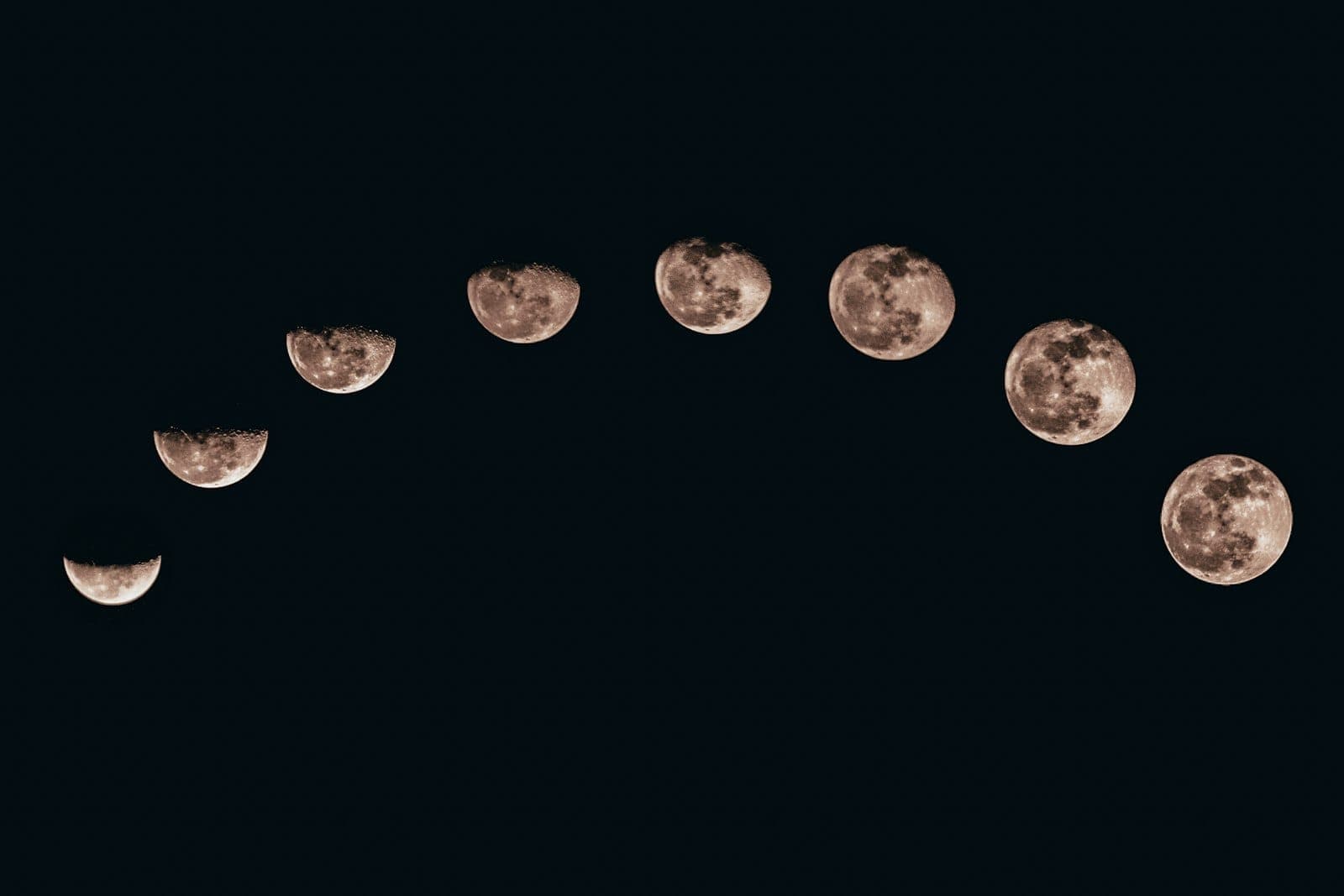
Photo: Wolfgang Hasselmann / Unsplash
In this article · 7 sections
Ask a group of people, “Why is it hot in summer?” A good share of the answers will very likely be: “Because the Earth is closer to the Sun in summer.” It sounds perfectly sensible; we get warmer as we move closer to a fire, don’t we? But this explanation is wrong. What’s more, the evidence that it is wrong hides in a fact most of us already know: when it is summer in Türkiye, it is winter in Australia. Since the same planet cannot be both near and far at the same time, the seasons must have another cause. In this article we look step by step at that cause, Earth’s axial tilt, and at why it makes such a big difference.
The most common misconception: distance from the Sun
Let’s take the misconception seriously first, because letting go of a wrong idea by understanding why it is wrong lasts much longer than memorising the right one.
Earth’s orbit around the Sun is not a perfect circle but a slightly flattened ellipse. So the distance between the Earth and the Sun changes a little over the year:
- Perihelion (the closest point to the Sun): early January, about 147 million km.
- Aphelion (the farthest point from the Sun): early July, about 152 million km.
Here is the surprise: the Earth is closest to the Sun in January, in the middle of winter in the Northern Hemisphere. If distance were the main cause of the seasons, January would have to be the hottest month in Türkiye.
How much does the difference in distance matter?
The energy arriving from a light source falls off in inverse proportion to the square of the distance. Let’s calculate the ratio of energy at the nearest and farthest points:
So the solar energy reaching Earth in January is only about 7 per cent more than in July. That is a small difference, and as we will see below, it pales next to the difference created by the axial tilt. On top of that, this effect applies to both hemispheres at once, whereas the seasons in the two hemispheres are opposite. The distance explanation can never account for that observation.
The real cause: a tilt of 23.4 degrees
The Earth spins on its axis, and this axis is not perpendicular to the plane of its orbit. It is tilted by about 23.4 degrees. More importantly, the axis keeps pointing in almost the same direction in space all year round; its northern end points roughly at the Pole Star.
The consequence is this: when the Earth is on one side of its orbit, the Northern Hemisphere is tilted towards the Sun, and when it is on the opposite side, it is tilted away from the Sun. When the Northern Hemisphere is tilted towards the Sun, the Southern Hemisphere is naturally tilted the other way. That is the simple and elegant explanation of why the seasons in the two hemispheres are opposite.
The tilt creates two separate effects, and both work in the same direction:
- The angle at which sunlight arrives changes.
- The length of the day changes.
The first effect: how steeply does the light arrive?
If you hold a torch straight down over a table, you get a small, bright circle. Tilt the torch and the same light spreads over a wider, stretched-out area, with every point looking dimmer. The total amount of light has not changed; what has changed is the amount of light falling on each unit of area.
Sunlight works the same way. When the Sun is high in the sky, its rays strike the ground nearly vertically and the energy is concentrated in a small area. When the Sun is low, the same energy is spread over a wide area. If we call the Sun’s height above the horizon , the power falling on a unit area of a horizontal surface is approximately:
Here is the power per unit area when the rays arrive exactly vertically. In addition, when the Sun is low its light travels a longer path through the atmosphere and is weakened more, which strengthens the effect.
Worked example: summer and winter noon in Ankara
Ankara lies at about 40 degrees north latitude (39.9 degrees to be more precise). The Sun’s height at noon is given approximately by:
Here is the latitude and is the Sun’s “declination” on that day. The declination is about at the summer solstice, about at the winter solstice and at the equinoxes.
- Summer solstice (around 21 June):
- Winter solstice (around 21 December):
Now let’s compare the power falling on a unit area:
So, because of the angle of the light alone, the solar power falling on each square metre of a horizontal surface at noon in an Ankara summer is about twice that at noon in winter. Compare this with the 7 per cent difference from distance: the effect of the tilt is dominant by a wide margin. And this calculation doesn’t even include the extra weakening in the atmosphere.
The second effect: days get longer, nights get shorter
The tilt also changes the length of the day. While the Northern Hemisphere is tilted towards the Sun, a city in the north spends a larger part of each rotation on the sunlit side. In Ankara the longest day lasts about 15 hours, while the shortest is around 9 hours 20 minutes.
A longer day means more time for the soil, air and water to warm up; a shorter night means less time to give the stored heat back to space. In summer the light arrives both more steeply and for longer. In winter both are reversed at once.
At the spring and autumn equinoxes, around 20 March and 22–23 September, the Earth’s axis is tilted neither towards nor away from the Sun. On these days night and day are roughly equal in length almost everywhere on Earth. Because the atmosphere bends light and the Sun is a disc rather than a point, daytime actually lasts a few minutes longer, but the overall picture does not change. The equinoxes are the astronomical midpoints of the transition between summer and winter.
What happens at the poles and the equator?
This effect changes dramatically with latitude:
- Near the equator, day length stays very close to 12 hours all year and the Sun is always high at noon. That is why the equatorial region tends to have wet and dry seasons rather than four distinct seasons.
- At the tropics (latitudes of about 23.4 degrees north and south; the Tropics of Cancer and Capricorn), the Sun passes directly overhead at noon on at least one day a year.
- Beyond the polar circles (latitude about 66.6 degrees), there are days in summer when the Sun never sets and days in winter when it never rises. These are called the “midnight sun” and the “polar night”.
Notice that all these latitudes are directly linked to the number 23.4: the tropics lie at , and the polar circles at . The axial tilt is also the source of these special lines on the world map.
Thought experiment: what if the Earth were not tilted at all?
What would happen if the axial tilt were zero? At every latitude the Sun would reach the same height at noon on every day of the year, and the day would last about 12 hours everywhere. Because of the small change in distance along the orbit there would be a very slight yearly variation, but summer and winter as we know them would almost disappear. A place’s climate would be a fixed state that depends largely on its latitude alone.
Now think of the opposite: what if the tilt were very large, say 90 degrees? There is something close to this in the Solar System: Uranus’s axis is tilted by about 98 degrees. As a result, during its orbit Uranus’s poles spend many years in constant sunlight or constant darkness. This comparison gives an intuitive feel for how the severity of the seasons is related to the angle of tilt.
Why isn’t the hottest day the solstice?
One more question: why don’t the hottest days of the year come when the sunlight is steepest and the day longest, at the summer solstice (around 21 June)? In Türkiye the hottest period is usually July and August.
The reason is seasonal lag (thermal lag). Seas, lakes and soil store large amounts of heat and take time to warm up. After the solstice the days are still long and the Sun is still high, so for a while the Earth keeps receiving more energy than it loses. The temperature keeps rising until the energy received is balanced by the energy lost. By the same logic, the coldest days also usually come a few weeks after the winter solstice. It is like heating a pan of water on the hob: the water does not start cooling the moment you turn the heat down.
Why is the misconception so stubborn?
The intuition that “closer means hotter” is strong because it fits our everyday experience. In a documentary known as “A Private Universe”, filmed at a Harvard graduation ceremony in the 1980s, some graduates and even some faculty members explain the seasons in terms of distance. In education research this documentary has become a frequently cited example of how persistent misconceptions can be.
This gives teachers and parents an important hint: telling students the right answer is not enough. It is far more effective for students to put their own explanation into words, to see that it clashes with an observation (opposite seasons in the two hemispheres, perihelion in January), and then to test the new model themselves with a torch or a globe.
In short
- The distance between the Earth and the Sun changes a little during the year, but that is not what causes the seasons. The Earth is closest to the Sun in January.
- The real cause of the seasons is that Earth’s axis is tilted by about 23.4 degrees and always points in the same direction in space.
- The tilt changes both the angle at which sunlight arrives and the length of the day.
- In the Ankara example, the solar power falling on a unit area at noon in summer is about twice that at noon in winter.
- The seasons in the two hemispheres are opposite; this is the strongest evidence against the distance explanation.
If you are curious about the order of the sky, take a look at our astronomy articles and our topics page. In Kuazara’s interactive lessons you can change Earth’s tilt yourself and see how the angle of sunlight and the length of the day change, so you understand the seasons without memorising them.
Frequently asked
4 questionsIs the Earth closer to the Sun in summer?
How many degrees is Earth's axial tilt?
Why is it summer in Australia in December?
Why are the hottest days of the year in July and August rather than on 21 June?
Sources
3 sources- 1.OpenStax, Astronomy 2e (opens in a new tab)openstax.org
- 2.NASA Space Place — What Causes the Seasons?
- 3.Schneps, M. H., Sadler, P. M. — A Private Universe (belgesel, Harvard-Smithsonian Center for Astrophysics, 1987)
- #seasons
- #axial tilt
- #earth
- #sun
- #misconceptions