Why does evaporation cool you down? States of matter and changes of state
Why does sweating cool us down, why does cologne feel cold, and why does water stay cool in a clay jug? We explain the states of matter, changes of state and the secret of evaporative cooling through the motion of molecules.
By Kuazara Bilim EkibiPublished: Updated: 7 min read
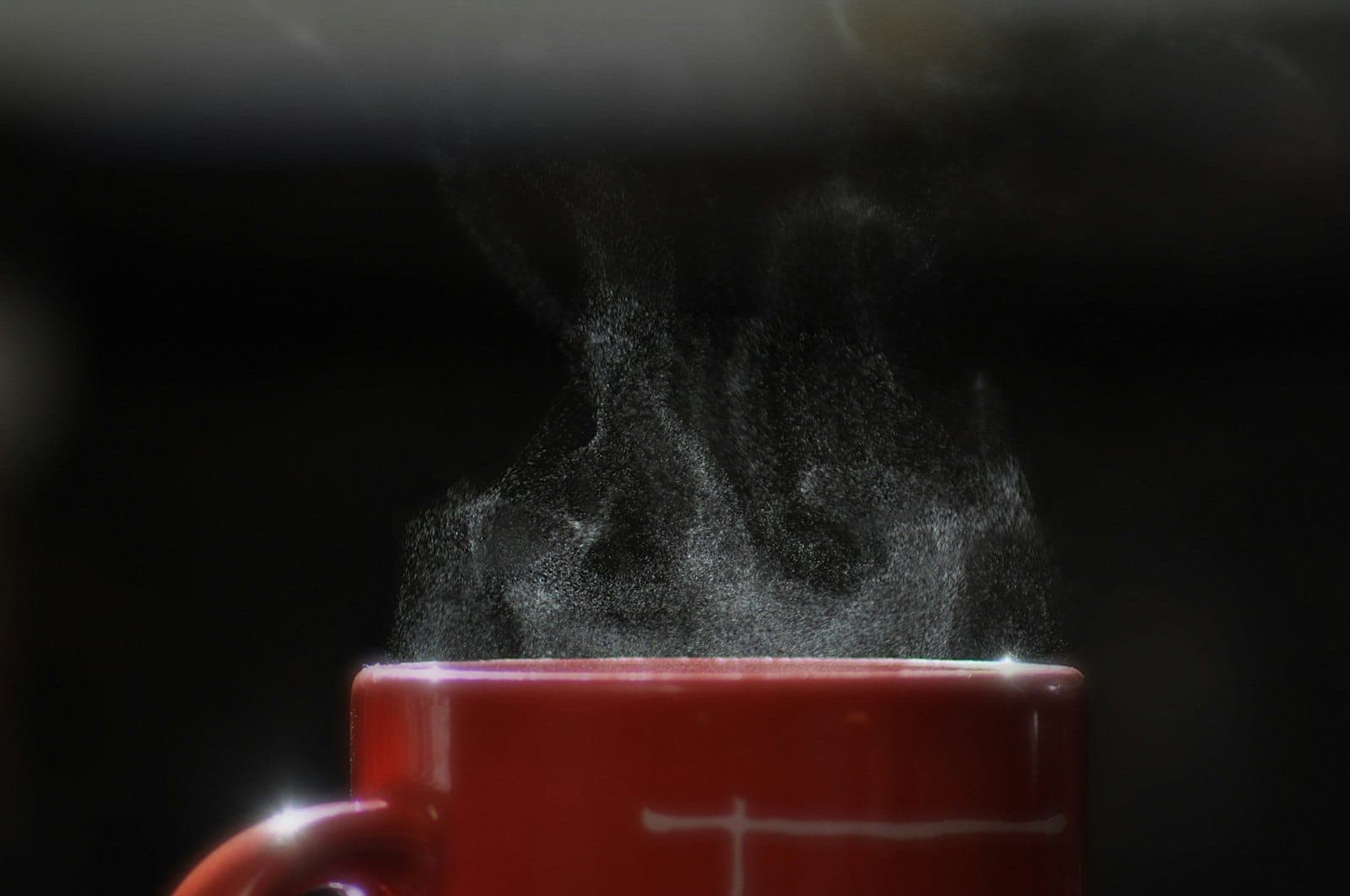
Photo: Dave Michuda / Unsplash
In this article · 8 sections
When you come out of the sea on a hot summer’s day, you feel cold for a moment, even if it is 35 degrees. When you splash kolonya (the lemon cologne Turks pour on their hands) onto your palm, it feels as if a cool breeze has touched it. In the earthenware water jugs (testi) used in Anatolia for centuries, the water stays cool even on the hottest day. What all of these have in common is evaporation. But why does a liquid cool its surroundings when it evaporates? To find the answer, let’s first take a short look at the states of matter and the world of molecules.
The states of matter: solid, liquid, gas
In everyday life we see matter in three basic states:
- Solid: The particles are very close together and vibrate about fixed positions. A solid has a definite shape and volume. Examples: ice, iron, a salt crystal.
- Liquid: The particles are still close together, but they can slide past one another and change places. A liquid has a definite volume, but takes the shape of its container. Examples: water, olive oil.
- Gas: The particles are very far apart and move quickly in all directions. A gas has no definite shape or volume; it fills its container. Examples: water vapour, air.
Scientists add plasma as a fourth state. The insides of stars and the channel of a lightning bolt are made of plasma. But for everyday phenomena at secondary-school level, three states are enough.
The difference between these three states comes down to how fast the particles move and how strongly they attract one another. Temperature is in fact a measure of the average energy of motion (kinetic energy) of the particles. On average, the molecules in hot tea move faster than those in cold water.
Changes of state
When we add heat to a substance or take heat away from it, its state can change. These changes have the following names:
| Change | Direction | Heat |
|---|---|---|
| Melting | Solid → Liquid | Absorbs heat |
| Freezing | Liquid → Solid | Releases heat |
| Evaporation | Liquid → Gas | Absorbs heat |
| Condensation | Gas → Liquid | Releases heat |
| Sublimation | Solid → Gas | Absorbs heat |
| Deposition | Gas → Solid | Releases heat |
The smell of mothballs (naphthalene) spreading through a wardrobe is an example of sublimation, and the ice patterns that form on windows on a winter morning are an example of deposition. A bathroom mirror steaming up is condensation.
While a pure substance is melting or boiling, its temperature does not change, even though it is taking in heat. For example, water boiling at sea level stays at around 100 °C for as long as the hob is on. The energy supplied goes into pulling the molecules apart rather than raising the temperature. This energy is called the latent heat (heat of change of state).
Are evaporation and boiling the same thing?
No. Both are changes from liquid to gas, but they happen in different ways:
- Evaporation can happen at any temperature and only at the surface of the liquid. Washing hung out on the balcony dries without ever reaching 100 degrees.
- Boiling happens at a particular temperature (the boiling point), and bubbles of vapour form throughout the liquid.
The boiling point depends on pressure. In high places such as Erzurum, the air pressure is lower, so water boils a little below 100 °C. In a pressure cooker the pressure is raised, so water boils above 100 °C and food cooks faster.
Why does evaporation cool you down?
Here is the real question. The molecules in a glass of water do not all move at the same speed. Some are slow, most move at medium speed, and some are very fast. Temperature is related to the average of these speeds.
To break away from the surface of the liquid and escape into the air, a molecule needs enough energy to overcome the forces of attraction holding it in the liquid. Only the fastest molecules can manage this. Imagine the most energetic pupils in a class being the first out of the door at break time: the average energy of those left in the classroom drops.
The same thing happens in the liquid. When the fastest molecules escape, the average energy of motion of those left behind goes down. And when the average energy of motion goes down, the temperature falls. The liquid takes back the energy it has lost as heat from whatever surface it is touching, for example your skin. That is how your skin cools.
How much energy are we talking about? To evaporate water at temperatures close to body temperature takes about 2.4 kilojoules per gram. That is more than five times the energy needed to heat the same gram of water from 0 °C to 100 °C. This is why even a small amount of sweat evaporating from the skin gives a substantial cooling effect.
Examples from everyday life
- Sweating: When our body heats up, sweat glands release water onto the skin. As sweat evaporates, it takes heat from the body. In humid air, sweat struggles to evaporate, which is why a humid summer day in Adana or İstanbul feels more oppressive than a dry day at the same temperature.
- Cologne: The alcohol in cologne evaporates more easily than water. That is why cologne cools the skin so quickly.
- The clay water jug: A testi is made of porous fired clay. Water slowly seeps to the outer surface and evaporates there. The evaporation cools the jug and the water inside it.
- Blowing on tea: When you blow on hot tea, you carry away the moist air above the surface; evaporation speeds up and the tea cools faster.
- Wet washing dries quickly in the wind: Wind carries away the water vapour at the surface and so speeds up evaporation.
Common misconceptions
“Water only evaporates at 100 °C.” No. 100 °C is the boiling point of water at sea level. Evaporation happens at any temperature; a puddle on the ground dries up too.
“If we give boiling water more heat, its temperature keeps rising.” In an open pan at constant pressure, the temperature of boiling water stays constant. Turning up the hob makes it boil faster, not hotter.
“The bubbles in boiling water are air bubbles.” The large bubbles during boiling are water vapour. The small bubbles you see at the start of heating are dissolved air coming out of the water.
“A fan cools the air.” A fan does not cool the air in the room; we feel cooler because the moving air speeds up the evaporation of sweat and breaks up the layer of warm air around the body.
Try it at home: Wet hand, dry hand
You will need: Water, a cotton pad or tissue, and two thermometers if you have them.
- Wet the back of one hand with water and leave the other dry.
- Blow gently on both hands at the same time, or hold them in front of a fan.
- Note which one feels cooler.
If you have thermometers, you can do a more quantitative experiment: wrap the bulb of one in a wet tissue and leave the other dry. Put both in front of a fan and read them after a few minutes. The wet thermometer will show a lower temperature. The drier the air, the bigger the difference. For many years meteorologists used exactly this principle to measure the humidity of the air.
Summary
- Matter exists as solid, liquid and gas; the difference lies in how the particles move and how strongly they attract one another.
- Temperature is related to the average energy of motion of the particles.
- Evaporation happens at any temperature and at the surface of the liquid; boiling happens at a particular temperature and throughout the liquid.
- In evaporation the fastest molecules escape, the average energy of those left falls, and the liquid cools.
- Sweating, cologne and the clay water jug all cool by this principle.
For more, take a look at our Science topics and our chemistry articles.
Frequently asked
4 questionsWhy does evaporation cool things down?
What is the difference between evaporation and boiling?
What are the states of matter?
Why do we feel more uncomfortable in humid weather?
Sources
3 sources- #states of matter
- #evaporation
- #change of state
- #heat
- #sweating