What is pi? Why does it go on forever?
What is pi, where does 3.14 come from, and why do its digits never end? We explain this ratio between a circle's circumference and its diameter, Archimedes' method, the 22/7 misconception, and how to measure pi at home with a piece of string.
By Kuazara Bilim EkibiPublished: Updated: 7 min read
In this article · 8 sections
Think of the rim of a tea glass, a bicycle wheel, or the base of a hot-air balloon rising into the sky over Cappadocia. They are all circles of different sizes. But they share a hidden connection: whichever one you measure, if you divide its circumference by its diameter, you always arrive at the same number, roughly 3.14. Mathematicians call this number by the Greek letter (pi). So what exactly is pi, why do its digits after the decimal point never end, and why does it matter so much?
What is pi?
Pi is the ratio of a circle’s circumference to its diameter:
The surprising thing about this ratio is that it does not depend on the size of the circle. The circumference of a ring and the Earth’s equator (if we treat the Earth as a perfect sphere) are both about 3.14 times their diameters. This is because all circles are enlarged or reduced copies of one another. In similar shapes, lengths all scale by the same factor, so the ratio stays fixed.
The first digits of pi are:
In school, most calculations use or . These are approximations; they are not pi itself.
Circle formulas
The circle formula follows directly from the definition of pi. If the diameter is and the radius is , then since :
The area of a circle is:
Why does the area formula look like this? There is a lovely intuitive explanation. Cut a pizza into lots of thin slices. Lay the slices side by side, with the pointed ends alternately facing up and down. The more slices there are, the more the shape looks like a rectangle. The height of this rectangle is the radius (), and its length is half the circumference (). So the area of the rectangle is .
Example: What are the circumference and area of a tray with a radius of 10 cm? (Let’s take .)
- Circumference: cm
- Area: cm²
How did Archimedes calculate pi?
The first systematic method for calculating pi was found about 2,200 years ago by the Sicilian mathematician Archimedes. His idea was very elegant: he drew regular polygons inside and outside a circle. The perimeter of the inner polygon is slightly less than the circumference of the circle, and the perimeter of the outer one slightly more. As you increase the number of sides, both polygons get closer to the circle.
Archimedes started with a hexagon and kept doubling the number of sides until he reached polygons with 96 sides. In the end he found this range:
In other words, he showed that pi lies between about 3.1408 and 3.1429. Reaching this result without even a calculator is one of the most impressive achievements in the history of mathematics. In the centuries that followed, Chinese, Indian, Islamic and European mathematicians calculated more digits. In the 15th century Jamshid al-Kashi, working in Samarkand, had calculated pi correctly to 16 decimal places. Today computers have calculated trillions of digits.
Why is pi infinite? Irrational numbers
Let’s make an important correction here: pi itself is not an infinitely large number. It is a perfectly definite number between 3 and 4. What is “infinite” is that its decimal representation never ends and never settles into a regular repeating pattern.
This is because pi is an irrational number. Rational numbers are numbers that can be written as the ratio of two whole numbers, such as , and . The decimal representation of a rational number either ends () or repeats from some point on (, ).
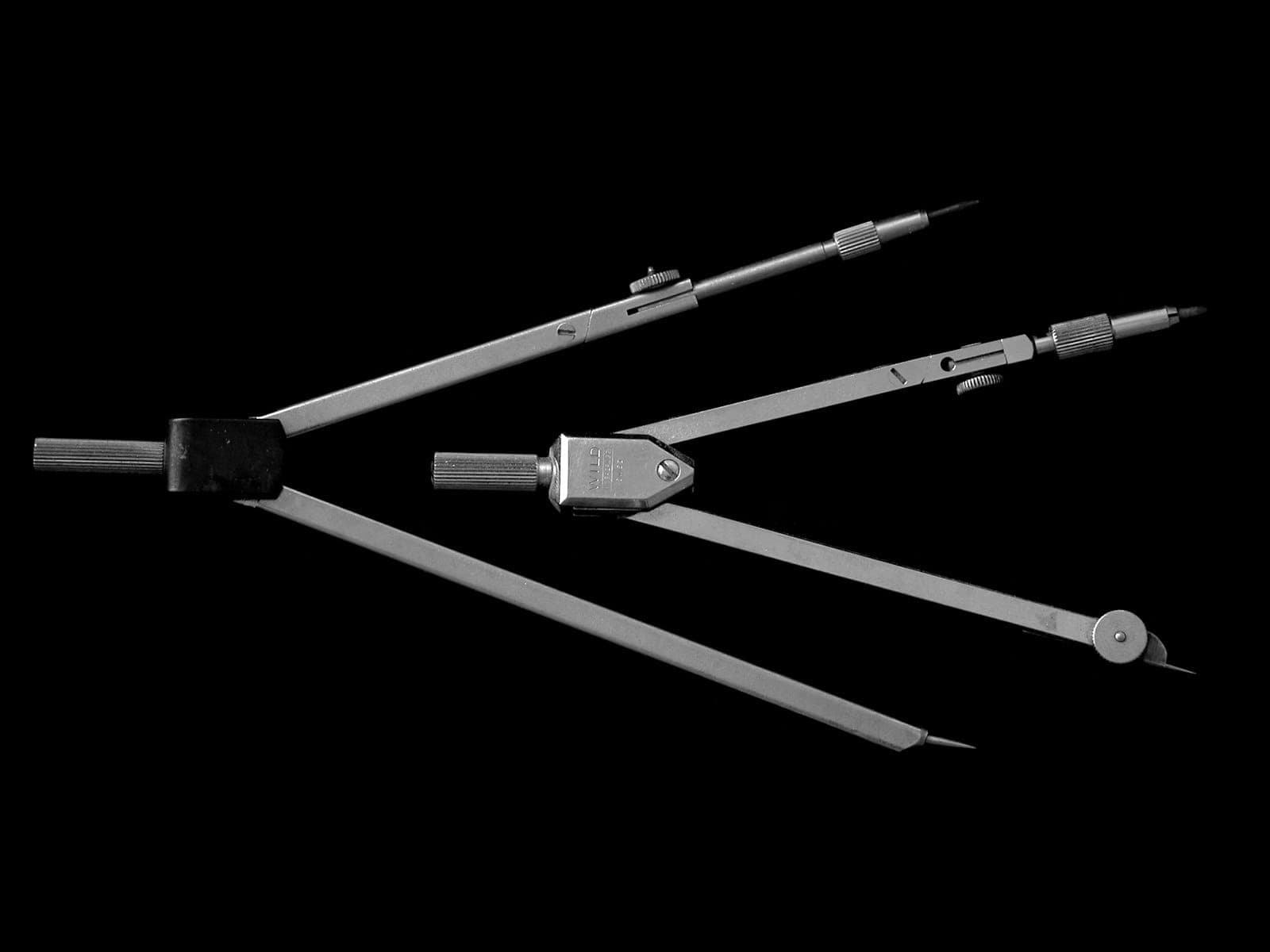
In 1761 the Swiss mathematician Johann Heinrich Lambert proved that pi cannot be written as the ratio of two whole numbers. So pi’s decimal representation neither ends nor repeats. In 1882 Ferdinand von Lindemann proved an even stronger result: pi is transcendental; it is not the root of any polynomial equation with integer coefficients. This proof also gave a final “no” to a question asked since the ancient Greeks: “Can you construct, with compass and straightedge, a square with the same area as a given circle?”
How many digits do we really need?
Although trillions of digits have been calculated, very few are needed in practice. Engineers at NASA’s Jet Propulsion Laboratory have explained that they use only 15 decimal places of pi when calculating the trajectories of interplanetary spacecraft. With that many digits, the error stays extremely small even over distances on the scale of the Solar System. Even to calculate the circumference of a circle the size of the observable universe to better than the width of an atom, forty-odd digits are enough.
So why calculate so many digits? To test computer hardware and algorithms, to study the structure of numbers, and of course out of human curiosity.
Common misconceptions
“22/7 is pi.” No. , whereas . 22/7 is a good approximation, but it is a rational number; pi is irrational.
“Pi is an infinitely large number.” Pi is a definite number between 3 and 4. What is infinite is the sequence of its decimal digits.
“Every sequence of numbers is definitely somewhere in the digits of pi.” This is a common claim, but it has not been proved mathematically. Whether pi’s digits have this property is still an open question.
“One day we will find out the exact value of pi.” The value of pi is already exactly defined, and we can calculate as many of its digits as we like. But because it is irrational, we can never write it as a finite decimal or a fraction.
Try it at home: Measure pi with a piece of string
You will need: String or a tailor’s tape measure, a ruler, round objects from around the house (a glass, a saucepan lid, a jar, a plate).
- Wrap the string once around the object and measure the length of string with the ruler. This is the circumference.
- Measure the object’s diameter across its widest part.
- Divide the circumference by the diameter.
- Write the results in a table and take the average.
You will probably get values between 3.0 and 3.3. With larger objects the measurement error is proportionally smaller, so the results usually come closer to 3.14. If a whole class does it, the average of dozens of measurements can give a surprisingly good value for pi. This experiment shows that pi is not just a number to memorise but a fact you can measure.
Summary
- Pi is the ratio of a circle’s circumference to its diameter, and it is the same for every circle.
- The circumference is given by and the area of a circle by .
- Archimedes used polygons to squeeze pi between 223/71 and 22/7.
- Pi is irrational: its decimal representation neither ends nor repeats.
- In practical calculations a few digits are enough; even space missions need only 15.
For more on geometry and numbers, take a look at our Mathematics topics and our maths articles. And remember that 14 March (3/14) is celebrated as Pi Day in many parts of the world.
Frequently asked
4 questionsWhat is pi?
Why is pi infinite?
Is 22/7 equal to pi?
What is the formula for the area of a circle?
Sources
4 sources- 1.Beckmann, P. — A History of Pi, St. Martin's Press
- 2.NASA Jet Propulsion Laboratory, Rayman, M. — How Many Decimals of Pi Do We Really Need?
- 3.OpenStax, Prealgebra 2e — Bölüm 9: Math Models and Geometry (opens in a new tab)openstax.org
- 4.Encyclopaedia Britannica — Pi (opens in a new tab)britannica.com
- #pi
- #circle
- #irrational numbers
- #geometry
- #area of a circle