What is the Maillard reaction? Why bread crust and Turkish simit turn brown
The crust of fresh bread, roasted coffee, fried köfte (Turkish meatballs)... Behind all their wonderful smells lies the same chemical process: the Maillard reaction. We explain this kitchen chemistry, how it differs from caramelisation, and some common misconceptions.
By Kuazara Bilim EkibiPublished: Updated: 7 min read
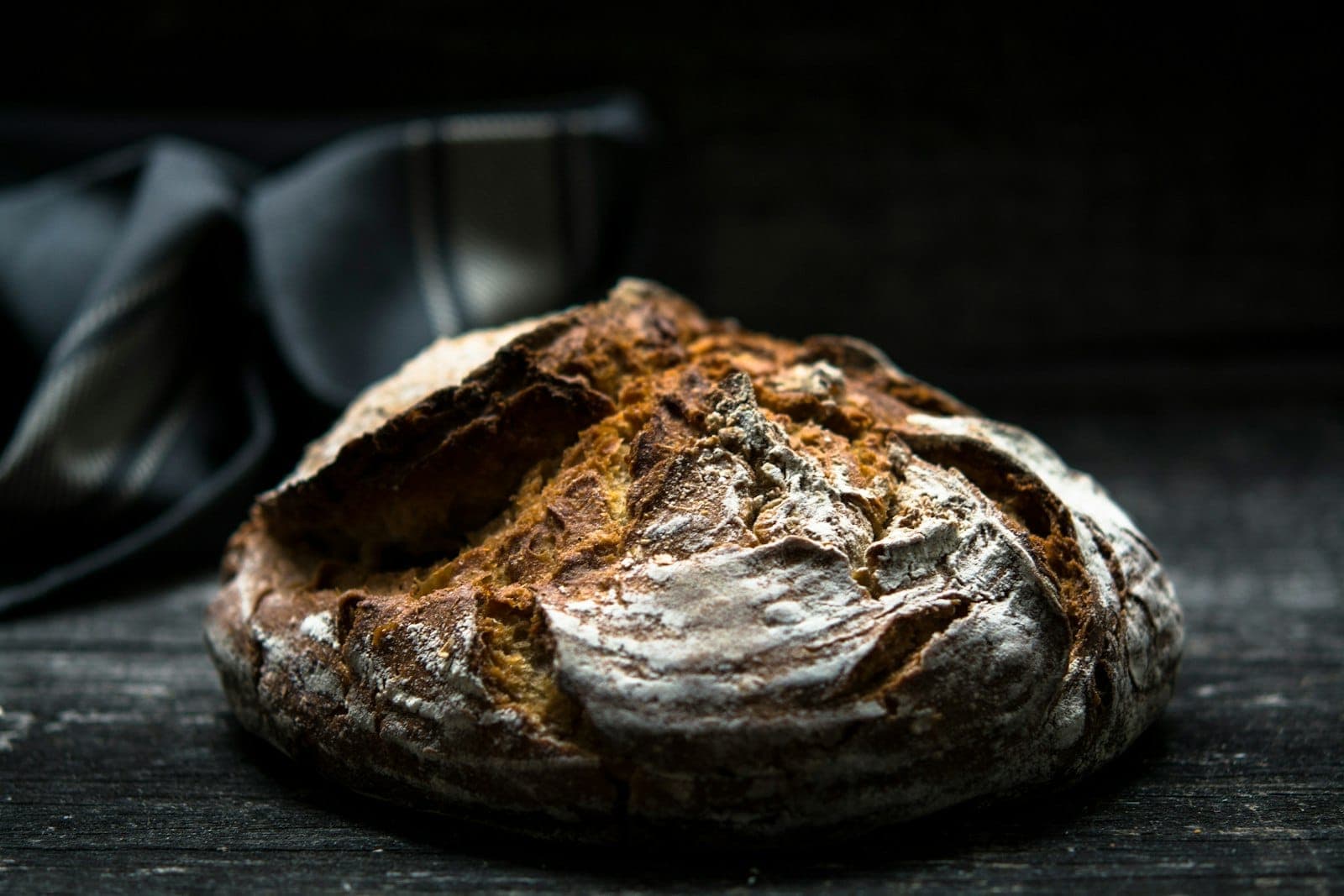
Photo: Jonathan Pielmayer / Unsplash
In this article · 8 sections
The smell of bread fresh out of the oven, of coffee being roasted in the morning, of onions browning in a pan... These smells practically pull you into the kitchen. Behind all of them is the same chemical process, which takes place on the surface of food as it cooks. It is called the Maillard reaction, after the French chemist who first studied it systematically. Your kitchen is really a laboratory where chemistry experiments happen every day.
A chemist’s curiosity
Louis-Camille Maillard, born in 1878, was a French physician and chemist. What really interested him was not cooking but the chemistry inside living things. In 1912 he published a study showing that brown substances form when amino acids and sugars are heated together.
Amino acids are the building blocks of proteins. Sugars, glucose and fructose above all, are found in many foods. The reaction Maillard discovered is what happens when these two groups of substances combine under the effect of heat and form hundreds of new compounds. Maillard probably had no idea how important his finding would turn out to be for food science. The reaction’s importance in the kitchen and in the food industry was understood in detail mainly from the middle of the 20th century onwards.
What happens in the reaction?
The Maillard reaction is not a single, simple reaction but a complex network of reactions, made up of many reactions that follow one another. In simplified form, it can be summed up like this:
These reactions end up producing two kinds of product:
- Aroma compounds: hundreds of small molecules that give toast, roasted hazelnuts, coffee and grilled meat their typical smells.
- Melanoidins: large molecules that give the surface of food its brown colour.
Which aromas form depends on the types of amino acids and sugars in the food, the temperature, the cooking time and the acidity of the surroundings. That is why toast and fried meat smell different, even though they go through the same reaction.
The role of temperature and water
The Maillard reaction can also take place very slowly at low temperatures, but in the kitchen it needs high heat to speed up noticeably. It is generally accepted that it picks up speed above about 140 °C.
Water plays an important part here. At sea level, water boils at 100 °C. So the surface of a food that contains water can hardly get hotter than 100 °C until the water has evaporated. That is why a boiled potato or a piece of boiled meat doesn’t form a brown crust: the temperature never reaches the level where the Maillard reaction speeds up.
You can put this to use in the kitchen:
- Patting the surface of meat or vegetables dry with kitchen paper before frying helps them brown faster.
- Don’t overcrowd the pan; otherwise the water coming out of the food stays in the pan as steam, and the food steams instead of browning.
- The heat of the oven lets the crust of a loaf get hot enough for the Maillard reaction, while the moist inside of the bread stays soft and pale.
Acidity matters too
As well as temperature and moisture, the acidity of the surroundings affects how fast the reaction goes. In general, alkaline (non-acidic) conditions speed up the Maillard reaction, while acidic conditions slow it down. That is why some cooks add a tiny amount of bicarbonate of soda to the pan to brown onions faster. Too much, though, gives food a soapy taste; here too, getting the amount right is what counts.
Things are a little different in a pressure cooker: because the pressure inside rises, water boils at around 120 °C. That isn’t as hot as frying, but it lets Maillard reactions go faster than in ordinary boiling. This is one of the reasons why the broth from meat cooked in a pressure cooker can be a little darker and more flavourful.
Are the Maillard reaction and caramelisation the same thing?
No, but they are often confused. Caramelisation is simply sugar breaking down under heat; it doesn’t need amino acids. It is what happens when you melt plain granulated sugar in a pan and turn it into brown caramel. For table sugar, caramelisation usually becomes noticeable at higher temperatures than the Maillard reaction, above about 160 °C.
In real cooking, though, the two often happen together. Take simit (a sesame-crusted bread ring), which is dipped in water mixed with pekmez (grape molasses) and then baked: its dark, glossy colour comes both from the Maillard reaction between the proteins and sugars in the dough and from the caramelisation of the sugars in the pekmez.
Myth or fact?
- “Searing meat over a high heat first seals in its juices.” Myth. Browning the surface of meat gives it wonderful aroma and colour, but it doesn’t “lock in” the juices. Experiments have shown that seared meat loses a similar amount of liquid as it cooks. The real benefit of searing is flavour.
- “Anything brown has been caramelised.” False. The brown colour of bread, meat and coffee comes largely from the Maillard reaction.
- “The browner, the tastier.” Up to a point. Cooking at very high temperatures for a long time produces bitter tastes and unwanted compounds. In 2002, for example, Swedish researchers reported that a substance called acrylamide forms when starchy foods are fried at high temperatures. Acrylamide is a by-product of the Maillard reaction. That is why food safety agencies advise cooking foods such as chips to a golden yellow rather than dark brown.
A safe experiment in the kitchen
With an adult supervising, you can try this simple experiment:
- Cut an onion in half and chop it finely.
- Boil the first half in a saucepan with a little water for 10 minutes.
- Fry the second half in a dry frying pan with a little oil over a medium heat for 10 minutes.
- Compare the colour, smell and taste of the two samples.
The boiled onion goes soft but hardly changes in colour or smell, because the temperature stays at 100 °C. The fried onion, on the other hand, turns brown and develops a sweet, roasted smell. The same ingredient turns into something with a completely different flavour, simply because the temperature and the amount of water have changed. This is a small but real scientific experiment, based on changing one variable and observing the result.
There is Maillard chemistry in our bodies too
The Maillard reaction doesn’t only happen in the kitchen; it happens in our bodies too, just much more slowly. Sugar in the blood can gradually attach itself to proteins. The HbA1c value that doctors check to monitor diabetes measures how much sugar has attached itself to haemoglobin, a protein in the blood. This attachment is the same kind of chemical process as the first steps of the Maillard reaction. So the chemistry of living things, which was what Maillard was really curious about, and the chemistry of the kitchen meet at the same point.
Summary
- The Maillard reaction is what happens when amino acids and sugars react under the effect of heat, creating aroma and brown colour.
- It is named after the French chemist Louis-Camille Maillard, who described the reaction in 1912.
- It speeds up noticeably above about 140 °C, which is why boiled food doesn’t brown.
- Caramelisation involves only sugar; the Maillard reaction also needs amino acids.
- Overcooking can lead to bitter tastes and unwanted substances such as acrylamide; golden yellow is usually the best point to stop.
Frequently asked
4 questionsWhat is the Maillard reaction?
What is the difference between the Maillard reaction and caramelisation?
Why doesn't boiled meat brown?
Does searing meat seal in its juices?
Sources
3 sources- 1.McGee, H. — On Food and Cooking: The Science and Lore of the Kitchen, Scribner (2004)
- 2.Encyclopaedia Britannica — Maillard reaction
- 3.Maillard, L. C. — Action des acides aminés sur les sucres; formation des mélanoïdines par voie méthodique, Comptes Rendus de l'Académie des Sciences, 154 (1912)
- #maillard reaction
- #kitchen chemistry
- #caramelisation
- #chemical reaction
- #food science