How did Eratosthenes measure the Earth's circumference? A stick, a shadow and a little geometry
About 2,200 years ago, without going into space, Eratosthenes of Alexandria used nothing but shadows and geometry to calculate the Earth's circumference with surprising closeness. We work through his method step by step.
By Kuazara Bilim EkibiPublished: Updated: 7 min read
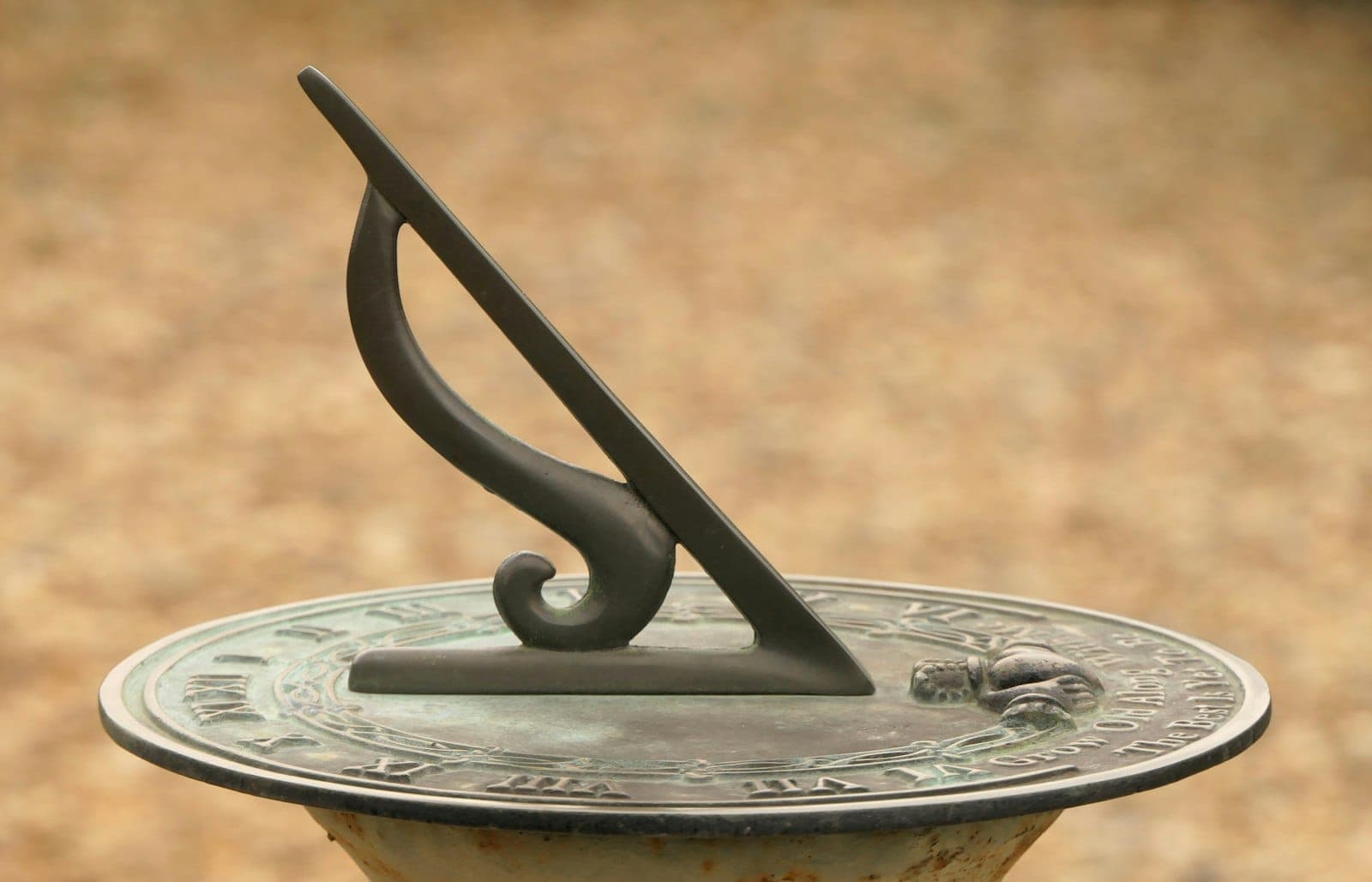
Photo: Patti Black / Unsplash
In this article · 8 sections
Could you measure the size of the Earth without launching a rocket into space, without satellites, without even a pair of binoculars? It sounds impossible. Yet about 2,200 years ago a scholar living in the Egyptian city of Alexandria did exactly that. All he had were shadows, the distance between two cities and a strong feel for geometry. His name was Eratosthenes, and his method is still being repeated in schools all over the world today.
The man in charge of the Library of Alexandria
Eratosthenes was born around 276 BC in the city of Cyrene (Kyrene), in what is now Libya, and died around 194 BC. After studying in Athens he became head of the Library of Alexandria, the greatest centre of learning in the ancient world. He wrote works in many fields, including mathematics, geography, astronomy, poetry and history. The method for finding prime numbers known today as the “sieve of Eratosthenes” also bears his name. It is often said, too, that he was the first to use the word “geography”.
The work in which Eratosthenes measured the Earth has not survived. The main source that tells us about his method is a book by the astronomer Cleomedes, who lived centuries after him. This is why historians still argue about some of the numbers he used; we will look at that separately below.
People already knew the Earth was round
First, let’s correct a common misconception: Eratosthenes was not trying to prove that the Earth is round. Educated people in Ancient Greece already knew it. About a century earlier, the philosopher Aristotle had pointed out that during lunar eclipses the shadow the Earth casts on the Moon is always round. Travellers heading south also noticed that some stars invisible in the north appeared above the horizon.
Eratosthenes’s question was a different one: if the Earth is round, how big is it?
The Sun at the bottom of a well
According to the story, Eratosthenes had heard that something interesting happened in the city of Syene (modern Aswan), south of Alexandria: on the summer solstice, the longest day of the year, the Sun’s rays at noon reached all the way to the bottom of a deep well, and upright objects cast almost no shadow. This meant that at that moment the Sun was directly overhead at Syene.
Yet on the same day and at the same hour, an upright stick in Alexandria cast a short but clear shadow. Eratosthenes realised that this difference was caused by the curved surface of the Earth. If the Earth were flat, the shadows of the sticks in the two cities would be the same.
Geometry steps in
Eratosthenes’s reasoning rested on two assumptions:
- Because the Sun is very far away, its rays reach the Earth parallel to each other.
- Syene is directly south of Alexandria.
When he measured the shadow of the stick in Alexandria, he found that the angle between the Sun’s rays and the stick was about one fiftieth of a full circle. That corresponds to about 7.2 degrees:
Now comes the elegant part. When a third line crosses two parallel lines, the alternate interior angles it forms are equal. Because the Sun’s rays are parallel, the shadow angle in Alexandria equals the angle formed at the centre of the Earth between Alexandria and Syene. In other words, seen from the centre of the Earth, the two cities are separated by an angle of 7.2 degrees.
Since 7.2 degrees is of a full circle, the distance between the two cities must also be of the Earth’s circumference. Eratosthenes took this distance to be about 5000 stadia. The rest is a simple multiplication:
Some sources report that Eratosthenes later rounded this result to 252,000 stadia.
How accurate was he? Myth and fact
At this point you often come across a claim: “Eratosthenes found the Earth’s circumference with a 1 per cent error.” The truth is a little more complicated.
The problem is that nobody knows exactly how many metres a unit of length called the stadion was. Different kinds of stadion were used in the ancient world, and it is not certain which one Eratosthenes used. If we take a stadion to be about 157.5 metres, the result comes out at about 39,400 kilometres; this is very close to the Earth’s real circumference (about 40,075 km at the equator). But if the “Attic stadion” of about 185 metres is used, the result rises to 46,000 kilometres and the error climbs to around 15 per cent.
Eratosthenes’s assumptions were not exactly right either:
- Syene is not directly south of Alexandria; there is a difference of a few degrees of longitude between them.
- Syene lies slightly north of the Tropic of Cancer, where the Sun comes directly overhead.
- The distance of 5000 stadia between the two cities was very probably an estimate.
Still, these small errors partly cancelled each other out. What really matters is this: whichever value of the stadion we take, Eratosthenes found the right order of magnitude. He showed that the Earth’s circumference is not a few thousand but tens of thousands of kilometres. And he did it with nothing but reasoning and simple measurements.
Another myth is that in Columbus’s time people thought the Earth was flat. In fact, educated Europeans knew the Earth was round. The debate was about the Earth’s size, and Columbus relied on estimates that made the Earth much smaller than it really is.
What makes the method so clever?
The beauty of what Eratosthenes did is that he linked a quantity that seemed impossible to measure to two small quantities that could be measured. Measuring the Earth’s circumference directly by walking round it was unthinkable in that age. But measuring the angle of a shadow and estimating the distance between two cities was possible. Ratio and proportion took care of the rest:
In this equation, once you know three of the four quantities you can find the fourth. It is exactly the logic you use at secondary school when you draw a pie chart or calculate the length of an arc of a circle. Eratosthenes’s experiment is one of the finest examples of how powerful this simple ratio can be.
You can do this experiment too
Eratosthenes’s method is so simple that schools in different cities repeat it together today. Here is what you need to do:
- Stand a stick exactly upright on flat ground.
- Measure the length of the shadow at local noon, when the Sun reaches its highest point in the sky.
- Calculate the shadow angle: .
- On the same day, compare your results with a school directly north or south of you.
- Use the difference between the two angles and the north-south distance between the two cities to calculate the circumference.
If you have not met the function yet, you can draw the stick and its shadow to scale on paper and measure the angle with a protractor.
Connection to today
Today we measure the Earth’s dimensions with satellites to within centimetres. But the essence of what Eratosthenes did has not changed: calculating something you cannot measure from something you can. Astronomers work out the sizes of other planets, the distances to stars and the expansion rate of the universe with similar logic: angles, ratios and geometry.
Summary
- In the 3rd century BC, Eratosthenes was head of the Library of Alexandria.
- People already knew the Earth was round; he wanted to measure its size.
- From the difference between the shadows in two cities he found an angle of 7.2 degrees and realised it was of a full circle.
- By multiplying the distance of 5000 stadia by 50, he calculated the circumference as 250,000 stadia.
- How many kilometres the result equals is debated, because the length of the stadion is unknown; but it is certain that he found the right order of magnitude.
Frequently asked
4 questionsWhat value did Eratosthenes find for the Earth's circumference?
Which cities did Eratosthenes use?
What maths does Eratosthenes's method use?
Did people in ancient times think the Earth was flat?
Sources
3 sources- 1.MacTutor History of Mathematics — Eratosthenes of Cyrene (opens in a new tab)mathshistory.st-andrews.ac.uk
- 2.Encyclopaedia Britannica — Eratosthenes
- 3.Bowen, A. C., Todd, R. B. — Cleomedes' Lectures on Astronomy, University of California Press (2004)
- #eratosthenes
- #earth's circumference
- #geometry
- #ancient greece
- #shadow experiment