COP31 diary, 18 November: Human and Social Development
The theme of COP31's tenth day is human and social development. We bring together the Global Call to Action for cities and WMO's news on ocean observations, with sources, and explain why wet-bulb temperature is studied as a limit for heat stress.
In this article · 3 sections
COP31, the 31st Conference of the Parties to the UN Framework Convention on Climate Change, takes place in Antalya, Türkiye, from 9 to 20 November 2026. The COP31 diary brings together the decisions, announcements, reports and initiatives announced each day. We report only what primary sources say and give the source next to each item. The theme of 18 November, the conference’s tenth day, is Human and Social Development (COP31 thematic days).
18 November in Antalya
- Global Call to Action for cities: According to a COP31 Presidency statement dated 18 November, the COP31 Presidency, the International Telecommunication Union (ITU), the UN Human Settlements Programme (UN-Habitat), the UN Framework Convention on Climate Change (UNFCCC) and the Ministry of Environment, Urbanization and Climate Change held the High-Level Dialogue on Cities in Antalya on 16 November 2026; as a result of the meeting, the “Global Call to Action for Smart, Resilient and Sustainable Cities” was announced. (COP31 Presidency)
- Framework of the Call: According to the same statement, the Call aims to mobilise governments, cities, the private sector, academia and other stakeholders around shared priorities and commitments, and provides a framework aligned with the UN Sustainable Development Goals, the Pact for the Future and the Global Digital Compact; the meeting also addressed issues that would lay the groundwork for a follow-up mechanism to sustain implementation and monitor progress after COP31. (COP31 Presidency)
- New pledges for OceanEye: According to a World Meteorological Organization (WMO) news item dated 18 November describing the 17 November Thematic Day on Ocean, Seas, Nature and Land Use, the OceanEye International Alliance received new pledges and commitments to strengthen observations which underpin all weather forecasts and climate predictions. (WMO)
- Ocean heat and sea level: According to the same news item, WMO Deputy Secretary-General Ko Barrett told an event organized by the COP31 Presidency that ocean heat content reached a record high in 2025, with preliminary data indicating another record in 2026, and that global mean sea level also reached record levels in 2026. (WMO)
By 2035, at least
25%
Target: reduction in operational energy use intensity in buildings
By 2035, at least
15%
Target: global circular material use rate
11%
Share of the world’s population living on low-lying coasts
Source: COP31 Presidency and WMO, 18 November 2026
According to the text of the Call, published with the statement, it acknowledges the role of cities in advancing four of the COP31 Presidency’s global implementation targets for 2035: increasing electricity’s share of global final energy consumption to 35%, reducing the projected increase in global annual municipal solid waste generation by at least 50%, reducing operational energy use intensity in the building sector by at least 25%, and increasing the global circular material use rate to at least 15%. The text calls on stakeholders to support actions under three headings, in line with local needs and capacities: scaling AI, digital twins and IoT for smart, resilient cities; building the conditions to harness digital technology for climate action and sustainability; and delivering practical implementation and measurable outcomes. The last heading includes reviewing progress annually and reporting publicly on results; the text asks that the enabling conditions needed to scale innovative urban technologies be put in place with particular attention to cities in developing countries.
At the event on Coastal Infrastructure and Communities in a Changing Ocean described in WMO’s 18 November news item, speakers from the Pacific, the Caribbean and Bangladesh highlighted practical problems facing the 11% of the global population who live on low-lying coasts and so are exposed to coastal hazards like storms and the impacts of sea-level rise. The WMO news item also quotes COP31 President Murat Kurum as saying that the ocean regulates our climate, supports livelihoods and sustains communities around the world. Negotiations are continuing; the conference runs until 20 November.
Theme of the day: Human and Social Development
In the COP31 Presidency’s Thematic Days programme, the sub-topics for 18 November are tourism, cultural heritage, employment and livelihoods, traditional and local knowledge, vulnerable groups, persons with disabilities, women’s empowerment, and just transition. The English version of the programme gives the day’s title as “Human, Social Development and Gender”.
According to the programme, the themes of the conference’s last two days are “İmece: Enhancing Implementation” (19 November) and “Final Negotiations” (20 November). The items above were compiled from primary sources published on 18 November and available at the time of writing.
Wet-bulb temperature and the heat limit
This section is for educational purposes only; it is not health advice.
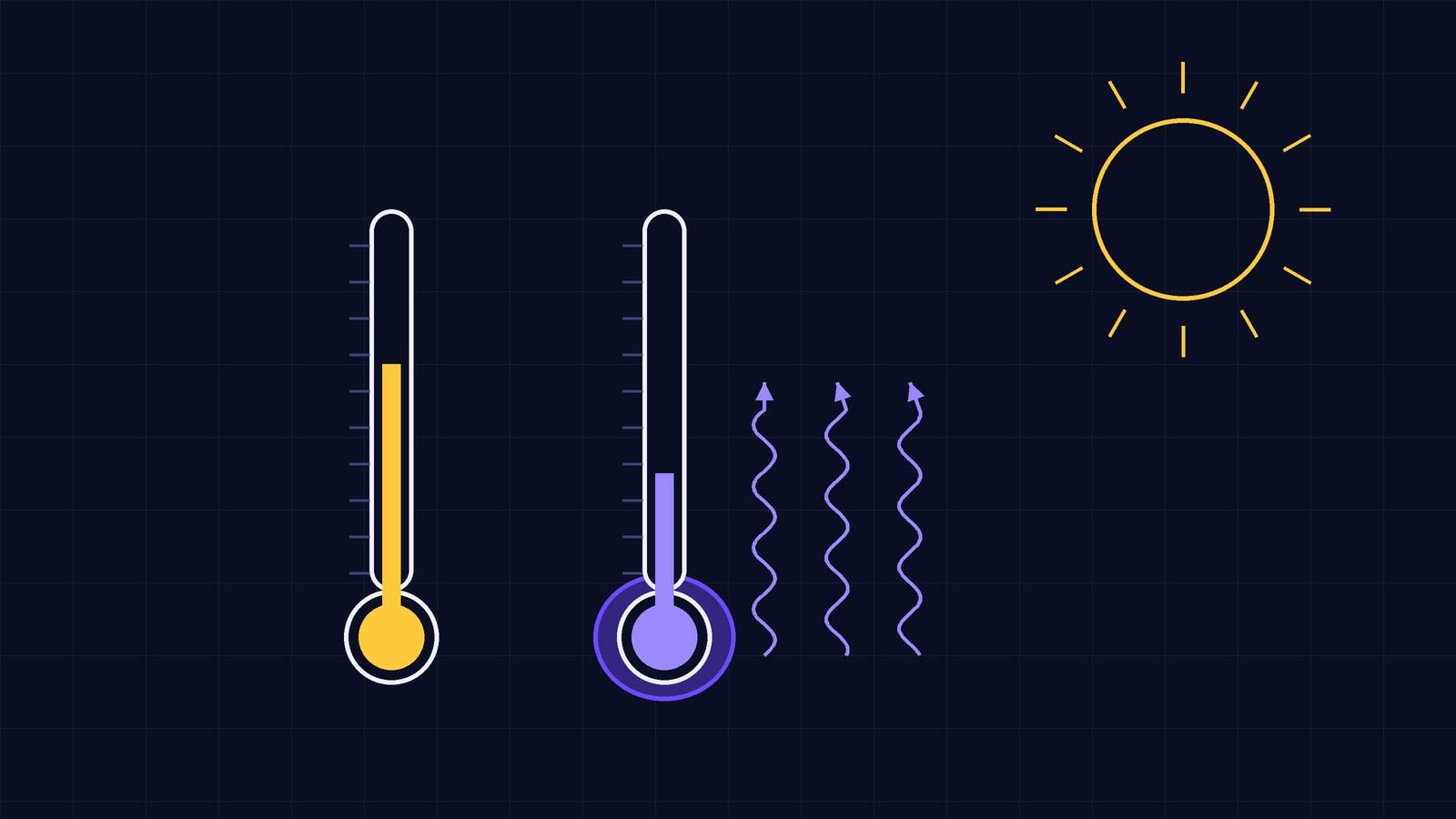
The day’s science post explains how the body releases heat in hot weather and what wet-bulb temperature is. The studies in this section are not cited in COP31’s texts dated 18 November. A study published by Sherwood and Huber in PNAS in 2010 quantified peak heat stress by the wet-bulb temperature. According to the authors, peak heat stress is surprisingly similar across diverse climates today, and the wet-bulb temperature never exceeds 31 °C. The authors state that any exceedance of 35 °C for extended periods should induce hyperthermia in humans and other mammals, as dissipation of metabolic heat becomes impossible (Sherwood and Huber, 2010).
Heat stress is measured
Sherwood and Huber quantified peak heat stress by the wet-bulb temperature.
Theoretical limit: 35 °C
According to the authors, if the wet-bulb temperature exceeds 35 °C for extended periods, dissipating metabolic heat becomes impossible.
Limit measured in humid air
In young, healthy adults in humid 36–40 °C environments, the critical value averaged 30.55 ± 0.98 °C.
Source: Sherwood and Huber (2010), Vecellio et al. (2022)
According to its authors, the study published by Vecellio and colleagues in the Journal of Applied Physiology in 2022 is the first to use empirical physiological observations to examine this theoretical threshold. The researchers measured the critical wet-bulb temperature at which heat stress becomes uncompensable in young, healthy adults performing tasks at modest metabolic rates mimicking basic activities of daily life. Across six experimentally determined environmental limits, no subject’s critical value reached 35 °C. The critical value was relatively constant across humid environments of 36–40 °C and averaged 30.55 ± 0.98 °C; it progressively decreased in hotter, dry environments. According to the authors, sweat rates did not differ significantly among the environments; in hot-dry conditions, evaporative cooling was outpaced by dry heat gain. The authors concluded that a wet-bulb temperature threshold cannot be applied across all climatic conditions and that, in high humidity, the threshold is well below 35 °C (Vecellio et al., 2022).
The day’s science post, How does the body cool down in hot weather? Sweat, evaporation and wet-bulb temperature, explains the ways heat leaves the skin, why sweat cools only when it evaporates and how wet-bulb temperature is calculated. You can study evaporation in the Changes of state: melting, freezing, evaporation lesson.
Sources
7 sources- 1.COP31 Presidency (18 November 2026). Global Call to Action for Smart, Resilient and Sustainable Cities Announced at COP31 (Turkish) (opens in a new tab)
- 2.COP31 Presidency (18 November 2026). Global Call to Action for Smart, Resilient and Sustainable Cities Announced at COP31 (opens in a new tab)
- 3.COP31 Presidency. COP31 Global Call to Action for Smart, Resilient, Sustainable Cities powered by Artificial Intelligence, Digital Twins & Internet of Things (PDF) (opens in a new tab)
- 4.WMO (18 November 2026). The ocean connects us all (opens in a new tab)
- 5.COP31 Presidency: Thematic Days (opens in a new tab)
- 6.Sherwood and Huber (2010). An adaptability limit to climate change due to heat stress. PNAS 107(21), 9552–9555 (opens in a new tab)
- 7.Vecellio et al. (2022). Evaluating the 35°C wet-bulb temperature adaptability threshold for young, healthy subjects (PSU HEAT Project). Journal of Applied Physiology 132(2), 340–345 (opens in a new tab)
- #COP31
- #COP31 diary
- #cities
- #ocean observation
- #wet-bulb temperature
- #Antalya