COP31 diary, 13 November: Finance and Trade
The theme of COP31's fifth day was finance and trade. We bring together what UN News and the Asian Development Bank announced on 13 November, with sources, and explain how the carbon footprint of a company or a product is calculated.
In this article · 3 sections
COP31, the 31st Conference of the Parties to the UN Framework Convention on Climate Change, takes place in Antalya, Türkiye, from 9 to 20 November 2026. The COP31 diary brings together the decisions, announcements, reports and initiatives made public each day. We report only what primary sources and the UN’s news service say, and we place the source next to each item. The theme of 13 November, the conference’s fifth day, is Finance and Trade (COP31 thematic days).
Today in Antalya
- AI and climate information: According to a UN News story dated 13 November, the Global Initiative for Information Integrity on Climate Change, co-chaired by the UN, UNESCO and Brazil, launched the Priorities for Action on AI and Climate Information Integrity at COP31 in Antalya on Friday; the Priorities call on AI companies to assess how their systems affect climate information integrity, to publish their findings and to disclose their energy use and their carbon, water and land footprints. (UN News)
- Finance for businesses in Türkiye: According to a 13 November announcement by the Asian Development Bank (ADB), ADB signed two private sector facilities totalling 208.3 million US dollars to expand access to long-term finance for micro and small-sized enterprises and for green leasing investments in Türkiye, as well as a trade finance agreement, at COP31 that day. (ADB)
- From dialogue to delivery: According to an ADB statement dated 13 November, during his visit to Antalya, ADB President Masato Kanda urged the international community to move from dialogue to delivery; speaking on behalf of the heads of multilateral development banks at an MDB Presidents Event with the COP31 Presidency, he called for stronger cooperation to simplify access to financing, accelerate projects that withstand natural hazards and turn country priorities into concrete results. (ADB)
208.3million US$
Two private sector facilities ADB signed in Türkiye
At least
50%
Share of the VakıfBank loan going to women-owned or women-led businesses
Around
1.9trillion US$
Climate investment the world currently makes, according to Kurum (September)
Source: ADB, 13 November 2026
According to UN News, Friday also marked the launch of the Charter for Climate Information Integrity in Advertising, which calls for transparency across the advertising supply chain so that advertisers have visibility of ad placements while respecting user privacy. According to the story, the partners in the Global Initiative called for greater investment in the information people use to understand and act on climate change; so far, Germany has committed more than 2.2 million US dollars to support research, develop communication strategies and undertake public awareness campaigns. Talks are continuing; the conference runs until 20 November.
Theme of the day: Finance and Trade
In the COP31 Presidency’s thematic days programme, the topics for 13 November are green transformation, climate-based investment, green finance, value chains and carbon markets.
According to ADB, 100 million US dollars of the financing signed today is a private sector loan to VakıfBank. The loan will help micro and small-sized enterprises in underserved regions, including those affected by the 2023 earthquakes, to access the resources needed to sustain operations, recover from shocks and invest for growth; at least 50% of the loan proceeds will be provided to women-owned or women-led businesses. A separate 108.3 million US dollars in loans to AkLease (according to ADB, a 50 million euro ADB facility, equivalent to 58.3 million US dollars, and a parallel loan of up to 50 million US dollars from the JICA-financed Leading Asia’s Private Infrastructure Fund 2, administered by ADB) will scale up green leasing finance to help businesses invest in clean energy and more energy-efficient technologies. ADB and Akbank also signed an agreement under ADB’s Trade and Supply Chain Finance Program (TSCFP). According to ADB, in 2026 TSCFP has provided at least 600 million US dollars in trade transactions involving Turkish companies.
According to ADB’s announcement on President Kanda’s visit to Antalya, at the High-Level Dialogue on Seizing the Green Industrial Opportunity Mr Kanda emphasised that development banks must absorb risks and lower borrowing costs to help developing economies modernise industries and create quality jobs. He also formalised ADB’s membership in the Türkiye Industrial Decarbonization Investment Platform (TIDIP) at the platform’s Membership Signing Event, alongside the European Bank for Reconstruction and Development, the World Bank Group and the Climate Investment Funds. According to the announcement, Mr Kanda welcomed Norway’s intention to provide 100 million US dollars in guarantees to ADB’s Innovative Finance Facility for Climate in Asia and the Pacific; according to ADB, this could unlock 450 million US dollars in additional lending.
According to the COP31 Presidency, finance is a key priority for COP31. Murat Kurum said at the Istanbul Climate Finance Summit on 4 September that climate finance needs stand at between 7.5 trillion and 9 trillion US dollars, while the world currently invests only around 1.9 trillion US dollars, and he called that difference a “chasm” that must be closed. On the same day, the Presidency announced the UN Development Programme (UNDP) as the delivery partner of the Climate Implementation Bridge (BRIDGE), which will provide country-led implementation support to help countries turn their climate and development priorities into finance-ready project pipelines. (COP31 Presidency)
The science behind it
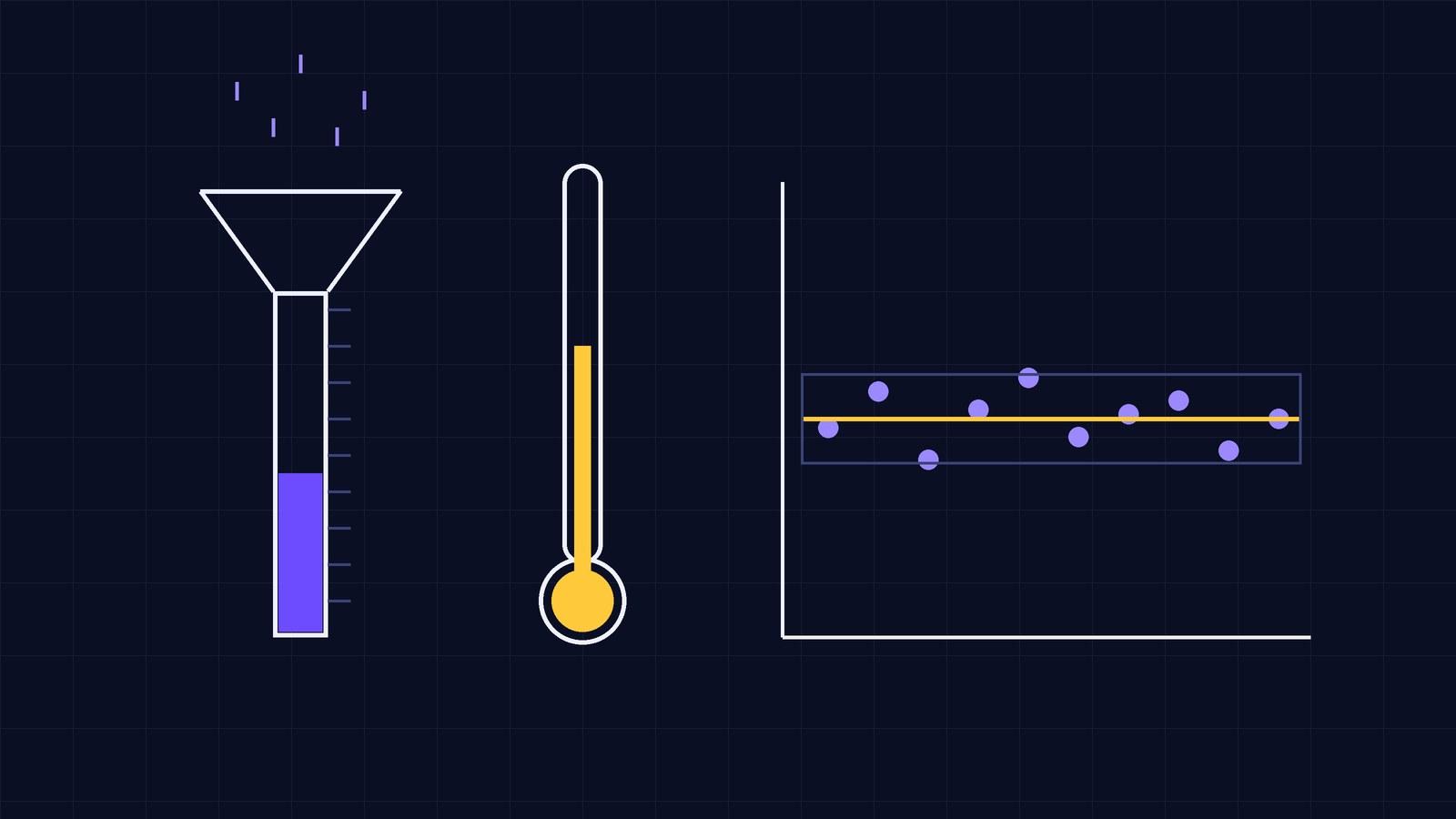
How are the greenhouse gas emissions of a company or a product calculated? According to the guidelines for national greenhouse gas inventories published by the Intergovernmental Panel on Climate Change (IPCC) in 2006, the most common simple method combines activity data, which shows the extent to which a human activity takes place, with an emission factor, which gives the emissions per unit of activity: Emissions = Activity data × Emission factor. In the guidelines’ example, in the energy sector fuel consumption is the activity data and the mass of carbon dioxide emitted per unit of fuel consumed is the emission factor.
Draw the boundary
Scope 1 is direct emissions, scope 2 purchased electricity, scope 3 other indirect emissions.
Measure and multiply
Activity data, such as fuel consumption, is multiplied by an emission factor.
Convert to CO₂ equivalent
Calculation tools work out each gas separately and convert it to CO₂ equivalent by its global warming potential.
Source: IPCC (2006)
According to the Greenhouse Gas Protocol (GHG Protocol) corporate standard, scope 1 covers direct emissions from sources owned or controlled by the company, for example from combustion in its own boilers, furnaces and vehicles or from chemical production in its own process equipment. Scope 2 comes from the generation of purchased electricity consumed by the company and physically occurs at the facility where the electricity is generated. Scope 3 covers other indirect emissions that are a consequence of the company’s activities but occur from sources it does not own or control; the standard’s examples are the extraction and production of purchased materials, the transportation of purchased fuels and the use of sold products. According to the standard’s description of its calculation tools, the worksheets calculate each gas separately and convert it to CO₂ equivalent on the basis of its global warming potential; the standard’s glossary describes CO₂ equivalent as the unit used to compare different greenhouse gases with carbon dioxide on a common basis.
According to the European Commission, the EU’s Carbon Border Adjustment Mechanism (CBAM) addresses the embedded carbon emissions of imported goods. It has applied under its definitive regime since 1 January 2026, after a transitional phase from 2023 to 2025, and applies to imports of selected goods in the cement, iron and steel, aluminium, fertiliser, electricity and hydrogen sectors and introduces obligations for importers, including authorisation and reporting requirements; the embedded emissions of imported goods are checked by verifiers.
The day’s science article, How is a carbon footprint calculated? A step-by-step example with a jar of jam, works through the product of activity data and emission factors, scopes 1, 2 and 3 and the uncertainty range of a calculation with a jam example. You can study this relationship, in which doubling the activity data doubles the emissions, in our lesson Direct proportion.
Sources
9 sources- 1.UN News (13 November 2026). COP31: New initiative targets AI and reliable climate change information (opens in a new tab)
- 2.ADB (13 November 2026). ADB, Türkiye Financial Institutions Sign Agreements to Expand Access to Finance for MSEs, Unlock Green Investments (opens in a new tab)
- 3.ADB (13 November 2026). ADB President Urges Shift from Dialogue to Delivery at COP31 (opens in a new tab)
- 4.COP31 Presidency (4 September 2026). COP31 President Murat Kurum calls for closing the climate finance chasm at the Istanbul Climate Finance Summit (ICFS) (opens in a new tab)
- 5.COP31 Presidency (4 September 2026). COP31 President-Designate Murat Kurum issues rallying cry to close climate finance 'chasm' at Istanbul Climate Finance Summit (ICFS) (opens in a new tab)
- 6.COP31 Presidency: Thematic Days (opens in a new tab)
- 7.IPCC (2006). 2006 IPCC Guidelines for National Greenhouse Gas Inventories, Volume 1, Chapter 1: Introduction (opens in a new tab)
- 8.GHG Protocol: A Corporate Accounting and Reporting Standard, revised edition (opens in a new tab)
- 9.European Commission, Taxation and Customs Union: Carbon Border Adjustment Mechanism (CBAM) (opens in a new tab)
- #COP31
- #COP31 diary
- #climate finance
- #trade
- #carbon footprint
- #Antalya