COP31 diary, 11 November: Zero Waste
The theme of COP31's third day was zero waste, and the Leaders' Summit opened. We bring together the 11 November announcements by the COP31 Presidency, the UN and the World Meteorological Organization, with sources, and explain why it matters where organic waste breaks down.
In this article · 3 sections
COP31, the 31st Conference of the Parties to the UN Framework Convention on Climate Change, takes place in Antalya, Türkiye, from 9 to 20 November 2026. The COP31 diary brings together the decisions, announcements, reports and initiatives made public each day. We report only what primary sources and the UN’s news service say, and we place the source next to each item. The theme of 11 November, the conference’s third day, is Zero Waste (COP31 thematic days). The two-day Leaders’ Summit also opened that day.
Today in Antalya
- Leaders’ Summit: According to the World Meteorological Organization (WMO), President Recep Tayyip Erdoğan convened the Leaders’ Summit in Antalya under the theme “Towards a Sustainable, Resilient and Equitable Future”. (WMO)
- The Presidency’s three calls: In his opening address to the summit, COP31 President Murat Kurum called for turning national climate goals into investment programmes, making climate finance something countries can access rather than simply pledge, and putting resilience at the heart of national development policy; on access to finance, he said the Climate Implementation Bridge developed under the COP31 Presidency will meet that need. (COP31 Presidency)
- Climate justice proposal: According to UN News, UN Secretary-General António Guterres proposed a “climate justice compact” to help developing countries move away from fossil fuels while protecting those already affected by climate change; it rests on four priorities: accelerating the transition away from fossil fuels, protecting vulnerable populations, delivering affordable climate finance and strengthening international cooperation. (UN News)
- State of the climate: According to WMO, WMO Secretary-General Celeste Saulo presented the State of the Climate Update at the summit: from January to September 2026 the global average temperature was about 1.47°C above pre-industrial levels, carbon dioxide in the air is now more than 50 per cent higher than before the industrial age, and methane has nearly tripled. (WMO)
- Early warning report: According to the Global Status of Multi-Hazard Early Warning Systems 2026, announced from Antalya on 11 November by WMO and the UN Office for Disaster Risk Reduction (UNDRR), the number of countries reporting some multi-hazard early warning system capability has risen to 136, or 70 per cent of countries. (WMO)
By 2050
50%
Projected increase in global waste generation
Over 20 years
80+times
Heat trapped by methane compared with carbon dioxide
January–September 2026, about
1.47°C
Global mean temperature above pre-industrial levels
Source: COP31 Presidency Zero Waste action page, UN News and WMO, 11 November 2026
According to UN News, alongside the leaders’ speeches, negotiators continued to work on unresolved issues in climate finance, loss and damage, emissions cuts and a just transition. Talks are continuing; the conference runs until 20 November.
Theme of the day: Zero Waste
In the COP31 Presidency’s thematic days programme, the topics for 11 November are zero waste, resource efficiency, methane and the circular economy.
In his opening address, President Kurum named the Zero Waste movement launched under First Lady Emine Erdoğan’s leadership, building a circular economy and cutting methane emissions among the tangible goals of climate action. According to the Presidency’s Zero Waste action page, the waste sector is the third largest source of anthropogenic methane, and global waste generation is projected to increase by 50 per cent by 2050. The Presidency aims to halve this projected increase in global annual waste generation by 2035. The page lists three focus areas: preventing food loss and waste, circular economy policies that turn waste into a resource, and integrating waste-related methane into countries’ updated Nationally Determined Contributions (NDCs). According to the Presidency, circular economy policies aim to strengthen reuse, recycling and circular-by-design principles.
According to UN News, methane featured prominently in the day’s discussions. At a special event, Mr Guterres called on the UN Environment Programme (UNEP) to develop a global standard for near-zero methane emissions from oil and gas. The Secretary-General noted that of more than 5,000 methane leak alerts issued since 2023, barely one in eight has received a response. According to Julia Ferini, who leads UNEP’s International Methane Emissions Observatory, the system, which tracks leaks with satellites and artificial intelligence, has helped reduce emissions in 45 cases across 13 countries.
The science behind it
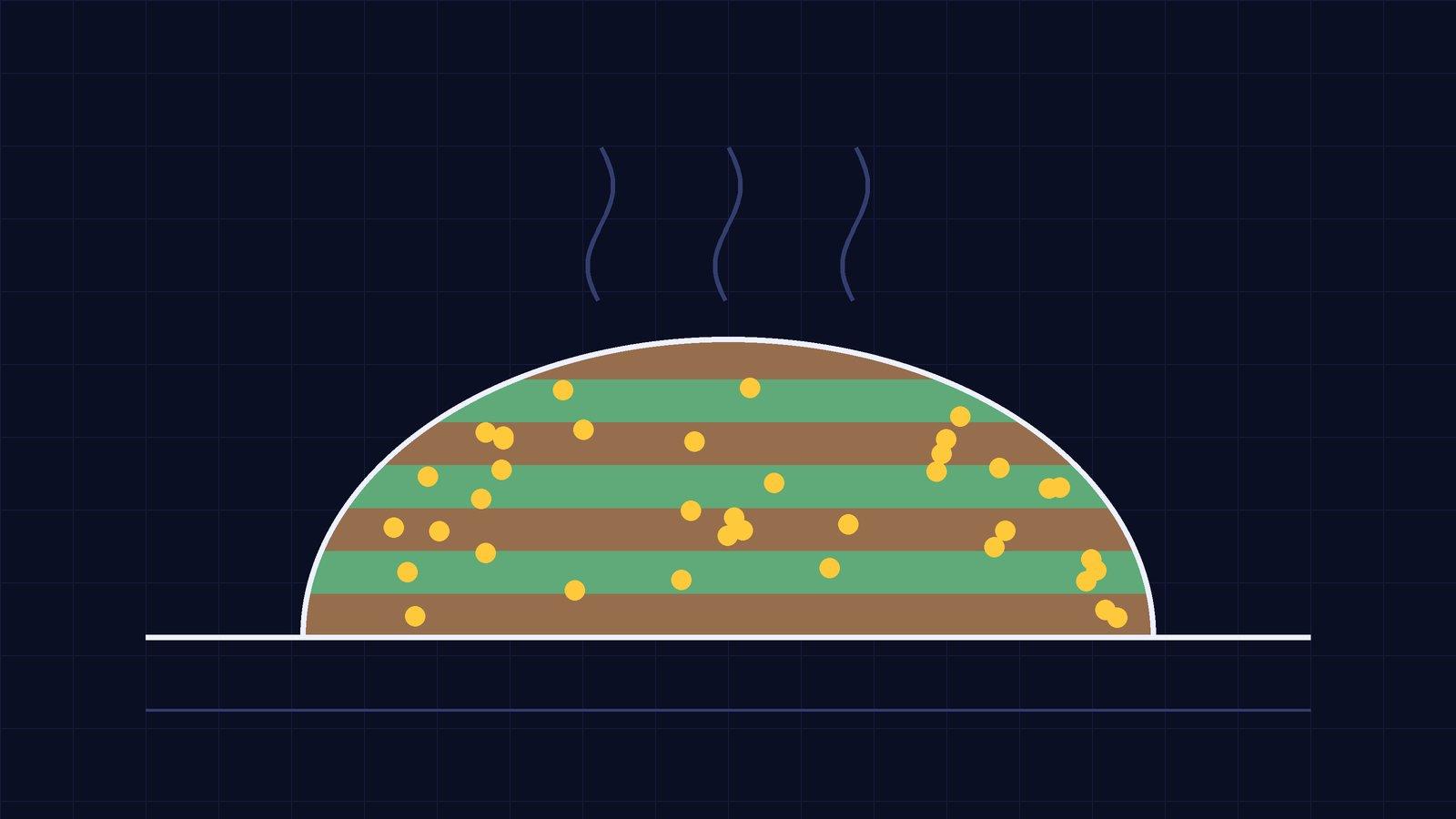
How much an apple peel affects the climate depends on where it breaks down. In a compost heap, microbes break organic matter down using oxygen, and most of the carbon returns to the air as carbon dioxide. In a landfill, where waste is compacted and covered, the oxygen soon runs out; microbes that work without oxygen also produce methane. According to the US Environmental Protection Agency (EPA), landfill gas is roughly 50 per cent methane and 50 per cent carbon dioxide. According to UN News, methane traps more than 80 times as much heat as carbon dioxide over 20 years and is responsible for nearly a third of global warming to date.
Processed in a digester
Organic waste is processed in a biogas digester.
Fermentation without air
The waste is broken down through a fermentation process that does not use air.
Methane feeds a generator
The methane produced is fed into a generator.
Electricity is produced
The generator uses this gas to produce electricity.
Source: UN News (UNDP photo caption)
According to a UNDP photo caption in UN News, a biogas digester breaks down organic waste through a fermentation process that does not use air; the methane is then fed into a generator to produce electricity. Julia Ferini calls methane the climate’s “emergency brake”: cutting this short-lived gas could slow warming relatively quickly, buying time to reduce carbon dioxide emissions. According to UN News, the Botswana company Viva Organica turns organic waste collected from food retailers into fertiliser with more than half a million worms, and has already processed more than 1,000 tonnes of organic waste.
Why a compost heap warms up, how to work out a carbon-to-nitrogen ratio and how methane forms in a landfill are explained step by step in the day’s science article, How do you make compost? An apple peel’s journey back to the soil. You can see how the carbon that decomposers release becomes sugar again inside a plant in the Lab’s The leaf factory figure.
Sources
8 sources- 1.COP31 Presidency (11 November 2026). COP31 Leaders' Summit Opening Address (Turkish version) (opens in a new tab)
- 2.COP31 Presidency (11 November 2026). COP31 Leaders' Summit Opening Address (opens in a new tab)
- 3.WMO (11 November 2026). COP31 Leaders' Summit: Turn commitments into action (opens in a new tab)
- 4.WMO and UNDRR (11 November 2026). Early warning protection expands worldwide (opens in a new tab)
- 5.UN News (11 November 2026). 'Make or bake time': Guterres urges climate justice pact as leaders gather at COP31 (opens in a new tab)
- 6.COP31 Presidency: Action Agenda, Zero Waste (opens in a new tab)
- 7.COP31 Presidency: Thematic Days (opens in a new tab)
- 8.US EPA: Basic Information about Landfill Gas (opens in a new tab)
- #COP31
- #COP31 diary
- #zero waste
- #methane
- #circular economy
- #Antalya